
This week, Dr Ray O’Connor considers how common problems may benefit from non-drug treatment
Back pain
Low back pain is a leading cause of disability worldwide. The authors of this clinical review paper1 examined the evidence for common interventions, excluding drugs, for the treatment and prevention of non-specific low back pain in adults aged 18-60 years. The paper focused on assessing research that included people with low back pain felt between the last rib and the buttock creases without a specific cause. This is seen very commonly in practice. The paper contains some very useful statistics for counselling patients presenting with back pain. For example, routine imaging is not recommended.
For about one-third of people, a new episode of low back pain will recover in around two weeks. However, for about 10 per cent of people the pain becomes recurrent, and for 20 per cent of people, the pain becomes chronic, defined as pain that persists for longer than three months.

Dr Ray O’Connor
The non-drug treatment strategies advised are as follows. For acute low back pain, advice/education and superficial heat have moderate certainty evidence of a favourable benefit harm balance, but the benefit is likely small. For chronic low back pain, advice/education, exercise, integrated physical and cognitive therapies, and psychological therapies all have a favourable benefit harm balance, but the benefit is likely small for advice/education and psychological therapies, and moderate for exercise and integrated physical and cognitive therapies.
For prevention, interventions that combine exercise and education/health coaching have moderate certainty evidence of favourable effects.
Finally, choosing which intervention to engage with should consider the likely benefits and harms and how they relate to an individual, availability of resources (e.g., trained clinicians), cost in terms of financial and time outlay, and the preferences of the patient.
Knee pain
Physical therapy is routinely recommended for knee pain attributed to a degenerative meniscal tear, but its efficacy has not been established. In this randomised controlled trial,2 participants aged 45 to 85 years of age with knee pain, osteoarthritis, and meniscal tear were randomly assigned to one of four groups: home exercise (three-month home-exercise program), home exercise plus text messages to encourage exercise adherence, home exercise plus text messages plus sham physical therapy (in-clinic sham manual therapy and sham ultrasound therapy), and home exercise plus text messages plus standard physical therapy (supervised strengthening, functional, and stretching exercises and manual therapy).
The primary outcome was the change in the Knee Injury and Osteoarthritis Outcome Score (KOOS) pain. A total of 879 participants underwent randomization (mean age, 59.2 years). The outcome was that the addition of physical therapy or text messages to encourage adherence to home exercises was not superior in reducing pain to a home-exercise program alone.
Insomnia
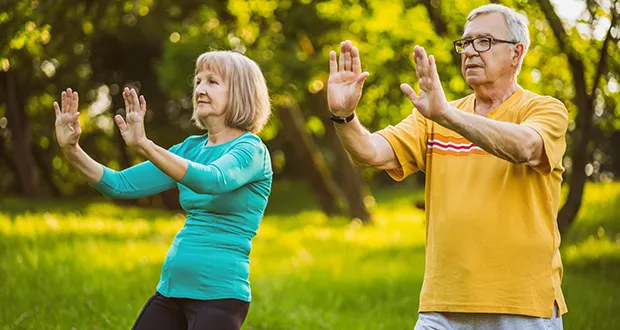
Chronic insomnia is one of the most common sleep disorders in middle-aged and older adults, with global prevalence rates ranging from four per cent to 22 per cent, depending on the diagnostic criteria used. The objective of this randomised trial3 was to assess whether tai chi is non-inferior to cognitive behavioural therapy for insomnia (CBT-I), the first line treatment, for managing chronic insomnia in middle aged and older adults.
The setting was a single research site in Hong Kong with participants recruited from the local community. The participants were Chinese citizens aged ≥50 years with chronic insomnia. Tai chi and CBT-I interventions were delivered in group format over three months, consisting of one hour sessions twice a week for a total of 24 sessions.
The primary outcome was the change in perceived insomnia severity measured by the Insomnia Severity Index after the intervention (month three) and at 12 month follow-up (month 15). The conclusion was that Tai chi was inferior to CBT-I at month three but non-inferior at month 15. This finding supports the use of tai chi as an alternative approach for the long term management of chronic insomnia in middle-aged and older adults.
Depression
Depression is a common cause of morbidity and mortality worldwide. Depression is often treated with antidepressants or psychological therapy, or both, but some people may prefer alternative approaches such as exercise. This Cochrane review4 updates one first published in 2008 and last updated in 2013. The objective was to determine the effectiveness of exercise in the treatment of depression in adults compared with no intervention, waiting list control or placebo, or where exercise is used as an adjunct to an established treatment that is received by both exercising and non-exercising groups.
 Another objective was to determine the effectiveness of exercise compared with other active interventions for depression in adults (psychological therapies, pharmacological treatments or alternative interventions such as light therapy).
The authors’ conclusion was that exercise may be moderately more effective than a control intervention for reducing symptoms of depression. Exercise appears to be no more or less effective than psychological or pharmacological treatments, though this conclusion is based on a few small trials. Long-term follow-up was rare.
Constipation in the elderly
Constipation, one of the most common gastrointestinal disorders, primarily manifests as dysfunctional bowel movements, reduced bowel movements, and dry and hard faeces. Epidemiological surveys indicate that the global prevalence of constipation in adults is as high as 15.3 per cent, and it increases with age.
Among patients aged 65 and above admitted to the Geriatric Department, 65 per cent have experienced symptoms and signs of constipation, and 60% have received laxative treatment. This meta-analysis5 evaluated the efficacy and safety of non-pharmacological interventions such as acupuncture, abdominal massage, ear acupoints, probiotics, and dietary fibre in the treatment of constipation in the elderly.
Forty-one studies involving 3,005 patients aged ≥60 years were included. The conclusion was that non-pharmacologic treatment group demonstrated significantly higher efficacy compared to the control group. Long-term intervention has more significant effects. However, the authors warned that due to different intervention regimens, inconsistent treatment time, and methodological defects included in the study, there is a high degree of heterogeneity in the evidence considered.
References:
Jones C et al. Clinical Update: Management of non specific low back pain without drugs. BMJ 2025;391:e086052 http://doi.org/10.1136/bmj-2025-086052.
Katz J et al. A Randomized Trial of Physical Therapy for Meniscal Tear and Knee Pain. N Engl J Med 2025;393:1694-1703 DOI: 10.1056/NEJMoa2503385.
Siu P et al. Tai chi or cognitive behavioural therapy for treating insomnia in middle aged and older adults: randomised non-inferiority trial. BMJ 2025;391:e084320 http://dx.doi.org/10.1136/bmj-2025‑084320.
Clegg AJ et al. Exercise for depression. Cochrane Database of Systematic Reviews 2026, Issue 1. Art. No.: CD004366. DOI: 10.1002/14651858.CD004366.pub7.
Xu L et al. Nonpharmacologic treatment for elderly with constipation: a systematic review and meta-analysis. Front. Med. 12:1644609. DOI: 10.3389/fmed.2025.1644609.