
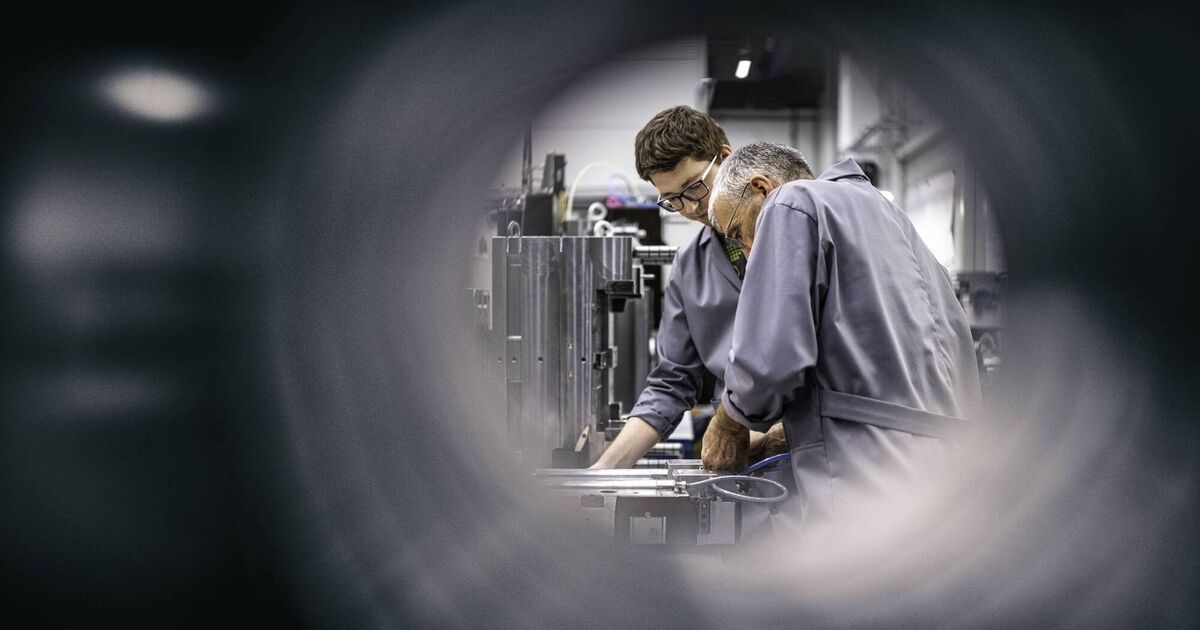
“One of the unique aspects of apprenticeships is that you are paid consistently from day one,” explains Siobhan Kinsella, President of the Employment and Recruitment Federation.
“You are on a salary with your employer paying you the whole way through. The individual attends college once a week during a time that is protected, as the study time that each apprentice is guaranteed. It is all focused in such a way to make sure that what they are doing in college is coming up in their day-to-day work, which ensures a huge element of on-the-job learning.” In addition to her role as President of the ERF and Managing Director of Strategic Placements, she is a former MD of the Noel Group and founding Director of Driving Force, Airport Staff, Total Talent and Evolut.
“One of the things I particularly love about it is challenging the traditional view that education or college is the leveller. It is not – apprenticeships are. It costs the apprentice nothing – the employer covers the cost, and you are paid a salary, so there is nothing impeding individuals from succeeding them in their career. If you look at the way accommodation is in any of our great urban centres where colleges are, we have apprentices all over the country, and because they can do their colleges online, in their places of employment, it enables much greater accessibility.” Kinsella references student accommodation in Dublin costing €12,000 annually, before college fees and living expenses are added.
“For an apprentice, particularly those on Level 8, the fact that you can do it from anywhere in the country with the support of your employer means that the people who could have been financially disadvantaged in accessing the course they want to do can do it while earning a living, getting on with their life and succeeding.” Despite Ireland reaching a record 2.81 million people in employment and maintaining a low 4.0% unemployment rate, the latest Labour Market Monitor from the ERF shows that the growing problem of young people being left behind.
 Siobhan Kinsella, President of the Employment and Recruitment Federation.
The youth unemployment rate rose to 10.7% in June, an 8.5% increase year-on-year, even as employers report serious difficulties filling roles across core industries.
That means more than one in ten young people aged 15 to 24 are out of work, a rate more than twice the national average. “We have employers urgently looking for skilled people, and yet thousands of young workers remain locked out,” Kinsella points out.
“The system simply isn’t working for early-career job seekers, particularly those not progressing through college. While university graduates continue to enjoy good post-graduation employment rates, young people leaving school after the Leaving Cert face fewer structured options. Internships for non-graduates remain scarce, and vocational transitions into work are underdeveloped.
“We’re not building the bridges we need between school and the workforce. Without targeted apprenticeships, structured placements, and clearer entry routes, we risk deepening inequality in what is supposed to be a full-employment economy.” The ERF has developed its own apprenticeship model with the National College of Ireland, offering a Level 8 degree in Recruitment Practice for school leavers and those already working in the sector. However, more widespread initiatives are needed to support young people transitioning from school to sustainable employment.
“Apprentices are a step ahead of college graduates in having a head start in their chosen field and the things they know how to do – whether it is sales, influencing or conflict resolution. We, as an industry, have a special interest in our apprentices – they have to attend and do an assignment at our conference every year as part of their professional development.”
And those who come successfully through their apprenticeship often find themselves recipients of another career benefit: “They all get promoted. The level of promotion of candidates in their professional careers is a testament to it. They are taking all of this learning and work and applying it day to day. What we wanted to do with the Level 8 Honours degree in recruitment was to create the next generation of leadership in our industry – and that is transpiring to be true. There are still many people who don’t have that qualification, which means our apprentices have a distinct advantage if they are progressing their career in the same company or an alternative firm.”
Every apprenticeship host has an apprenticeship mentor, who mentors their work and academic progress to ensure they get any help or assistance they need. Those mentors go through an induction course with the National College of Ireland, many of whom are qualified through the ETB.
“Separate to that, every apprenticeship host must have senior director buy-in,” Kinsella explains. “So there is no leader in the Irish recruitment industry that is hosting apprentices that doesn’t have a direct link to those apprentices and a special interest in them. So, in fact, they are getting more senior executive one-on-one time as a result of the fact that they are apprentices as well.”
In addition, as the ETB is very involved with the National College of Ireland, it provides guest speakers where industry experts give lectures to the apprentices. “One of the key successes of Ireland in attracting Foreign Direct Investment is how the Irish can network and bring people and ideas together, creating their own professional network in work and their industry. These apprentices have an absolute head start over everybody else because they are doing it in a structured fashion, meeting people at different levels in their career throughout the industry. That they are developing those relationships so quickly has given us an even more cohesive industry.”