

Midlife fitness is often linked with declining muscle mass and slower recovery, making regular exercise more important than ever. Alongside working out, tracking your strength, balance and coordination can help highlight key areas for improvement.
To make this easier, midlife fitness expert and founder of Owning Your Menopause, Kate Rowe-Ham, shares nine benchmarks to aim for – helping you monitor progress and maintain long-term strength, independence and functionality.
9 midlife fitness tests 1. Single-leg stand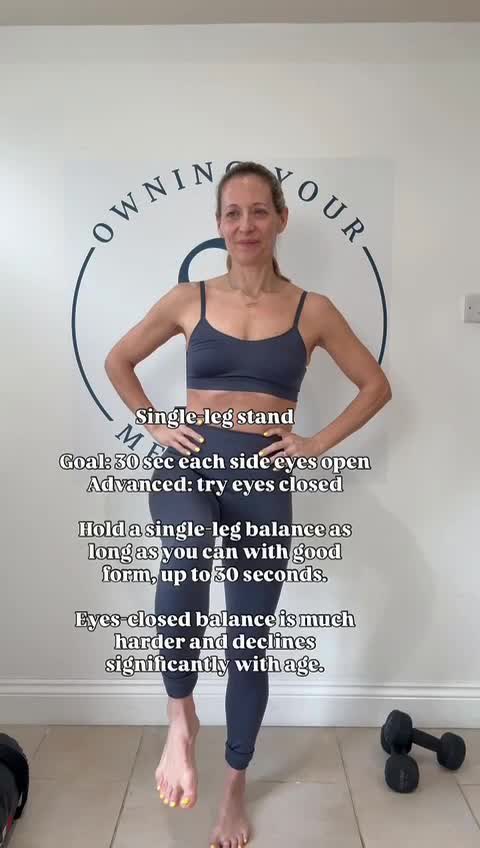
Goal: 30 seconds each side, eyes open. For an advanced test, try balancing with eyes closed
‘Eyes-closed balance is much harder and declines significantly with age,’ says Rowe-Ham. Hold a single-leg balance as long as you can with good form for up to 30 seconds as a test.
2. Sit to stand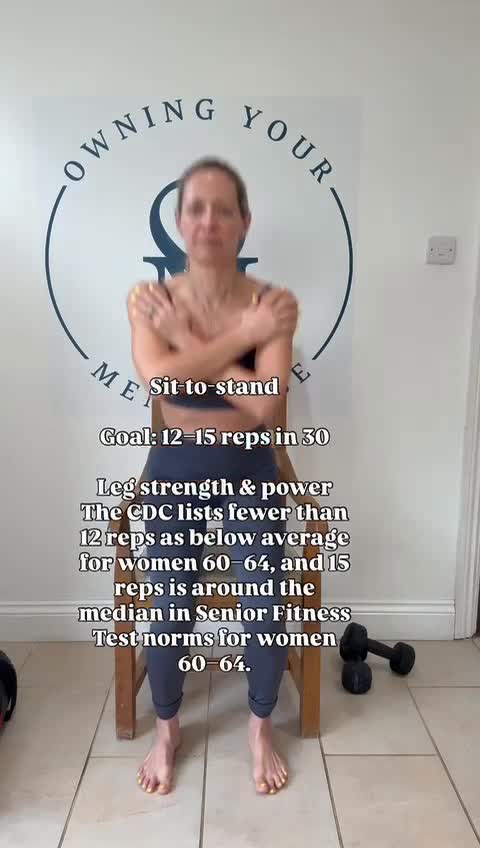
Goal: 12-15 reps in 30 seconds
This tests leg strength and power, says Rowe-Ham. ‘The CDC lists fewer than 12 reps as below average for women 60-64, and 15 reps is around the median in senior fitness test norms for women 60-64.’
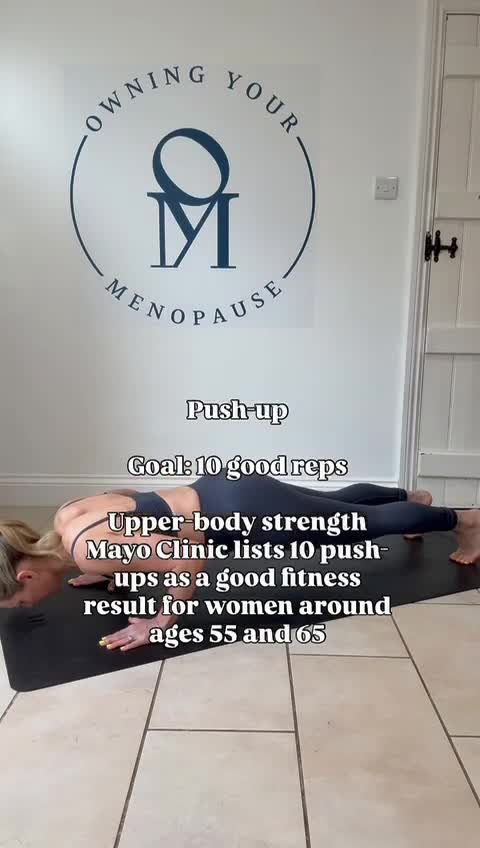
Goal: 10 good reps
This tests your upper-body strength. ‘Mayo Clinic lists 10 push-ups as a good fitness result for women around 55 and 65,’ Rowe-Ham explains.
4. Farmer’s carry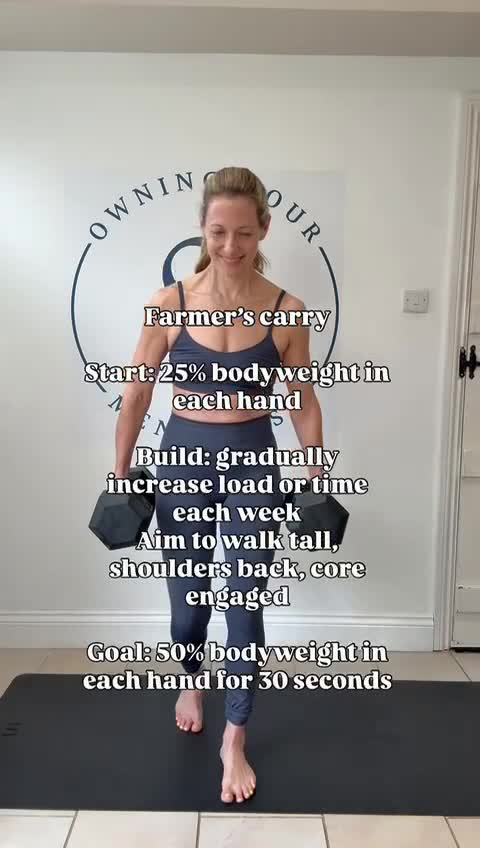
Goal: 50% of bodyweight in each hand for 30 seconds
Start with 25% of your bodyweight in each hand, then build up the weight by gradually increasing load or time each week. ‘Aim to walk tall, shoulders back and with your core engaged,’ says Rowe-Ham.
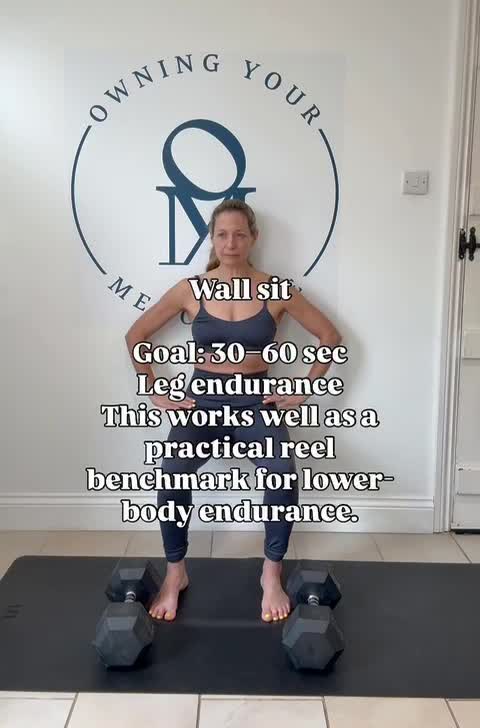
Goal: 30-60 seconds
An exercise that tests leg endurance, this works well as a practical benchmark for lower-body muscle capacity.
6. Chest press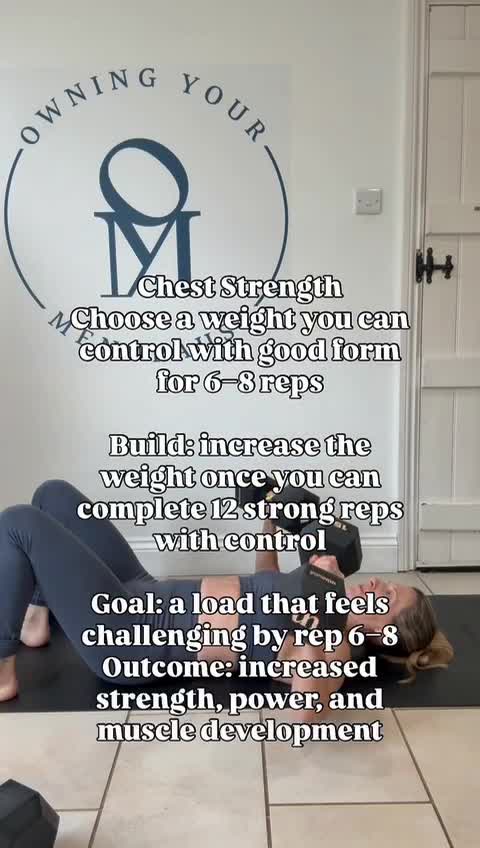
Goal: a load that feels challenging by rep 6-8
For increased strength, power and muscle development, start by choosing a weight that you can control with good form for 6-8 reps, advises Rowe-Ham. ‘Then increase the weight once you can complete 12 strong reps with control.’
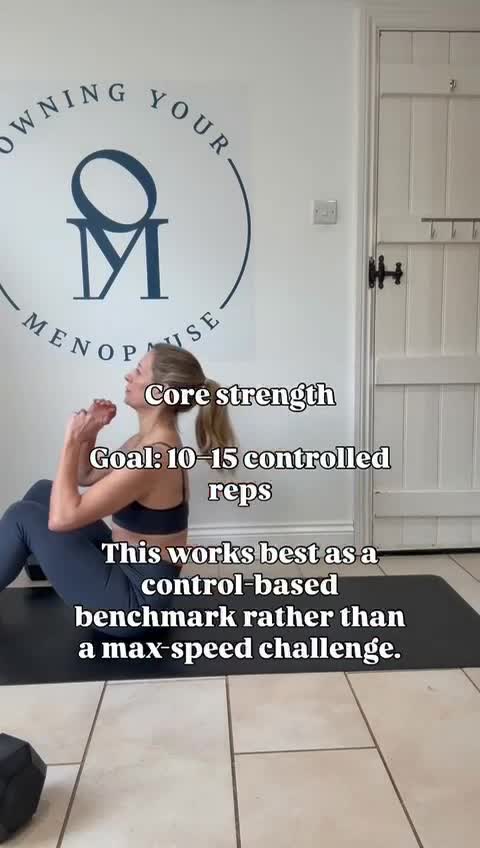
Goal: 10-15 controlled reps
This core strength test works best as a control-based benchmark rather than a max-speed challenge, so focus on good reps and form.
8. Shoulder mobility finger overlap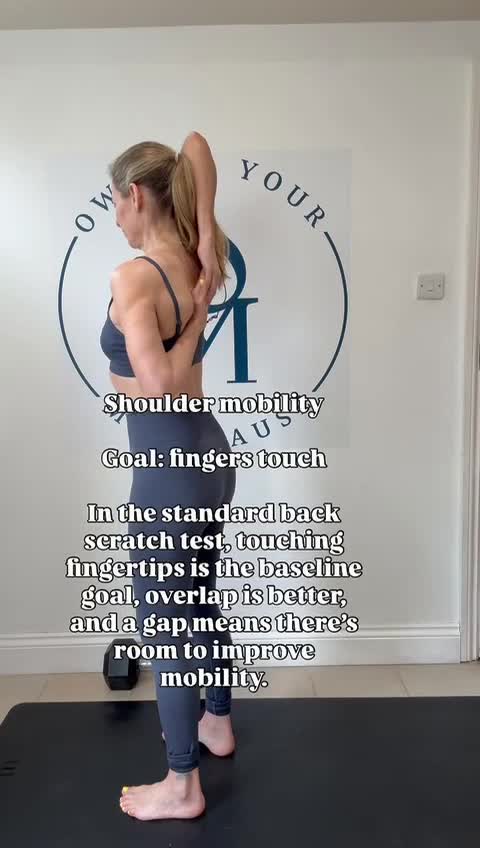
Goal: Fingers overlap
In the standard back scratch test shoulder mobility test touching fingertips is the baseline, but overlap is better, Rowe-Ham says. ‘A gap means there is room to improve mobility.’
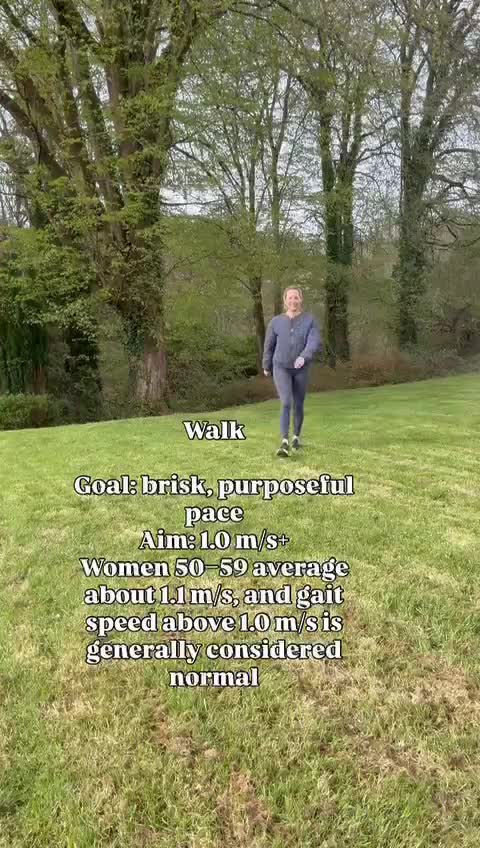
Goal: 1m/s
Women 50-59 average about 1.1m/s and gait speed above 1.0m/s is generally considered normal, Rowe-Ham notes. ‘Aim for a brisk, purposeful pace.’
After years living with endometriosis and undergoing seven rounds of IVF, Radio 4 presenter Emma Barnett turned to training with PT Frankie Holah to rebuild strength and a more positive relationship with her body. Download the Women’s Health UK app to access Frankie’s full training plan.
 Related Stories
 Expert consulted:Kate Rowe-Ham
Coach & Menopause Fitness Specialist
Kate-Rowe Ham is a leading women’s health coach, menopause fitness specialist and founder of Owning Your Menopause, where she shares evidence-based strategies that help women build strength, independence and resilience, future-proofing their bodies and minds through midlife and beyond. She is regularly featured in the media, including The Times and The Telegraph, and has collaborated with brands including Nike and Sweaty Betty.