
Summary: We usually think of fitness as something that happens in the muscles, lungs, and heart. However, a new study co-led reveals that the brain actually “programs” our physical endurance.
Researchers discovered that a specific group of neurons in the ventromedial hypothalamus (VMH), defined by a protein called SF1, tracks exercise and forms a “memory” of past activity. These neurons don’t just react to a workout; they actively direct the body to boost its endurance capacity. This discovery suggests that the brain is the critical “middleman” that translates effort into physical improvement.
Key FactsThe SF1 “Memory”: As mice underwent treadmill training, SF1-producing neurons in the VMH became increasingly active. This heightened state acted as a neural memory of the exercise, driving the body’s long-term adaptations.Control Over Stamina: When these neurons were blocked, mice failed to improve their endurance despite training. Conversely, artificially stimulating these neurons allowed mice to shatter their typical fitness “plateaus.”Beyond Muscle Memory: While we often focus on cardiovascular or musculoskeletal changes, this study proves the brain is an essential intermediate that tells the rest of the body to adapt.Metabolic Powerhouse: Previous research showed that without these SF1 neurons, mice failed to gain the metabolic benefits of exercise, such as calorie burning and resistance to weight gain.A “Workout” for the Immobilized: The researchers hope this path leads to treatments that mimic the brain’s exercise signals, providing the benefits of physical activity for people with limited mobility due to injury or illness.
Source: UT Southwestern
Neurons in a part of the brain known as the ventromedial hypothalamus (VMH) appear to direct the body to boost endurance in response to exercise, a study co-led by researchers at UT Southwestern Medical Center shows.
The findings, published in Neuron, shed light on how the body adapts to physical activity and could eventually lead to treatments that reproduce the benefits of exercise training when movement is limited.
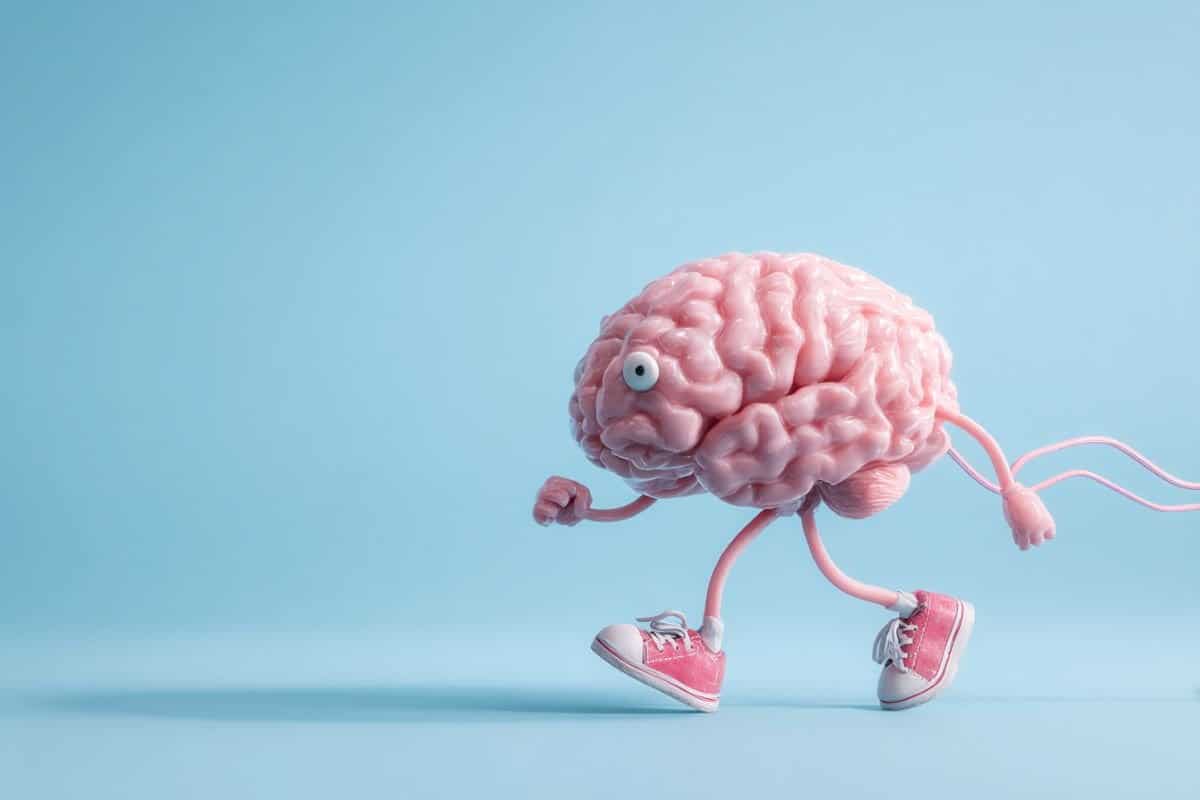 The brain itself can program endurance capacity, acting as a critical intermediate in the adaptive response to training. Credit: Neuroscience News
“Most people think of the body adapting to exercise through the muscles, heart, lungs, and other tissues. But our study shows that the brain itself can program endurance capacity,” said Kevin Williams, Ph.D., Associate Professor of Internal Medicine, a member of the Center for Hypothalamic Research, and an Investigator in the Peter O’Donnell Jr. Brain Institute at UT Southwestern. Dr. Williams co-led the study with J. Nicholas Betley, Ph.D., Associate Professor of Biology at the University of Pennsylvania, and Erik B. Bloss, Ph.D., Assistant Professor at The Jackson Laboratory.
Researchers have long known that the brain changes with exercise, boosting production of new neurons, increasing neural connectivity, and reducing neuroinflammation. These adaptations have typically been considered to reflect, rather than produce, the positive changes that come with exercise, the leading lifestyle intervention recommended for human health.
However, Dr. Williams explained, previous research at UTSW and elsewhere suggested that steroidogenic factor-1 (SF1) – a protein produced by a subset of neurons in the VMH – is key to many of the metabolic benefits of exercise. Studies showed that without it, mice failed to develop the muscle adaptations, resistance to weight gain, and increased calorie burning that comes from higher levels of physical activity.
To better understand SF1’s role, Dr. Williams and his colleagues worked with mice that underwent a rigorous exercise training program. They ran five days a week on a tiny treadmill, with a single weekly long run that increased in speed. This training significantly raised their endurance, which peaked about three weeks into the program.
The researchers found that some SF1-producing neurons had an uptick in activity. As the training program continued, these neurons became increasingly active, seemingly forming a kind of “memory” of past exercise.
When these neurons were blocked from firing in mice after their exercise programs, their endurance capacity did not rise. Taking the opposite tack, artificially increasing the firing of SF1-producing neurons after their exercise programs led to continued endurance improvement even at the three-week mark, when it typically plateaued in mice with normal SF1-neuron firing rates.
Together, Dr. Williams said, these results suggest VMH neurons that produce SF1 drive endurance improvements in response to exercise. He and his colleagues plan to study how these neurons sense that exercise has occurred, as well as the role other neurons connected to this population play in boosting endurance.
Eventually, he said, this research could lead to new ways of raising endurance without exercise – a potential game changer for people who lack the capacity to increase their physical activity due to illness, injury, or limited mobility.
“One of the more interesting implications of this study is that we traditionally think of increases in athletic performance occurring by building the musculoskeletal, cardiovascular, and respiratory systems as an adaptive response to training,” Dr. Betley said. “Here, we identify the brain as a critical intermediate in this process.”
Other UT Southwestern researchers who contributed to this study are Joel K. Elmquist, D.V.M., Ph.D., Professor and Vice Chair of Research for Internal Medicine and Director of the Center for Hypothalamic Research; Teppei Fujikawa, Ph.D., Associate Professor of Internal Medicine and a member of the Center for Hypothalamic Research; Eunsang Hwang, Ph.D., Instructor of Internal Medicine; and Kyle Grose, B.S., Research Assistant.
Funding: This study was funded by grants from the University of Pennsylvania School of Arts and Sciences; the National Institutes of Health (P01 DK 119130, R01 AG 079877, R01 DK 119169, R56 DK 135501, F32 DK 131892, and F31 DK 131870); the National Science Foundation (DGE-1845298 and DGE-2236662); the National Research Foundation of Korea (2021R1A6A3A14044733); the Rhode Island Institutional Development Award Network of Biomedical Research Excellence (NIH P20 GM 103430); the Rhode Island Foundation (16409_139170); the Providence College Provost’s Fellowship; Providence College; and the University of Pennsylvania.
Key Questions Answered:Q: Does this mean “mind over matter” is actually a real biological circuit?
A: In a way, yes. This study shows that your “will” to exercise is translated by the VMH into a physical command for the body to get stronger. Your brain is essentially the coach that tells your muscles and heart to upgrade their systems based on the data it collects during your runs.
Q: Could we eventually take a “gym pill” that activates these neurons?
A: That is the long-term goal. For people who physically cannot move, such as those with paralysis or severe illness, activating these specific SF1 neurons could potentially trigger the muscle-strengthening and calorie-burning benefits of exercise without the person needing to step on a treadmill.
Q: Why do I hit a “plateau” in my fitness, and how does the brain fix it?
A: Normally, your brain and body reach an equilibrium where they think you are “fit enough” for your current routine. The study found that by over-stimulating these SF1 neurons, they could push past that natural ceiling, suggesting that our limits are often set by our brain’s programming rather than our physical anatomy.
Editorial Notes:This article was edited by a Neuroscience News editor.Journal paper reviewed in full.Additional context added by our staff.About this exercise and neuroscience research news
Author: Kevin Williams
Source: UT Southwestern
Contact: Kevin Williams – UT Southwestern
Image: The image is credited to Neuroscience News
Original Research: Open access.
“Exercise-induced activation of ventromedial hypothalamic steroidogenic factor-1 neurons mediates improvements in endurance” by Morgan Kindel, Ryan J. Post, Kyle Grose, Louise Lantier, Eunsang Hwang, Jamie R.E. Carty, Lenka Dohnalová, Lauren Lepeak, Hallie C. Kern, Rachael Villari, Nitsan Goldstein, Emily Lo, Albert Yeung, Lukas Richie, Bridget Skelly, Jenna Golub, Manmeet Rai, Teppei Fujikawa, Julio E. Ayala, Joel K. Elmquist, Christoph A. Thaiss, David H. Wasserman, Kevin W. Williams, Erik B. Bloss, and J. Nicholas Betley. Neuron
DOI:10.1016/j.neuron.2025.12.033
Abstract
Exercise-induced activation of ventromedial hypothalamic steroidogenic factor-1 neurons mediates improvements in endurance
Repeated exercise produces robust physiological benefits and is the leading lifestyle intervention for human health. The benefits from exercise training result from the remodeling of skeletomuscular, cardiovascular, metabolic, and endocrine systems.
In mice, we find that activation of the central nervous system following exercise is essential for subsequent endurance performance and metabolism benefits. Ventromedial hypothalamic steroidogenic factor-1 (SF1) neurons are activated following exercise, and repeated training results in increased post-exercise SF1 neuron activation.
Exercise training increases the intrinsic excitability and density of excitatory synapses on SF1 neurons, suggesting that exercise history is encoded through hypothalamic plasticity.
Inhibition of SF1 neuron output blocks endurance gains and metabolic improvements that result from exercise training. Conversely, stimulation of SF1 neurons following exercise enhances gains in endurance.
These results demonstrate that exercise-induced hypothalamic SF1 neuron activity is essential for the coordination of physiological improvements following exercise training.