
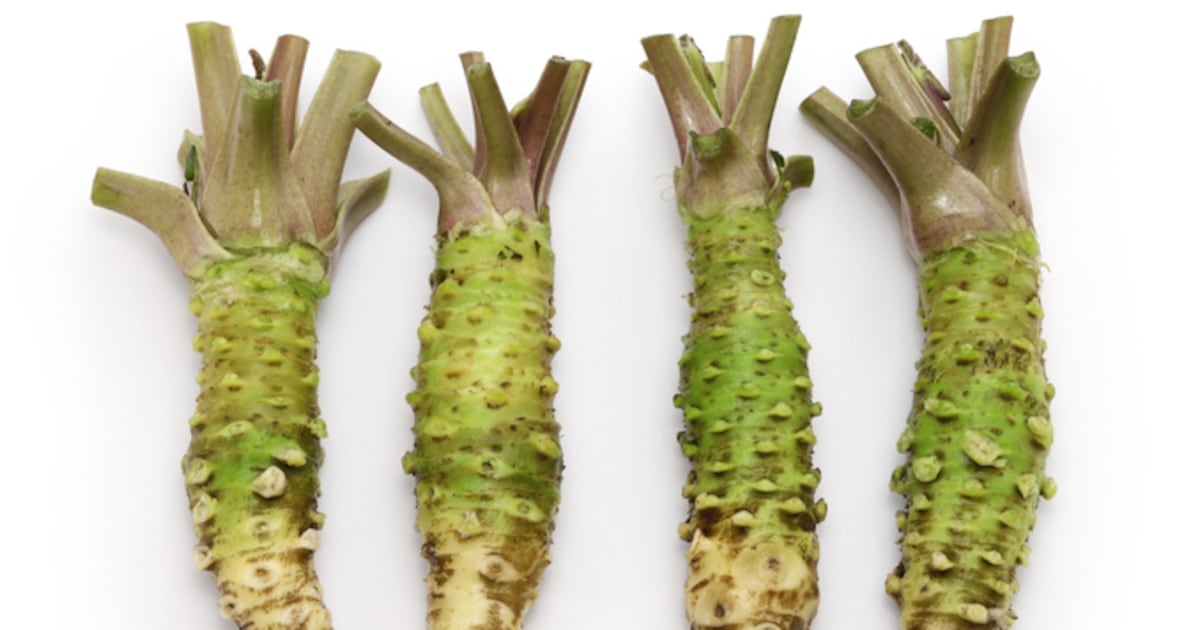
Nearly three decades later, Dr. Wasabi is still fascinated by the botanical, Eutrema japonicum, and its potential beyond the sushi platter. As a researcher at Kinjirushi, he’s hoping to shine a light on research into one of its compounds, hexaraphane, a naturally occurring wasabi compound being studied for its potential role in brain health, cognitive function and healthy aging.
“As a scientist, my curiosity is continually stimulated by the fact that hexaraphane has demonstrated a wide range of beneficial effects across various studies, yet its mechanisms of action in the human body are still not fully understood,” he told NutraIngredients.
Kinjirushi, a Japan-based wasabi specialist with decades of experience in cultivation, processing, product development and research, has studied wasabi and its naturally occurring compounds, including hexaraphane.
Recent research has suggested that hexaraphane can rapidly reach the brain, Dr. Okunishi said, opening up exciting new possibilities for neuroscience and brain health research.
What exactly is hexaraphane?
Hexaraphane, also known as 6-MSITC, is a wasabi-derived isothiocyanate. While many isothiocyanates are behind wasabi’s pungency and aroma, hexaraphane is non-volatile and has little taste or smell. Dr. Okunishi became interested in the compound after research pointed to its potential health effects and historical records showed wasabi had been used as a medicinal herb more than 1,300 years ago.
Brain resilience
Central to Dr. Okunishi’s research is the concept of “brain resilience.” He said he sees hexaraphane as more than just an antioxidant or anti-inflammatory compound.
“I believe that hexaraphane is a compound capable of enhancing brain resilience.”
He described brain resilience as the ability to cope with challenges including oxidative stress, inflammation, metabolic changes and damage to cellular proteins while maintaining neural plasticity.
One pathway that dominates his thinking is Nrf2, a transcription factor involved in cellular defense. Dr. Okunishi said hexaraphane activates Nrf2, which can increase the expression of antioxidant and cytoprotective genes. Instead of acting as an antioxidant itself, he argued that hexaraphane may help strengthen the brain’s own defenses against oxidative stress.
“Furthermore, the biological effects of hexaraphane appear to extend beyond the Nrf2 pathway,” he said, pointing to research that suggests hexaraphane may also activate PP2A, an enzyme involved in regulating tau phosphorylation. According to Dr. Okunishi, this could potentially reduce the accumulation of hyperphosphorylated tau, which is associated with Alzheimer’s disease and other neurodegenerative disorders.
He also brought up neural plasticity – the brain’s ability to adapt by changing neural connections – as another potential piece of the puzzle. Hexaraphane has also been reported to promote autophagy, the cellular process that helps remove damaged proteins and organelles. Dr. Okunishi described this broader effect as a “brain cellular resilience factor.”
Does the science translate to cognitive benefits?
A 2023 randomized, double-blind, placebo-controlled trial published in Nutrients involving 72 healthy Japanese adults aged 60 and up found that 12 weeks of 6-MSITC supplementation was associated with significant improvements working and episodic memory compared to placebo. The study did not find significant improvement in other cognitive domains and acknowledged the need for research in more diverse populations.
From wasabi to a standardized ingredient
Dr. Okunishi told NI that one of the biggest challenges so far was figuring out how to get hexaraphane out of wasabi and into a usable ingredient.
Wasabi contains high levels of allyl isothiocyanate (AITC), the compound responsible for its characteristic heat. When his team initially developed a processed wasabi preparation using heat treatment to deactivate the enzyme that causes the pungent compounds, Dr. Okunishi decided to try it himself.
It didn’t go well.
As it turned out, the treatment did not prevent the enzymatic reaction from occurring in the intestine, resulting in the production of large amount of AITC. The experiment left him with severe diarrhea for three days.
“It felt as if my intestines were on fire,” he said.
The experience highlighted a key challenge: how to remove the compounds behind wasabi’s pungency while preserving hexaraphane.
That proved difficult because as Dr. Okunishi explained, AITC and hexaraphane have similar molecular weights, while hexaraphane is unstable and sensitive to water and heat. Kinjirushi ultimately developed a process to separate the two compounds. That work led to a manufacturing patent that has since expired.
Thinking green
According to Dr. Okunishi, he’s just getting started. He wants to explore hexaraphane’s potential in areas like dementia, as well as other neurological and neuropsychiatric conditions, while continuing to research brain resilience.
He also is interested in whether compounds like hexaraphane could help the brain adapt to today’s digital environment, where people are constantly exposed to a barrage of information.
“Ultimately, my goal is to explore how hexaraphane can enhance brain resilience, enabling the brain to maintain its health, adaptability and cognitive performance – even in today’s ‘information shower’ society, where we are constantly exposed to vast amounts of information and stimulation.”
For Dr. Wasabi, the future of hexaraphane research may have less to do with wasabi’s familiar heat and much more to do with understanding how the brain responds to the demands of modern life.