
Almost half a century ago, biologists at the MRC Laboratory of Molecular Biology in Cambridge mapped the complete development of a tiny, transparent worm – from a fertilised egg to an adult with nearly 1,000 cells in all – by sitting at a microscope and watching every single cell division. That work ultimately won John Sulston the Nobel Prize. But doing this for a simple, transparent worm is one thing. Performing the same feat of so-called “lineage tracing” – working out where each of the hundreds of different cell types in the mammalian body came from, and how they made the developmental decisions they did in terms of what to turn into and when, would be impossible to do the same way. Instead, Jay Shendure at the University of Washington has come up with an ingenious way to make cells tag themselves by writing extra bits of DNA in one long string inside their genomes. As each cell divides, it adds more DNA letters to the sequence, leaving the DNA equivalent of a breadcrumb trail. This process doesn’t affect the cell function, because it doesn’t code for anything. But it means that the researchers can take any cell from a developing embryo and, by reading this sequence of letters, see what cells, and how many generations of those cells, this cell, in whatever tissue, has come from. This “DNA Typewriter,” as they call it, has allowed them to reconstruct the ancestry of more than a million cells from a single embryo. Jay has been telling Chris Smith how it works…
Jay – Every one of us, every human on this planet, as well as nearly every animal on God’s green earth, started out as a single cell, a fertilised egg. You know, that cell divided, divided again, two, four, eight, 16, so on. And then, you know, at some later time point, you have a baby and eventually an adult, right, that consists of, in the case of humans, many trillions of cells. And so you can think about this in some ways as a family tree of cells. Cells are related to other cells, right, through this process of cell divisions. And somehow, mysteriously, we get this baby nine months later, which consists of not just one kind of cell, but really thousands of kinds of cells, you know, liver cells, skin cells, different kinds of neurones. And partly because we can’t see it, it’s taking place inside of mom. The process by which that fertilised egg gives rise to this baby is still very much a mystery.
Chris – Obviously, we can watch up to a point an embryo developing and see how groups of cells seem to turn from one blob of cells into tissues and then structure and have function. But ultimately, that is happening because those cells are making decisions. Things are driving them to develop in a certain way and then locking that decision in. And that, I presume, we have very little insight into at the moment.
Jay – Yeah, so we can watch, you know, we can, for example, you know, we can model some of these things with human cells in a dish. But there’s a lot of the process that we can’t watch, right, because it’s inside the womb. We can also turn to model organisms. So, for example, quite famously, the roundworm C. elegans is the only species in which we have a complete understanding of this process of cell divisions that gives rise to the adult. And so the C. elegans, you know, as an adult only consists of around 1,000 cells. It’s transparent, so you can stick them under a microscope. And the process of cell divisions happens the same way every single time. And so these properties are what made it possible, you know, now, almost 50 years ago, for Sir John Sulston at the University of Cambridge to essentially watch the fertilised zygote of the worm, you know, develop and basically record by pen and paper and just, you know, sitting in a microscope for two years and writing down everything he saw, a complete description of that animal, right? But the challenge is that, you know, obviously we don’t work exactly how a worm works. Nearly every other animal on the planet doesn’t develop the same way every time, is not transparent, and is much larger. Those are the reasons 50 years later we still don’t have these maps for other organisms.
Chris – How are you trying to solve it?
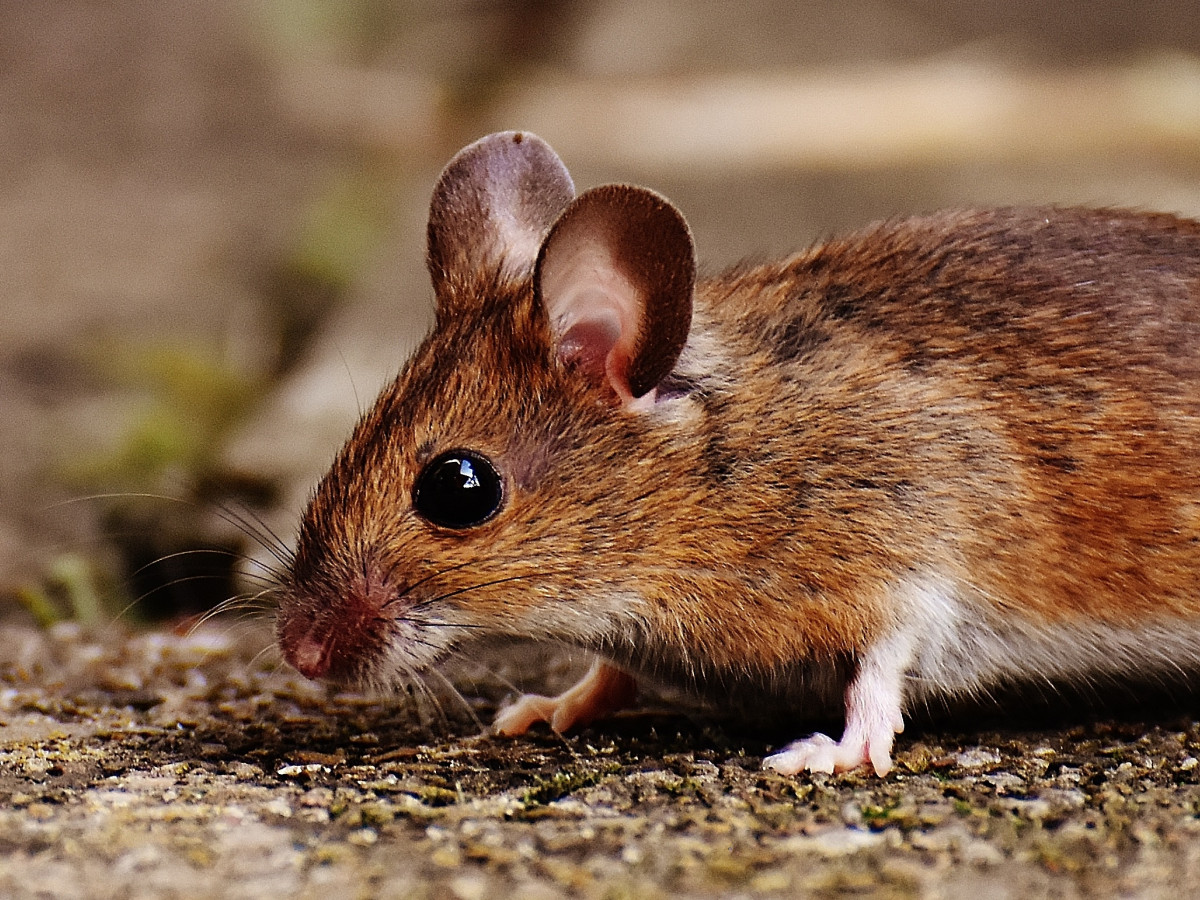
Jay – So we developed a technology that we call a DNA typewriter. The analogy is quite accurate. It actually works a lot like a typewriter. DNA is digital, consists of A’s, G’s, C’s, and T’s, much like the letters of our alphabet. It also has order, right? Meaning there’s kind of a left, the equivalent of left to right is also there for DNA. And so we were able to modify a genome editing tool, so a CRISPR-based tool, in order to essentially function as a left to right typewriter, right? Where we could punch keys that we define into DNA, right? So we’re essentially writing symbols into the genome. These symbols are encoding information that we then use to reconstruct the tree and also potentially what happened along the way. And so we’re really taking advantage of the cell and the fact that, you know, every cell in your body has a genome, and genome editors, engineering the genome to be able to write to itself, and kind of bringing together what we think about as symbolic language and the molecular biology of the cell into a mouse, where now it’s recording kind of its family tree of its cell divisions.
Chris – So as a cell goes through a process of dividing and turning into maybe a different type of cell or making a decision to become a skin cell or something, it is typewriting into the DNA of that group of cells, a unique message that you can read back later.
Jay – At the current stage, the analogy here would be a monkey at a typewriter, right? Where the cells are essentially typing random keys. But because, you know, for example, the first cell might punch a few letters and then it divides, it passed on everything that it’s typed so far to its daughter cells, but the daughter cells will punch, you know, different keys from one another, and then divide, and those, you know, whatever they punched will get passed on. And when we read the information out at the very end of the experiment, you know, we can essentially look at all those, you know, sheets of paper, essentially, and look at, you know, what pages share what parts in common or what starts of the paragraph, so to speak. And that allows us to build kind of a tree, right? Of when things split. We also have technologies that we’re now putting into the mouse that allow us to go from, you know, monkey at a typewriter to something that is more like, you know, if we see a particular signal, if we are in a particular cell state, we punch a particular key, right? And that will give rise, you know, to a tree where we have information layered on top of this rather than just what we get out at the end.
Chris – Does this mean then, Jay, that you can take a cell out of a developing mouse embryo, and if you read that random sequence of genetic letters that’s been punched in, you can effectively trace back and say, well, this cell that’s now sitting in the developing nervous system, its ancestors were previously one of these, one of these, and one of these cells earlier on in the embryo. This is where it’s come from. So we can look at the lineage that’s given rise to that now brain cell, for example.
Jay – And it’s like an archaeology almost, right? Where we are seeing the residues of what we collect at the end, but we’re getting a lot of signals based on, you know, commonalities about what happened in the, quote, past.
Chris – And what does this unlock? Now you can do this, and you can read back where cells came from in various stages at various times in development for a whole organism. What does that enable us to do now that we couldn’t do before?
Jay – You know, the optimistic view is that this has the potential to fundamentally reshape how we model not only normal development, but also really any disease that can be modelled in a mouse. So for example, Alzheimer’s or something like that. You know, by the time the mouse develops clinical Alzheimer’s, right, or like something resembling clinical Alzheimer’s, you know, maybe you’re making and sampling your measurements then, but you have no insights from looking then into the timing or the locations of where things went awry, you know, much earlier. When did it start? What was the initiation, right? So we would like to get to a point where in any model of any human disease, we can measure the entire mammal and pinpoint the timing and signals of past events that lie at the origin of the manifestations of disease that we see at later points in time.
Chris – Does it also potentially open the door to organ repair and cellular repair where if we know how cells arose in an embryo, we can make better reproductions, new versions of them in a test tube so we can repopulate organs that have lost a cell population, for example, and led to a disease with cells that really do look like, behave like, and for all they know, really are the right source of cells for that particular disease to be repaired?
Jay – Absolutely. Regeneration, you know, it’s something that humans don’t do very well relative to, you know, at least some of our evolutionary cousins, but it’s clearly possible and it’s clearly possible in other mammals, right? And so we know it happens and many aspects of it are still a mystery. And so if we’re able to track these kinds of cell divisions that, you know, not only give rise to an organism, but also are the basis for regeneration, hopefully we can get insights and possibly even, you know, doing this in a dish with human cells, improve our systems for advancing regeneration of human tissues.