
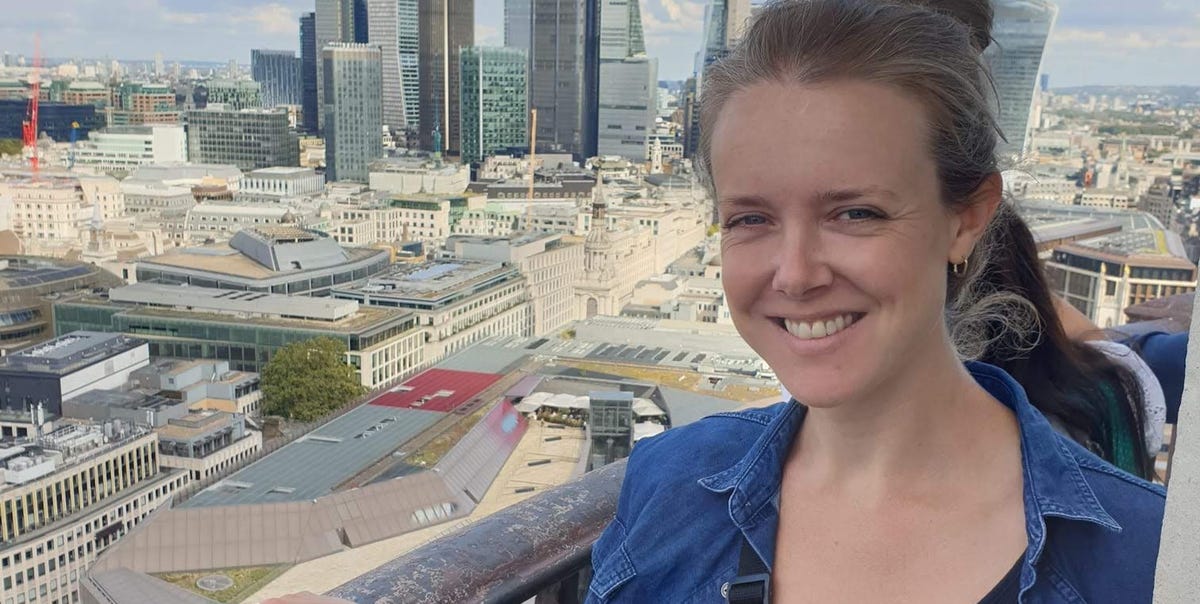
Being diagnosed with bowel cancer at 38 came as a huge shock to Maia Kennedy, now 40. Young, active (we’re talking netball, cycling, running half marathons) and healthy, she says that even when she was referred to the hospital, ‘cancer did not even enter my mind – I genuinely thought they wouldn’t find anything and I’d just be discharged.’ Still, when she noticed a change in her bowel habits, Maia had felt compelled to call the doctor, which eventually led to a stage one bowel cancer diagnosis.
Maia didn’t require chemotherapy and she’s just received the all-clear at her two-year test. ‘I think I had the best outcome of a bad situation,’ she tells WH. Now, she’s sharing her story to help others detect the disease as early as possible. ‘If I could just help one person get detected early, then that’s a win,’ says Maia. ‘The more people who get caught at stage one, the better their outcomes are going to be.’
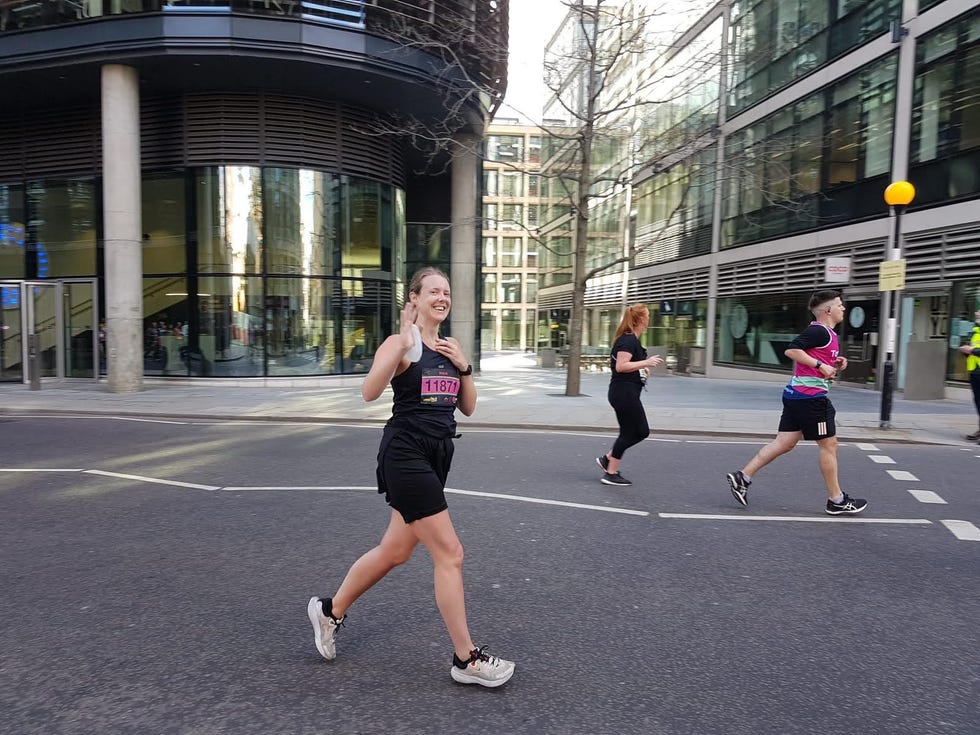 Maia Kennedy
Maia hopes sharing her experience can help others detect bowel cancer as early as possible
Maia’s symptomsNausea
‘The first symptom I had was just nausea all the time – like all day, every day,’ says Maia. After around a week, she called the doctor, who prescribed her medication for acid reflux (which can make some people feel nauseous), but told Maia to come back if it continued.
Bowel habit changes
Between taking that medicine and calling the doctor again, Maia also noticed a change in her bowel habits. ‘During this time, I was going much more often – and I thought, that’s quite weird,’ she explains. ‘But I thought maybe I was just having [an IBS] flare-up.
FIT Test
Concerned about these changes, Maia called her doctor again, who immediately sent her for a FIT test (faecal immunochemical test), which involves taking ‘a sample of your poo and checking for any blood within it that may not be visible to you when you’re going to the toilet,’ explains Maia. ‘Again, I thought maybe it’s IBS or maybe the IBS had changed with something else, like Crohn’s or coeliac or something else… cancer did not even enter my mind.’
‘I was actually on holiday at this time in Switzerland – I was on the train in the mountains, and the doctor called me and said they had found some blood in my poo, so she wanted me to come in for an emergency colonoscopy.’ Immediately after the procedure – during which doctors did find something – Maia was sent for a CT, biopsy and was assigned a colorectal nurse.
After what she describes as a hellish two-week wait, Maia was told the results were unclear. ‘It was kind of showing signs of pre-cancer, but it wasn’t necessarily full-blown cancer,’ she says. ‘So they said that the best course of action at this point would be to have surgery to remove part of my bowel and take the tumour out, and then after that, they would fully test the whole tumour.’
It was stage one cancer, ‘which apparently is very rare – the earliest is normally stage two but I caught it so early, it hadn’t spread or gone through the walls of my bowel.’
The red flag symptom
The change in her bowel habits, reiterates Maia, was the red flag that made her think ‘I probably need to take this a bit more seriously.’ That was partly due to the fact she was already relatively conscious of them. ‘I’ve had IBS for years and had ups and downs with my bowels,’ she says. ‘So I felt like I’d always been a bit [more] aware of how my body behaves.’
‘Now, I’m learning what my new normal is again so if anything does change then I would do the same thing and call the doctor,’ says Maia. ‘I think that’s my main message for people: just know what’s normal for you and if it’s changed, do something about it and act quickly.’
‘If I’d left it any longer and the symptoms had stopped, then I might never have gone to the doctor,’ adds Maia, who urges people not to be embarrassed discussing poo or feel like they’re wasting doctors’ time. ‘If you know something’s not right, just really push with the doctors to get it sorted sooner.’
Bowel cancer and young people
Because Maia was so young, she was sent for genetic testing to see whether she had Lynch syndrome, a genetic condition that increases a person’s chance of getting bowel cancer and other types of cancer, but the result was negative.
Bowel cancer is rising rapidly in those under 50 in the UK, according to Bowel Cancer UK, which says among adults aged 25-49, cases have increased by more than 50% in the past 25 years – a trend that isn’t slowing.
Maia is now part of a research study investigating cancer in young people. ‘It felt nice to be able to contribute to helping understand why young people are getting colon cancer and hopefully stopping some other people getting it,’ she says.
Genevieve Edwards, Chief Executive of Bowel Cancer UK, said: ‘We’re very grateful to Maia for raising awareness of her experience of bowel cancer.
‘Every 12 minutes someone in the UK is diagnosed with bowel cancer, making it the UK’s fourth most common cancer. Although the disease is more common in the over 50s, there is a growing body of evidence globally that bowel cancer is increasing in younger people, including in the UK.
‘Bowel cancer is treatable and curable, especially if diagnosed early. The earlier bowel cancer is found, the more treatable it’s likely to be, with more than 9 in 10 people surviving the disease when diagnosed at the earliest stage.
‘Whatever your age, if you’re experiencing symptoms of bowel cancer like bleeding from your bottom, blood in your poo or a change in your pooing habits, please contact your GP to ask for an at-home test. It could save your life.’
Bowel cancer is an umbrella term that includes cancers of the colon and rectum (often referred to as colorectal cancer). Colon cancer specifically refers to cancer in the colon, but the terms are often used interchangeably.
Related Stories
Hannah Bradfield is a Senior Health and Fitness Writer for Women’s Health UK. An NCTJ-accredited journalist, Hannah graduated from Loughborough University with a BA in English and Sport Science and an MA in Media and Cultural Analysis. She has been covering sports, health and fitness for the last five years and has created content for outlets including BBC Sport, BBC Sounds, Runner’s World and Stylist. She especially enjoys interviewing those working within the community to improve access to sport, exercise and wellness. Hannah is a 2024 John Schofield Trust Fellow and was also named a 2022 Rising Star in Journalism by The Printing Charity. A keen runner, Hannah was firmly a sprinter growing up (also dabbling in long jump) but has since transitioned to longer-distance running. While 10K is her favoured race distance, she loves running or volunteering at parkrun every Saturday, followed, of course, by pastries. She’s always looking for fun new runs and races to do and brunch spots to try.