
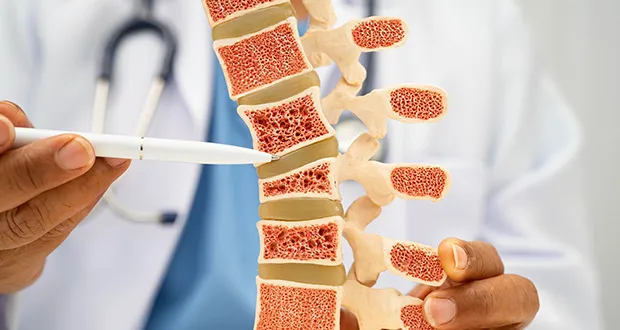
Across 26-year period researchers noted a reduction of around two-thirds in the prevalence of osteoporosis among people presenting for their first scan
The last quarter-of-a-century has seen a significant decline in levels of osteoporosis among people in the midwest undergoing their first DEXA bone-density scan.
Researchers examining more than 66,000 patients in Limerick, Clare and Tipperary found that the proportion with osteoporosis at the hip fell from approximately 19 per cent in 1998 to seven per cent in 2024. At the lumbar spine, prevalence fell even more markedly, from approximately 30 per cent to eight per cent.
The findings raise the possibility that future generations of older people may face a substantially different burden of bone disease than previously expected.
The study was led by teams at St Camillus’ Hospital and University Hospital Limerick.
“This study has significant implications for our understanding of current ageing patterns, and challenges our current understanding of the diseases that will afflict us in later life,” said study author Prof Declan Lyons.
“Osteoporosis and fractures of the hips and spine may not be as big a part of the future mix as we thought. The paper also reminds us that while growing old is inevitable, ageing isn’t, and can be managed.
“The findings also raise a broader question about projections of ill-health in an ageing population. Forecasts based primarily on historical rates of age-related disease can assume that a person reaching 70, 80 or 90 in the future will have broadly the same underlying risk as somebody of that age in previous generations. This data suggests that assumption may not always hold true.”
After adjusting for both age and sex, each successive calendar year was associated with a four per cent reduction in the odds of osteoporosis at the hip and a 4.9 per cent reduction at the lumbar spine.
Across the study period, this amounted to an approximately two-thirds reduction in the prevalence of osteoporosis among people presenting for their first scan.
“The results do not mean osteoporosis has ceased to be a significant health problem, nor do they show that fractures will necessarily decline at the same rate,” cautioned Dr Azrin Muslim, research fellow at St Camillus Hospital.
“Hip-fracture risk, for example, is influenced not only by bone strength, but also by falls and other clinical factors.
“While further research will be needed to establish whether similar trends are occurring nationally and internationally – and whether improvements in bone density translate into lower fracture rates – the scale and duration of the Irish dataset provide evidence that the health profile associated with older age may itself be changing.”
By recording only the first DEXA scan for each individual, researchers reduced the potential distortion that could arise from repeatedly scanning patients already receiving osteoporosis treatment or undergoing clinical surveillance.
The researchers say a number of developments over recent decades could potentially be relevant to changing bone health, including greater awareness of osteoporosis, vitamin D supplementation and increased emphasis on fracture prevention.
However, the observational study was designed to establish the long-term trend rather than determine its cause.