WWildlife Read More Bowmouth guitarfish seen in S’pore waters after 30 yearsSeptember 14, 2026 SINGAPORE – The bowmouth guitarfish – a pet cause for billionaire Jeff Bezos and Hollywood actor Leonardo DiCaprio…
SScience Read More IBM and NASA’s New Moon AI Is Really a Data Infrastructure ProjectSeptember 14, 2026 IBM and NASA have released an open AI model that can help scientists identify lunar ice, map craters…
SSpace Read More Sophia Space and SLI agree on $300 million financing for 10-satellite edge-computing constellationSeptember 14, 2026 PARIS – Sophia Space and aerospace leasing specialist SLI announced a $300 million financing framework Sept. 14 for…
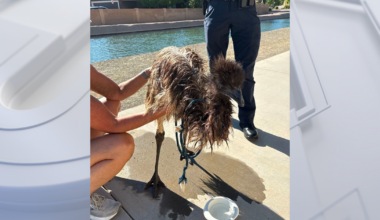
WWildlife Read More Soaking wet emu rescued from Gilbert canalSeptember 14, 2026 article A young emu dries off on a canal trail near Lindsay Road and Stonebridge Drive in Gilbert…
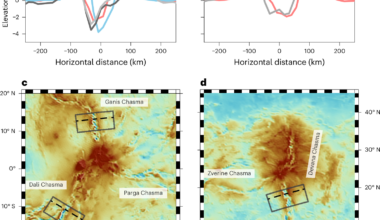
SScience Read More Venus has no oceans or water rain and far less surface erosion than Earth, so its rift valleys preserve clues our planet quickly erases. Simulations show that broad, steep shoulders belong to young, rapidly widening rifts—and Ganis, Dali and Devana Chasmata still carry that signature, suggesting parts of Venus may be tearing open today.September 14, 2026 Venus has no surface oceans and no rainwater carving channels through its rocks. Its sulphuric-acid clouds do contain…
SSpace Read More SPCX CFO Bret Johnsen Says China Has an ‘Amazing Space Program’ — But It’s ‘Not on a Starship Level’September 14, 2026 Benzinga and Yahoo Finance LLC may earn commission or revenue on some items through the links below. Space…
WWildlife Read More ASIA WATCH: With no pandas at home, Japanese fans visit Xiang Xiang in ChinaSeptember 14, 2026 YA’AN, China – With Japan now without pandas for the first time in nearly half a century, devoted…
SScience Read More Back-to-back Arctic storms can double sea ice lossSeptember 14, 2026 Weather can dramatically reshape the Arctic’s frozen surface, and some storms appear to be far more destructive than…
SSpace Read More Physicists can’t agree on how the Universe worksSeptember 14, 2026 The largest global survey of physicists ever conducted has revealed just how unsettled some of the biggest questions…
SScience Read More The universe’s first stars probably ignited 100–250 million years after the Big Bang and died within a few million years. Their ancient light can still reach Earth, but individual stars are so distant and rare that none has been conclusively identified—although cosmic gravitational lenses may finally bring one within JWST’s view.September 14, 2026 The universe had to make stars before it could make almost everything familiar. Carbon, oxygen, silicon and iron…
EEnvironment Read More Global warming is breaking a 400-year climate link between two oceansSeptember 14, 2026 A new study suggests that the climate connection between the tropical Indian and Pacific oceans can be disrupted…
SSpace Read More Space Exploration Technologies Corp. (SPCX)’s $100 Billion Starbase Bet Could Transform Its Growth OutlookSeptember 14, 2026 Space Exploration Technologies Corp. (NASDAQ:SPCX)’s planned $100 billion Starbase Louisiana complex could play a critical role in accelerating…