
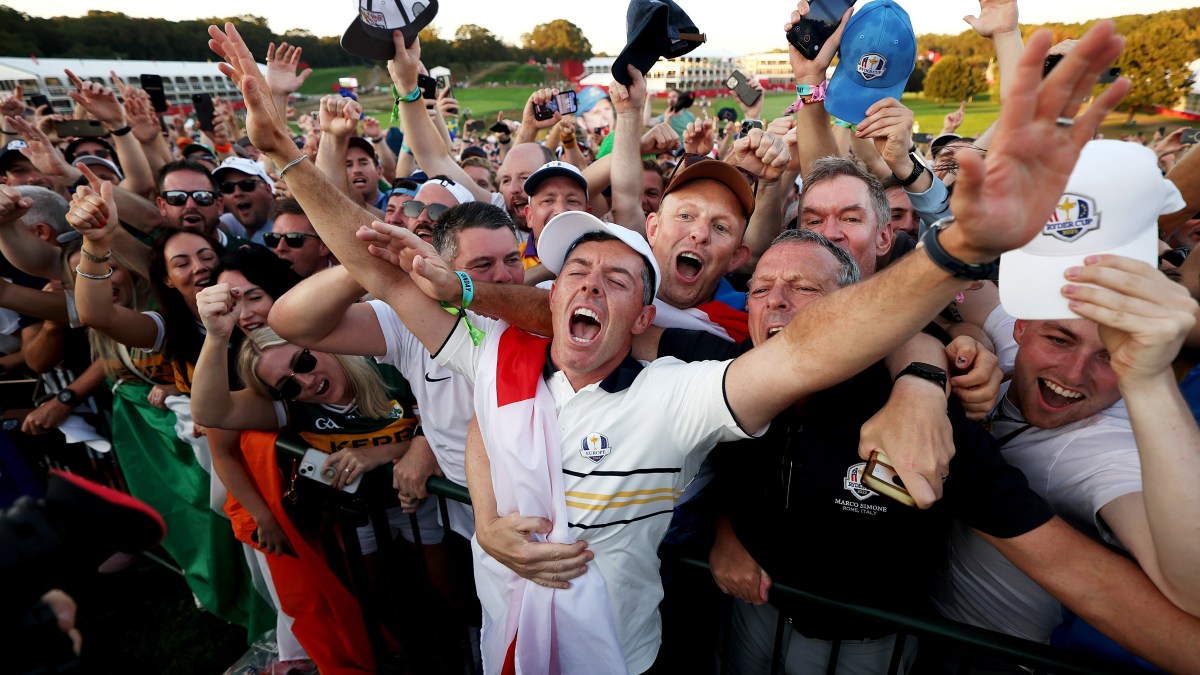
To the horror and dismay of many Britons, the executive chairman of the luxury gym Equinox, Harvey Spevak, has this week said that golf is an inadequate form of exercise.
“You’re hitting a little white ball around a golf course — using a golf cart and drinking at the ninth hole,” Spevak told The Wall Street Journal. “It’s fun, it’s recreation. But I don’t think it’s exercise.”
For fanatics, it was a painful blow. Does golf count? What about other maligned “light” sports?
NHS England’s activity guidelines say proper exercise is 150 minutes each week of moderate intensity activity or 75 minutes of vigorous intensity activity — or some combination of the two.
But what is vigorous? The 2021 Health Survey for England said climbing, hockey, martial arts, running and squash all counted as vigorous activity.
Aerobics, badminton, boxing, cycling, football, hill-walking, skiing, swimming, tennis and a workout in the gym also pass muster if they made you “out of breath or sweaty”.

Golf has become increasingly popular among young people since the Covid pandemic
KARL HENDON/GETTY IMAGES
• Pioneer climbers have a new Everest: Poundland
A fit person may not break a sweat in a round of golf. Dr Alan Ruddock, associate professor of sport physiology at Sheffield Hallam University, said: “Somebody might be starting to play golf for the very first time. It is quite technically demanding when you’re first starting out.”
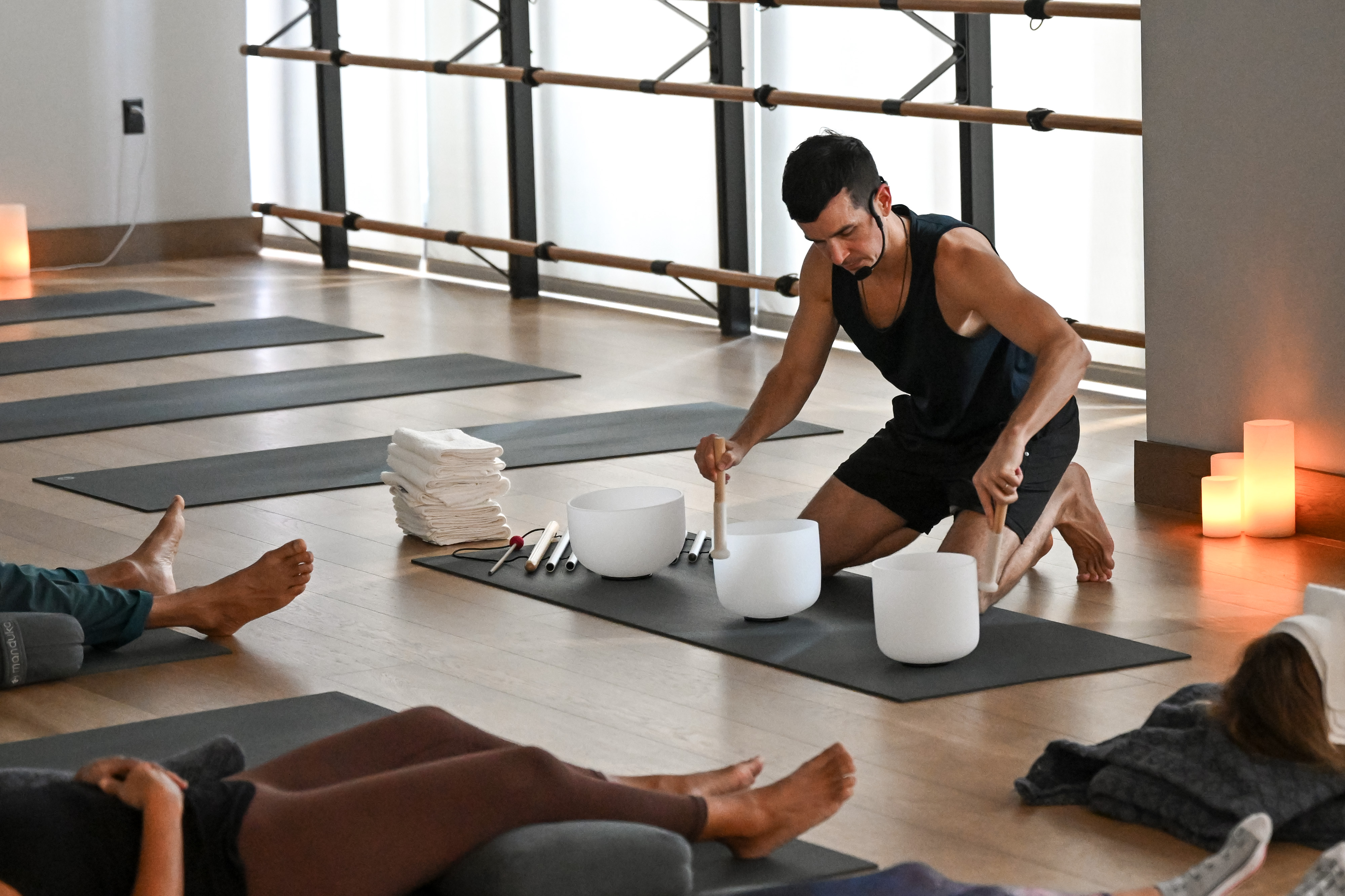
Equinox offers luxury fitness classes such as sonic meditation
BRYAN BEDDER/GETTY IMAGES
Although Mark Twain supposedly described golf as a “good walk spoiled”, research conducted in 2023 suggested that golf, as a means of exercise, is more beneficial than walking. Finnish research in the journal BMJ Open Sport & Exercise Medicine concluded that an 18-hole round of golf had a slightly more beneficial effect on the lowering of blood pressure and levels of blood sugar and cholesterol than activities such as an hour of brisk walking or Nordic walking.
An 18-hole round, which can take between three and five hours, burns between 1,200 and 1,500 calories, according to several golf websites, if a player walks the entire distance and carries their clubs. In an average round a player would typically cover a distance of four to five miles, with resistance.
While most American players opt to use motorised buggies, this is a little more uncommon in the UK.
A long battle for darts
Darts has had a long, uphill battle to be recognised as a sport — let alone an exercise — not helped by its association with pubs. In 2005, Sport England officially recognised it, swiftly followed by all four UK nations.
The England Darts Organisation has taken pains to prove its physical side. In 2006, they attached a pedometer, which measures distance travelled, to then World Champion Martin Adams.
Adams told The Guardian: “I did 33,000 paces over a nine-day tournament. That’s 25 kilometres. Footballers run around a field for 90 minutes!
“We work anything up to 13 or 14 hours a day. Calf muscles so tight you could play the drums on them. Got to have stamina.”
Tommy Thompson, chairman of the England Darts Organisation, said this “confirmed the physical aspects” of darts competitions.
The sport has yet to secure its place in the Olympics, but Bobby George, former professional darts player, is pushing for it to be included in 2032.
For Ruddock, however, darts doesn’t have the physical exertion required to be classed as exercise. “There is clearly no disruption from homeostasis, even though there is… clear activity of the shoulder,” he said.
Tai Chi
Tai Chi, a series of slow meditative movements, is described as “moderate” exercise by the NHS.
Barry McGinlay, Tai Chi world champion, said: “By integrating slow movement, breath and focused attention, [Tai Chi] supports physical health while also improving mental clarity, emotional regulation and long-term wellbeing.
“While Tai Chi can be practised as a sport, it is deeply rooted in Chinese culture, medicine and philosophy, and it also retains its original martial and combat foundations,” McGinlay added. “I stand in both camps: Tai Chi can be practised as a sport, yet it also exists beyond sport, and my view has shifted through years of research and lived experience.”
Bowls
The British lawn sport bowls does not count towards NHS activity goals — it has been damned with faint praise as “light” exercise. But it might shine as an activity to improve balance, coordination and strength.
Peter Thompson, chief executive of the English Indoor Bowling Association, said: “We’d describe bowls as target or precision sport that requires skill and technique[s] such as physical coordination, balance and fine motor control.”
• Bowls England seeks younger players to revitalise ailing sport
Lisa Graham, managing director of the Bowls Development Alliance, said that bowls was “clearly a sport” that involves “physical skill, balance and coordination”.
“The delivery involves bending and lunging while maintaining a steady body position, followed by a smooth, accurate release. Small changes in grip, posture or timing can make a noticeable difference to where the bowl finishes,” she said.
Graham said that bowls require “strong hand-eye coordination” as players continuously have to judge line and weight, consider the bias of the bowl and the changing conditions of the green. During a full game, players can cover roughly two to three miles walking back and forth between ends.
Graham said: “Being able to repeat this accurately over 21 ends requires physical discipline and concentration, particularly as fatigue sets in later in a game.”
For Ruddock, whether bowls is a sport is relative. “The issue with the physical activity guidelines is that they are predominantly physiological, so it doesn’t necessarily take into account the strength-based or what we would call biomechanical based aspects of an activity. It also doesn’t take into account the relative intensity.” By way of example, Ruddock’s grandmother played bowls for years, and he said: “If I was to play bowls with her it would be nothing to me, it probably even wouldn’t register as light activity, but for [her] it would be light to moderate [exercise].”