
AI is revolutionising industries the world over — but could it make you fitter, too?
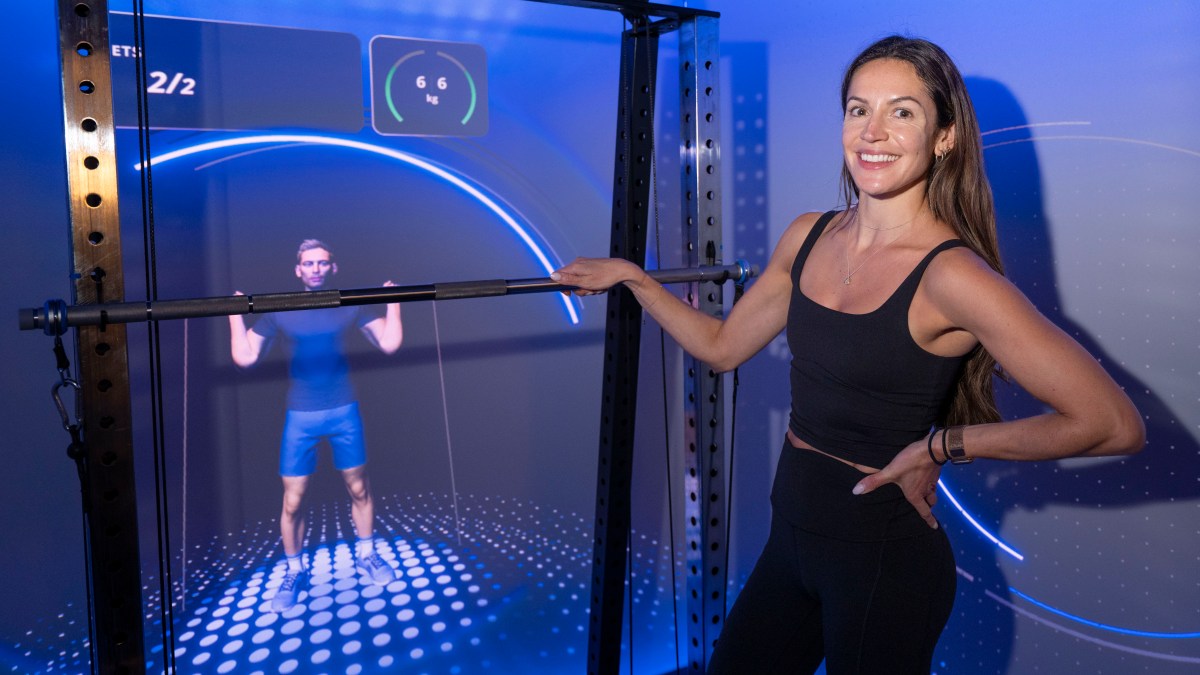
Here I am, on a rainy Tuesday afternoon at a south London gym, among the first in the UK to test CoachCube, the world’s first AI-powered personal training cube.
As AI has crept into healthcare and nutrition, it was only a matter of time before it entered the gym.
Personal training is, as the name suggests, tailored to the individual and delivered one-to-one. Can the AI “avatar” in front of me really do that, at a fraction of the price — £30 for an hour — of a real, living, breathing personal trainer?
Will Dean, the founder of CoachCube, says: “Personal training works, but it’s a luxury reserved for the few that can afford it. We’re introducing a world-first approach to personalised strength training.”
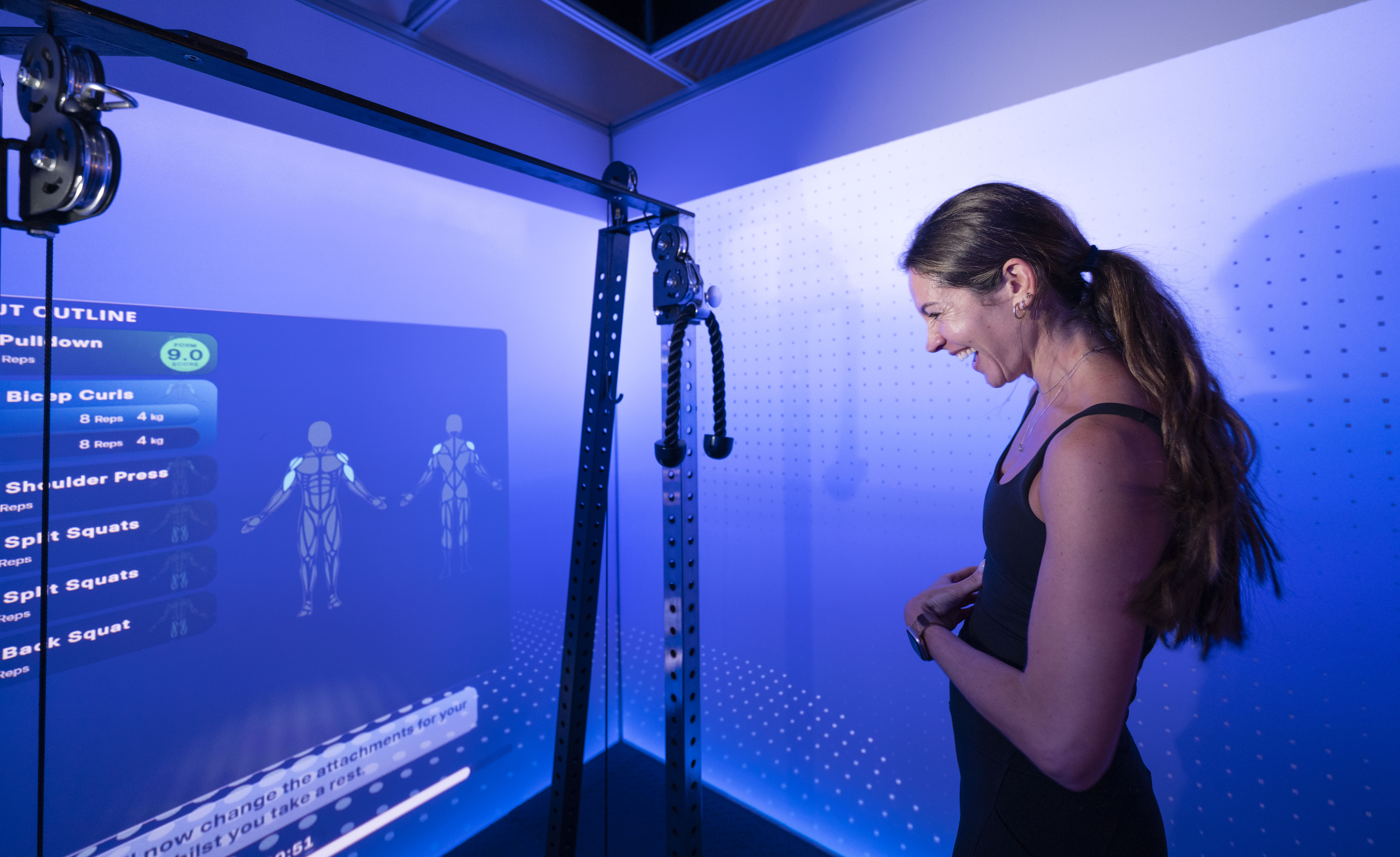
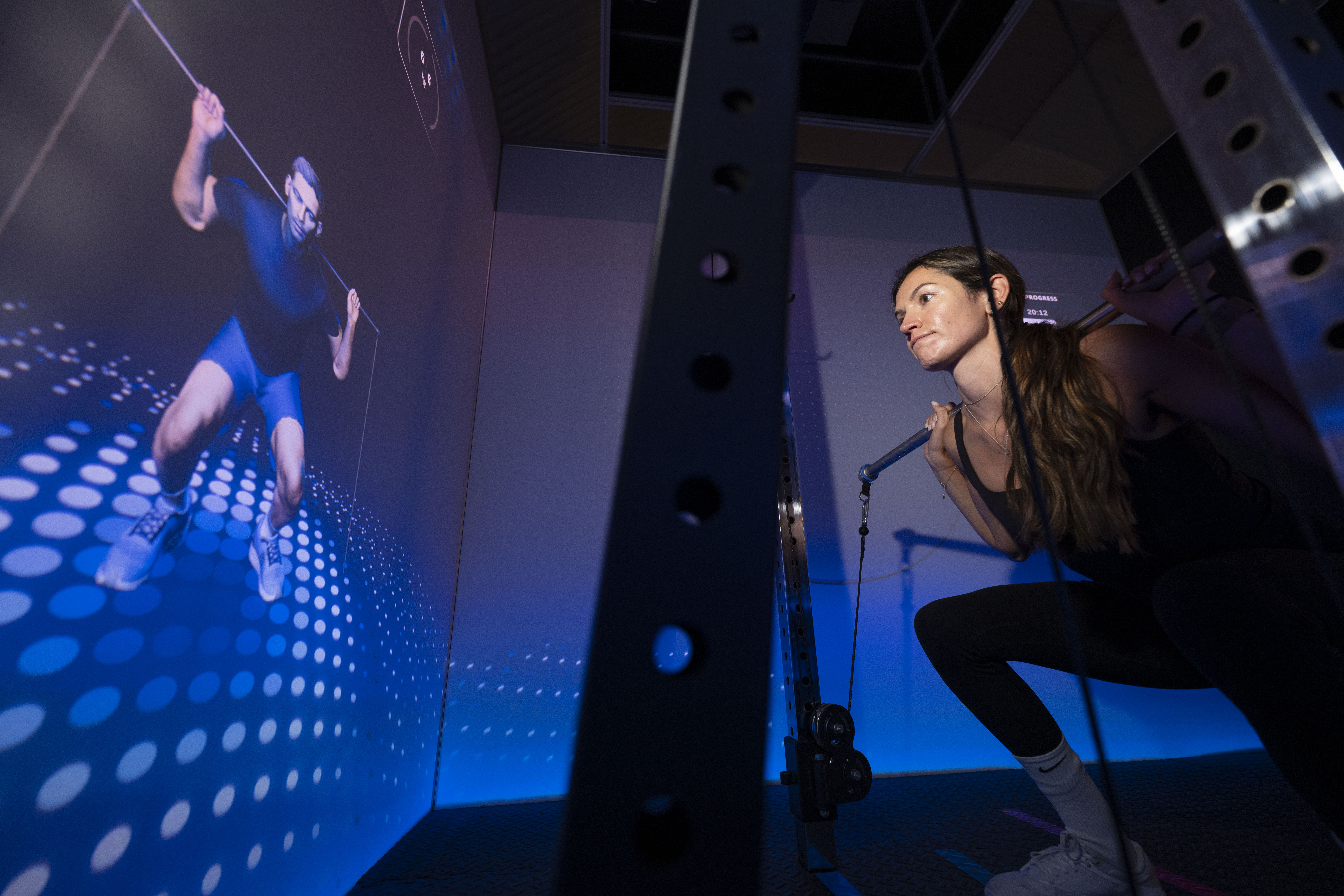
I step into the cube, where I’m surrounded by three projection screens. At the front of the cube sits a large squat rack and cable machine hybrid, with various attachments. There are more than 150 different exercises programmed into the cube and resistance is generated digitally via a magnetic motor capable of producing up to 200kg.
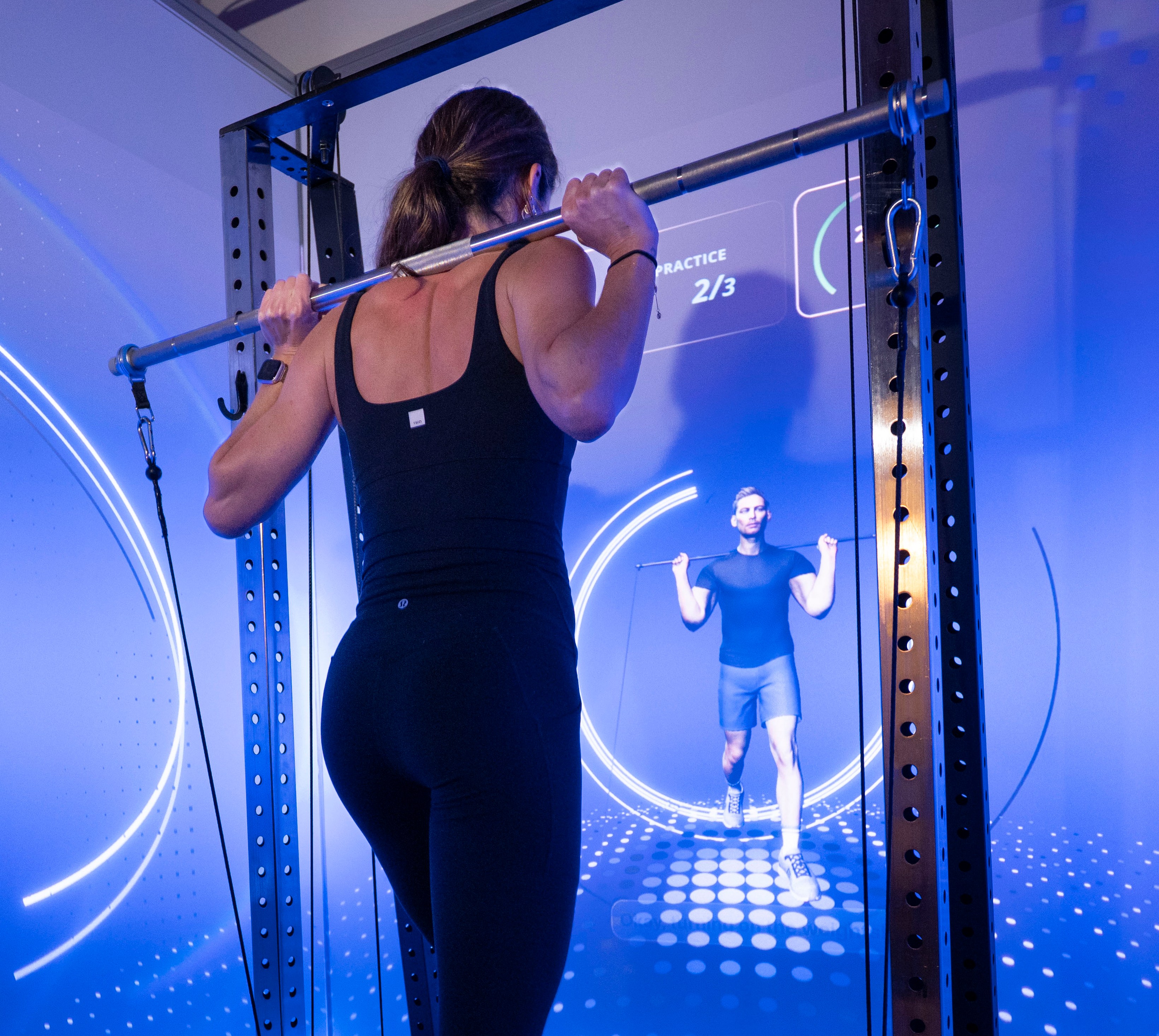
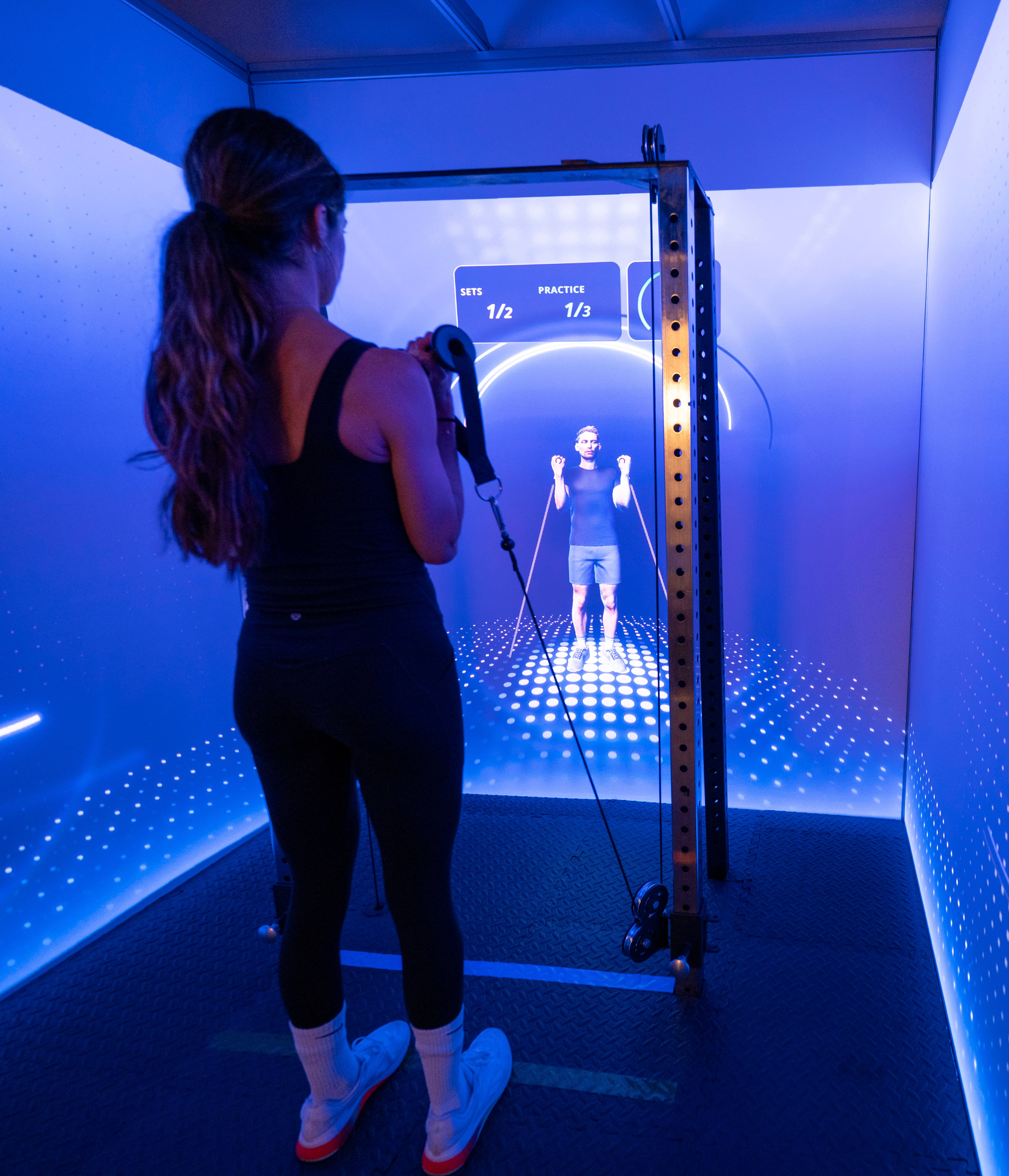
Dean explains that CoachCube is unlocked by a phone. Users log in at a pre-booked time and are met by their avatar, which demonstrates exercises. Workouts are based on fitness scores as well as a readiness score: a combination of sleep, exercise done the day before and mood. Over time, CoachCube gets to know you, just like a personal trainer.
“It learns your personality, it asks how you’re feeling, picks up on your speech; whether you seem irritable or grumpy or happy,” Dean says.

• Can an AI coach really be a better personal trainer than a human?
I’m given four exercises and my avatar guides me through each one. Workouts get harder over time, using progressive overload, the key principle behind building strength. They’re also tailored to your specific goals.
At first, weight training in the cube feels unusual, particularly during back squats, where resistance comes from a lightweight barbell and pulley system rather than stacked plates, but very quickly, the movement feels natural.
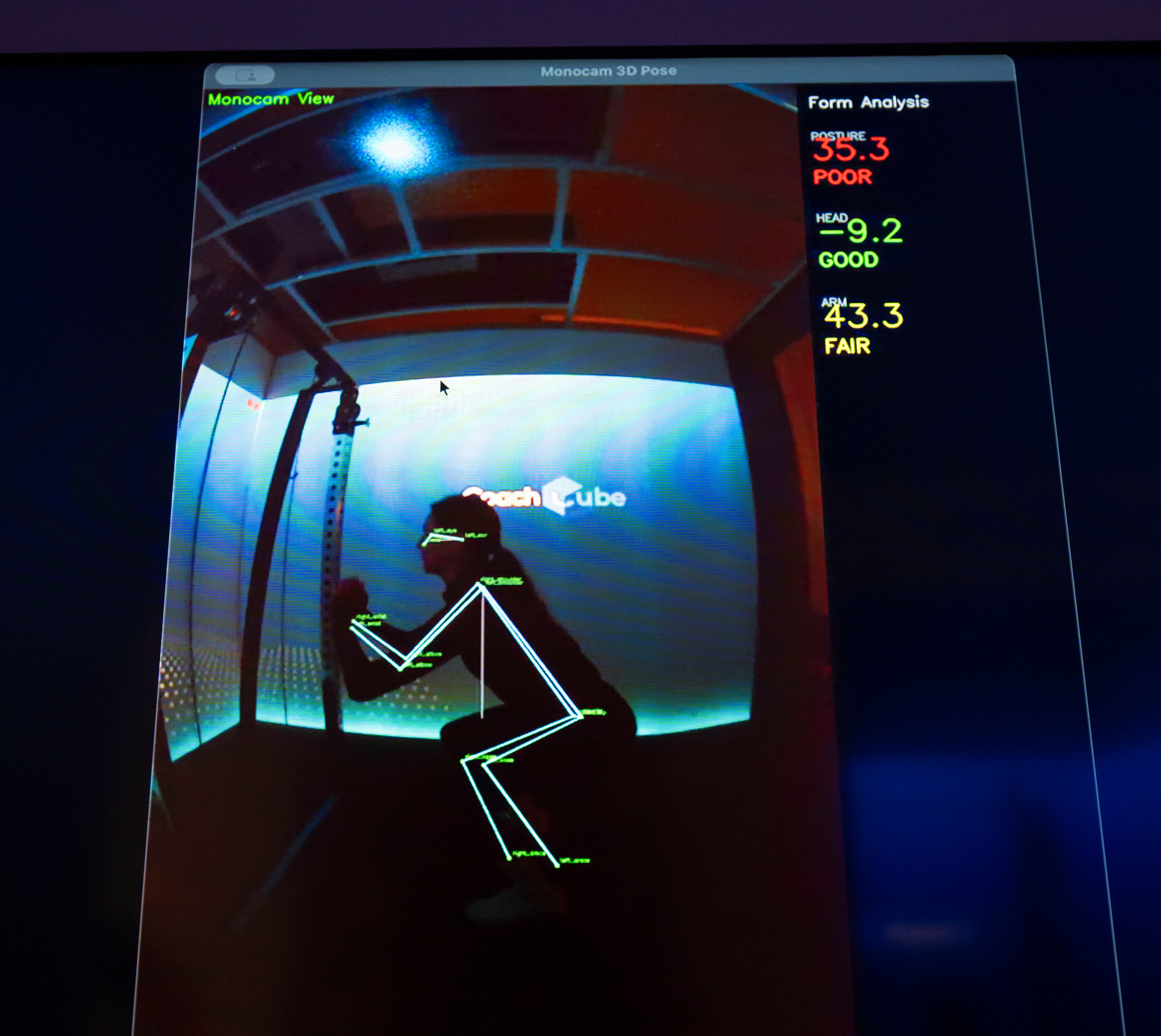
As for form, this is where it gets interesting. There’s no cheating in the cube. Cameras track and analyse your movement, prompting necessary corrections. After all, poor form can leave you sore and injured. “Because the resistance is digital, it stops instantly if you do something truly dangerous,” Dean says.
After each move, I’m given a form score, which I’m continually trying to beat. I don’t think I have ever been so focused on improving my technique, which is no bad thing.
“At a time when AI can drive cars, it makes little sense that personal trainers are paid to watch people do push-ups,” says Dean, who founded Tough Mudder.
In my meagre efforts to find something wrong with CoachCube, I ask: “But what about if you turn up to a session nursing a sore knee? Or tight hamstrings?” Turns out, CoachCube also responds to on-the-day constraints, adjusting workouts to suit your needs. It literally designs workouts there and then for your “off” days, detecting and compensating for hidden issues you might not even notice.
• Can ChatGPT get you fit? Our expert put it to the test
As a personal trainer myself, I feel confident walking into the weights room at the gym and training. I know how to structure a session and push myself so that I see results. But not everyone does. As a friend once said to me: “I get nervous doing things wrong and looking stupid. At least with a PT [personal trainer], I know I’m doing it right.”
What CoachCube, and undoubtedly future AI training iterations, don’t offer, is that supportive, look-you-in-the-eyes, human reassurance. Yes, they can try to motivate you and pick up on your mood, but can they read the room like a real person can? And let’s be honest, AI isn’t going to have a heart to heart with you about external personal issues, which a real person will. Hairdresser chat, as they call it.
Will Duru, the founder of the training app 12reps, which blends AI programming with human coaching, believes the future lies somewhere in between.
He says: “A lot of people fail with their training regime because they struggle to simply show up. AI can build excellent training programmes, but it doesn’t hold you accountable. People also may not feel confident or supported and that has nothing to do with whether the workout was incorrect.
“A machine can’t laugh with you or push you when you need it. That’s the human bit. One-to-one will always win over apps and AI.”
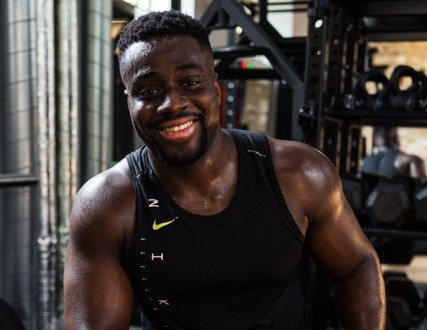
Dean tells me that CoachCube isn’t designed to replace PTs entirely, “just the bad ones”.
• Lost weight lately? 21 rules to keep it off — by the experts
The first full CoachCube studio opens in March, and more will follow in London and internationally, including New York next year.
“You’d visit CoachCube and it would be like logging into your Gmail,” Dean says. “It would continue to train you as normal.”
I’d need to see it leave the confines of major cities before I can fully embrace AI’s role in personal training. For now, at least, I believe the human trainer still has a huge role that AI cannot ever fully replicate.
Plus, there’s still a nagging thought that every move, rep, bit of data I tell a machine, is being logged somewhere. But, there’s no denying tech is getting better, rapidly. As I step out of the cube, it feels as if AI is here to stay on the gym floor.