
The run/walk method, pioneered in the 1970s by the late Jeff Galloway, is an innovative strategy in the sport that emphasizes time on feet rather than continuous running. The method can help all runners stay healthy and build fitness, but it’s especially useful for beginners in the sport.
For some, there’s an intimidation factor that comes along with jumping into continuous running, explains Michelle Baxter, Minnesota-based RRCA- and V.02-certified run coach. Run/walking is a perfect stepping stone because it gives athletes “the ability to transition into continuous running,” she says. Because the run/walk structure is built on controlled effort, the method can also support more advanced training as fitness grows, introducing run/walkers to threshold and VO2 max training in pursuit of a PR.
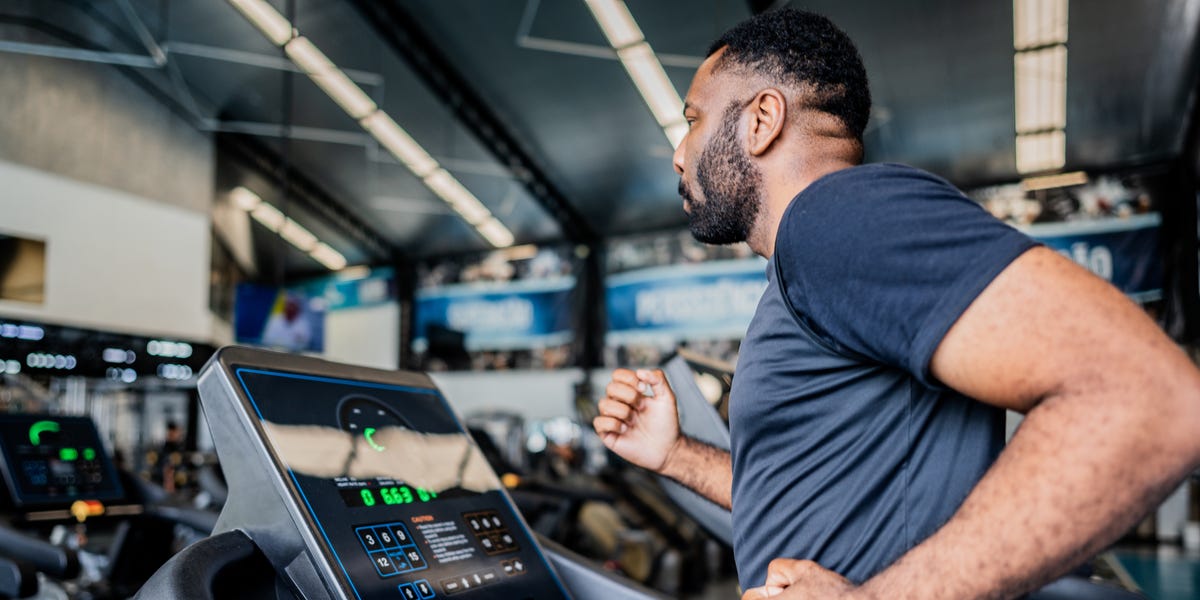
A tool that can make run/walking even more effective, especially for athletes ready to get faster? The treadmill. Pairing structured walk breaks with the controlled environment of indoor running creates a low-pressure way to learn pacing and build confidence at higher effort levels.
Below, you’ll find out exactly how the combination of the run/walk method and the treadmill can help you get faster, along with three workouts to help you safely layer in speed.
Related StoriesRun/Walk Workouts Designed for the Treadmill
Beginner run/walkers should already have at least a four- or five-week aerobic base built before adding these three workouts to their training, Baxter says. More advanced athletes may only need two or three weeks to build up, but all of the workouts include higher-effort running so you should be very comfortable with your easy run/walk pace before trying to pick it up.
Unless specified in the workout, for the easy run/walk sections (including the warmup and cooldown), Baxter wants athletes to use whatever run/walk combination they regularly use for easy-effort running. For example, if you typically run for 30 seconds and walk for 30 seconds on easy days, go for it. If 15-second runs and 45-second walks are better for you, that’s your plan! However, you should be able to sustain a faster running speed for at least three minutes before attempting these workouts.
The exercises below describe effort levels from 1 to 10 on a rate of perceived exertion (RPE) scale, where 1 is a slow stroll and 10 is an all-out effort.
The Hill Climber
Why it works: “Hills are strength training in disguise,” Baxter says. By doing short, 30-second high-incline surges, you practice quick leg turnover early in the workout. The harder running further into the effort targets your fast-twitch muscles to simulate a late-race push. This workout is great to include a few weeks into a run/walk half marathon training plan, for example, where you’ve got a few higher-intensity workouts under your belt and want to kick it up a notch with some hills.
How to do it: You’ll start with a 15-minute easy warmup, then transition into four short, but intense intervals at an incline. Then, you’ll move to a more traditional set of speed intervals before an easy cooldown.
Interval Sandwich
Why it works: Your threshold pace, a comfortably-hard clip, is a key effort level to practice because it helps boost your speed endurance or your ability to sustain fast paces for more time.
This workout focuses on the high end of your aerobic energy system with just a taste of anaerobic speedwork. Pushing the upper boundaries of your aerobic system with workouts like this one is the ticket to increasing your lactate threshold, and ultimately, running faster for longer.
How to do it: You’ll start with a 10-minute easy warmup. Then, lock in for a couple intervals at threshold pace, a few more even faster, then back off for more threshold work. You’ll finish with a cooldown.
Sprint Ladder
Why it works: This speed workout focuses on your anaerobic energy system and fast-twitch muscles. Each recovery interval is a little bit longer, giving your heart rate a chance to slow down and gear up for the next rep.
This workout pushes run/walkers into the VO2 max heart rate range. The structure itself is unique, and that’s by design. “You really have to make sure you save enough for the end,” Baxter says. It’s a way to use the treadmill to help runners lock into their designated paces.
How to do it: After an easy warmup, you’ll begin the workout with a short interval at close to your maximum effort. Don’t go out too fast though, because then you’ll slow down for longer, slower intervals in the middle, before ramping back up to your fast pace again at the end.
Related StoriesWhy the Treadmill Is a Helpful Tool
For run/walkers unfamiliar with new effort levels or those returning from injury, the treadmill can serve as a helpful training tool when attempting higher-level workouts for the first time.
Because pace is preset, it removes some of the guesswork. “Some athletes just push too hard in a workout,” Baxter says. “So the treadmill controlling the speed for them is nice.” Instead of constantly checking your watch, runners can use a “set it and forget it” mindset on the treadmill, which makes it easier to feel what a true threshold or VO2 max effort should feel like. Then, runners can begin to internalize how their breathing changes, how quickly their feet are turning over without external variables like weather, hills, or traffic interfering.
The treadmill can also provide a safer and more practical training environment for many athletes. Baxter points to run/walkers training through harsh winters, extreme heat, or those who don’t feel comfortable running after work when it’s dark out. “There are so many situations where the treadmill can be a valuable tool,” Baxter says.
Ultimately, Baxter hopes athletes move beyond outdated stereotypes—both of run/walking and of the treadmill. Neither tool is a sign of weakness, but an opportunity to grow in the sport.
Save All 3 WorkoutsRelated Stories
Matt Rudisill is an Associate Service Editor with the Hearst Enthusiast Group. A Nittany Lion through-and-through, Matt graduated from PSU in 2022 with a degree in journalism and worked in communications for the university’s athletic department for the past three years as the main contact and photographer for its nationally-ranked cross country and track & field teams. Matt was also heavily involved in communications efforts for the Penn State football team’s 2024 College Football Playoff run as well as the Nittany Lion men’s basketball team’s 2023 NCAA Tournament appearance. In his role with Hearst’s Enthusiast Group, Matt contributes to both Runner’s World and Bicycling magazines, creating service content to benefit runners and cyclists of all ages. When he’s not out jogging, Matt can be found tweeting bad takes about the Phillies or watching movies.