
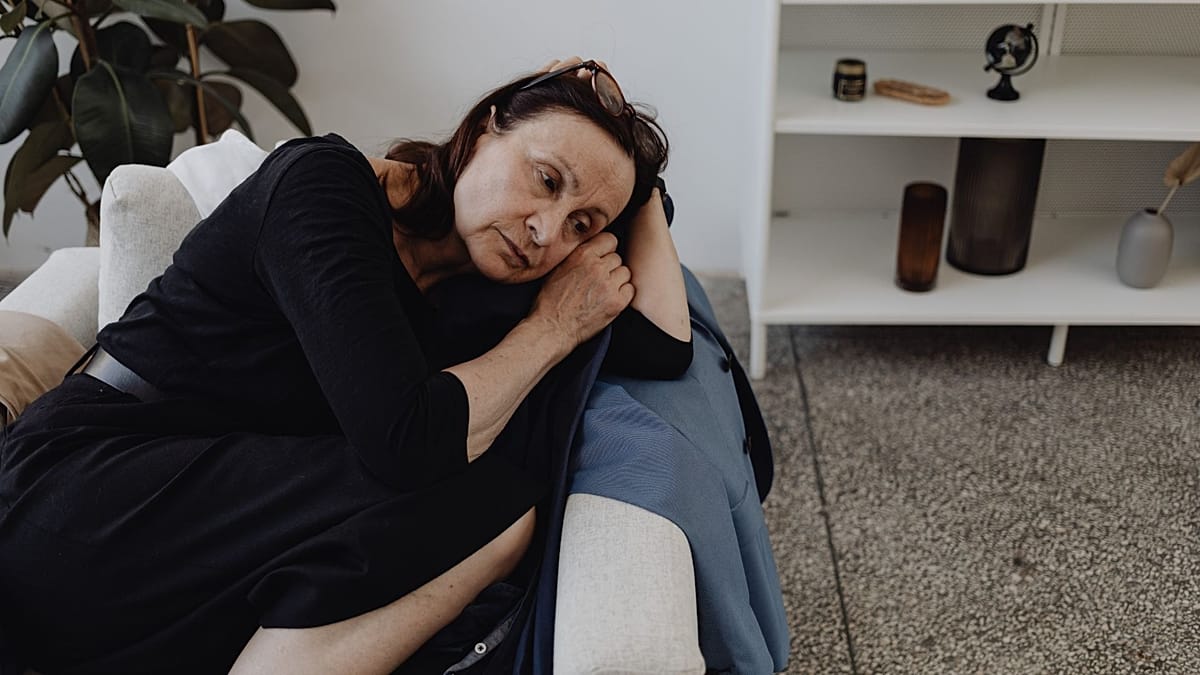
Menopause is an almost universal experience for women, but across Europe, its mental health risks remain poorly understood, unevenly treated, and rarely addressed in policy.

ADVERTISEMENT
ADVERTISEMENT
In the United Kingdom, a recent survey carried out by YouGov and commissioned by the Royal College of Psychiatrists found that only 28 percent of women knew menopause could trigger a new mental illness.
According to the RCPsych’s report, this knowledge gap means countless women are missing out on crucial care.
Part of the confusion stems from the fact that many symptoms begin years before menopause itself. The transitional phase known as perimenopause can start in a woman’s 40s – and sometimes earlier – when hormone levels begin to fluctuate unpredictably.
During this period, shifts in oestrogen and progesterone can trigger not only physical symptoms such as hot flushes and sleep disruption, but also significant changes in mood and mental health.
Menopause itself marks the end of a woman’s reproductive years and is defined as 12 consecutive months without a menstrual period. According to the World Health Organization (WHO), it typically occurs between the ages of 45 and 55.
A separate study by University College London, published in the Post Reproductive Health journal, found that 88 percent of Black women received no menopause education at school, while over half (58 percent) felt completely uninformed before the age of 40.
A widespread but under-recognised burden
Research suggests the scale of the issue is significant. A large European study found that 55 percent of women report psychological symptoms such as mood swings, anxiety or depression during menopause.
In Sweden, a 2021 national health report found 60 percent of women experience moderate or severe menopausal symptoms. In Germany, roughly one in three menopausal women reports depressive symptoms.
Other research indicates perimenopause can raise the risk of first-time major depression by around 30 percent and significantly increase the likelihood of manic episodes among women vulnerable to bipolar disorder.
Perhaps most concerningly, around 1 in 6 (16.6%) women are experiencing suicidal thoughts during perimenopause and menopause that are not being identified or treated effectively, according to a 2026 clinical research study published by Liverpool John Moores University and Newson Clinic.
Pooja Saini, Professor in Suicide and Self-Harm Prevention at Liverpool John Moores University, said: “Too many women are being assessed with tools that do not fully capture the hormonal drivers of suicidal thoughts, leaving gaps in care that are both avoidable and dangerous.”
When menopause symptoms are dismissed
For Sonja Rincón, founder and CEO of Menotracker, an AI-powered menopause tracking app, the topic is deeply personal. Looking back as she approaches 44-years-old this month, she says her symptoms began in her mid-thirties, but they were initially misdiagnosed as depression.
“I got diagnosed with depression around the age of 35 or 36,” she told Euronews Health. “I could barely get out of bed. It was really horrible and I had no idea what was happening.”
At the time, she was a single mother working and studying law in the evenings, and was repeatedly told that stress and overwork were to blame. “Everyone was telling me it’s just because you’re a single mum, you’re overworked,” she said. “The answer from my doctor was prescribing medication.”
She spent years cycling through antidepressants that never fully addressed the underlying cause. It was only much later that she discovered the concept of perimenopause. “I had no clue perimenopause existed,” Rincón said. “I only came across the whole topic myself two and a half years ago.”
After researching the condition herself, she realised many of her symptoms aligned with hormonal changes.”In the end, I basically diagnosed myself,” she said. “Then I went to the doctor demanding hormone replacement therapy.”
Life after diagnosis
Receiving the diagnosis was both validating and frustrating. “I was relieved,” she said. “But you don’t get back all of those years you spent struggling.”
The experience also gave her insight into the mental health crisis some women face during this transition. “When you’re dismissed so many times and everybody tells you it’s just depression, but the medication isn’t really working properly, it’s incredibly stressful,” she said. “I can really relate to why suicide rates are higher. I didn’t attempt suicide, but I was definitely close to that point.”
Her experience, combined with seeing a friend miss out on a promotion, made her realise this wasn’t an isolated issue.
A 2025 international study by Astellas Pharma confirmed it: surveying 13,800 workers across six countries, it found that nearly one in 12 women felt discriminated against at work because of menopause. And more than a third reported negative impacts, from reduced productivity (17%) to fear of disclosing symptoms (14%), while only 24% felt comfortable discussing the issue with their manager.
“I realised millions of women are affected,” she said. “That’s when I started thinking about what solution could exist.”
Inspired, she founded Menotracker, an AI-powered app available in around 61 languages. It allows women to track symptoms, cycles, lifestyle data, and treatment responses, generating reports they can share with doctors to improve diagnosis and care.
Bridging the menopause awareness gap
Rincón believes the broader issue ultimately comes down to awareness – both among the public and within medicine itself.
“Women were excluded from clinical trials until 1993. The medical world was largely run by men, and research focused on men. There was an assumption that women were basically just “small men. That thinking still influences many areas today,” she said.
She concluded, “I don’t think the intention was to dismiss women. But now we know women aren’t just small men, and there’s a lot of catching up to do. We need to destigmatise the topic and create a culture where it can be discussed openly. That requires a cultural shift.”
The Royal College of Psychiatrists’ recent report echoes Rincón’s call for action, and urges health services and governments to improve care, introduce mandatory teaching on menopause and mental health in all medical and psychiatric training, and implement workplace policies that address menopause’s impact on mental well-being.