
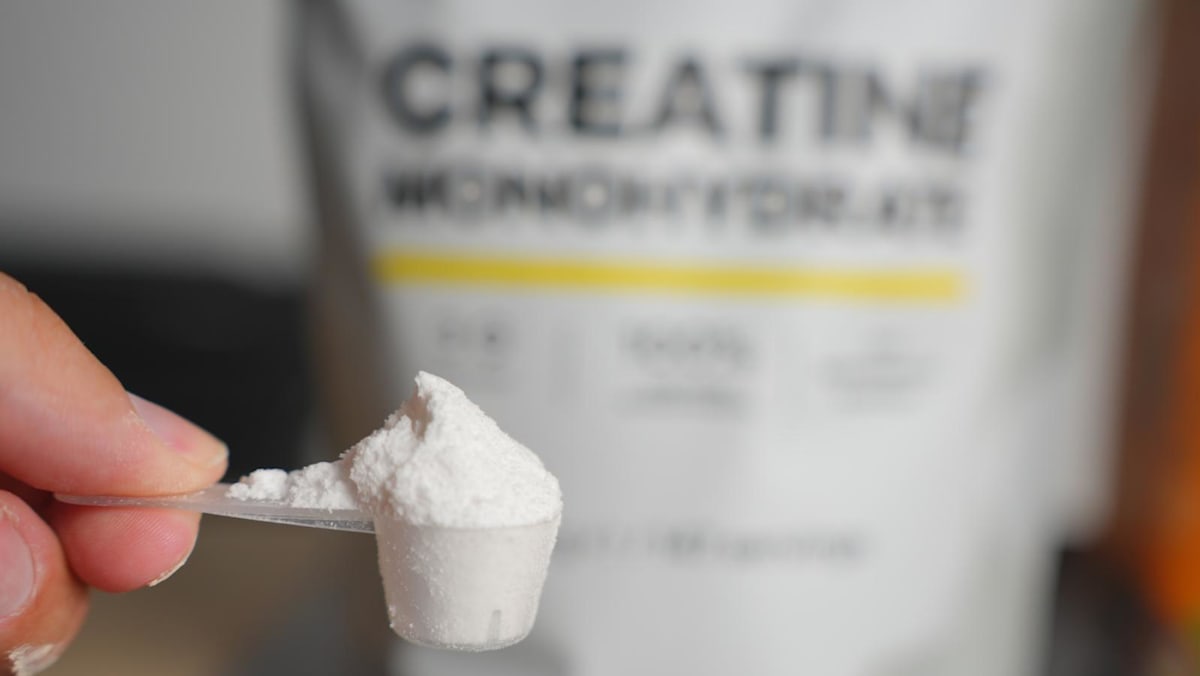
Creatine. It’s been associated with muscle-obsessed gym bros and an opportunistic supplement industry keen to jump on the next health fad. But does it really work the way you’ve read, such as helping you build bigger muscles, delay fatigue during exercise, and improve cognitive performance like better memory? Here’s a look.
WHAT IS CREATINE AND HOW DOES IT WORK?
For starters, creatine is not a steroid or any form of hormones. “Creatine is a naturally occurring compound found in the muscles and brain,” said dietitian Jaclyn Reutens from Aptima Nutrition and Sports Consultants. “It is made up of three amino acids: glycine, arginine and methionine.”
Every cell in your body, especially muscles, uses an energy currency known as adenosine triphosphate (ATP) to contract and create movement. However, your body only stores a tiny amount of ATP, just enough for about two to three seconds of maximum effort.
Once the ATP is used up, it becomes a “dead battery” molecule known as adenosine diphosphate (ADP). It’s also why you feel fatigued and your muscles cannot continue to perform at maximum intensity.
If you’re wondering about glucose at this point, yes, muscles do use it as well but they must first convert glucose into ATP. It’s like paying for a bubble tea with a gold bar instead of a S$10 bill; not so convenient when your body needs the energy now.
But back to creatine. Your muscles store it as phosphocreatine and uses it to charge the “dead” ADP back into a working, energised ATP.
“Creatine acts as a rapid-response energy reserve for the body, said Tung Yee Nei, the lead nutritionist with nutrition app Ventrickle. “It is stored primarily in the muscles to provide on-demand fuel for short, high-intensity bursts of activity, such as sprinting or heavy lifting.”
WHAT ABOUT THE BRAIN?
As much as ATP is associated with muscles, the brain actually uses a huge amount of ATP, according to Assistant Professor Yeo Tianrong, the senior consultant heading National Neuroscience Institute’s Department of Neurology. When your brain is working hard, such as when you’re studying, focusing and multitasking, it burns through ATP quickly.