
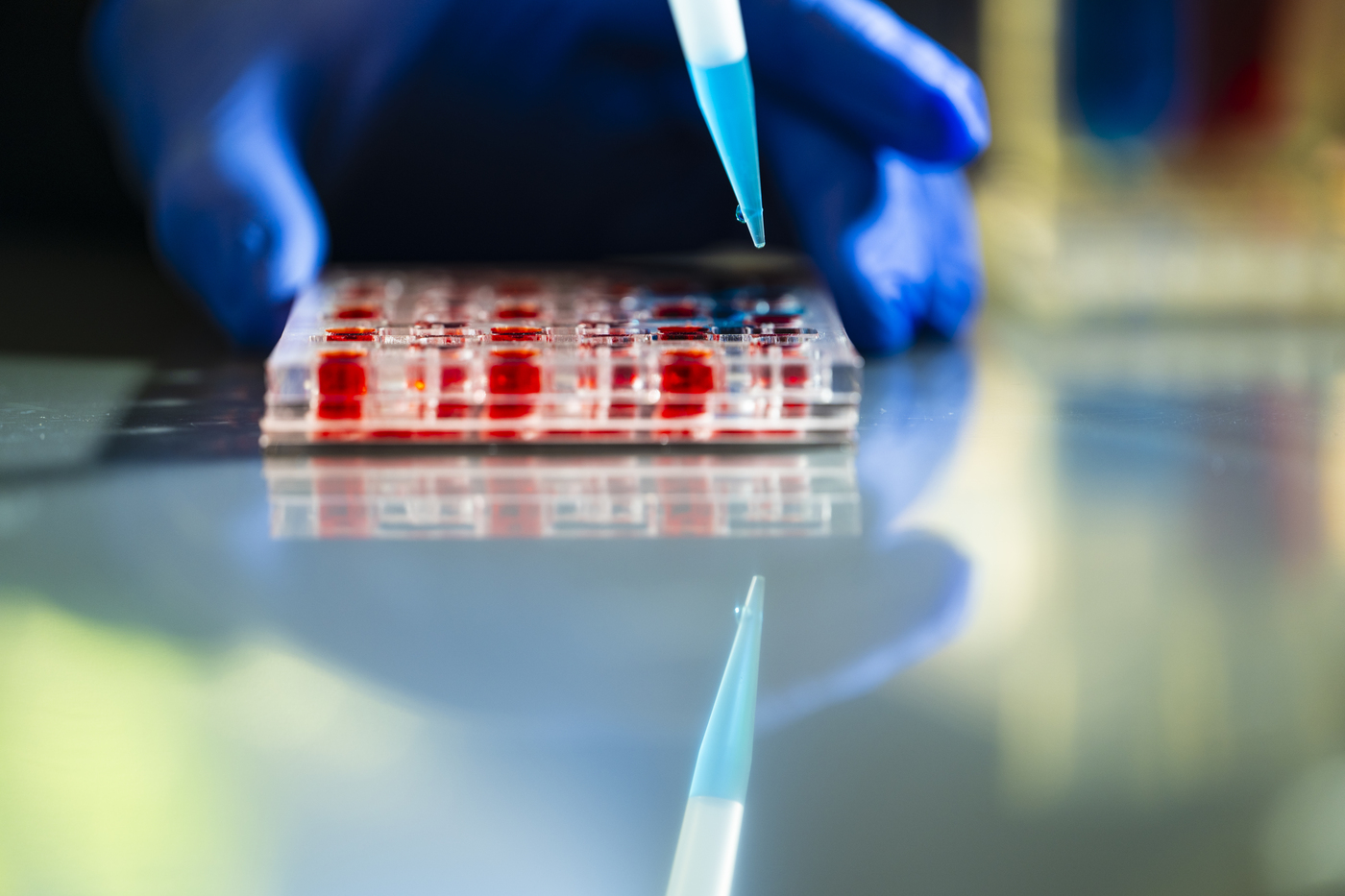
Two Northeastern University researchers want to make life better for people who’ve experienced serious physical trauma, the kind caused by bad car accidents or from injuries sustained during wartime, such procedures are crucial.
That process takes on an added layer of complication when damage occurs to the nervous system. Physicians turn to Schwann cells, which support the nerves and help repair damaged ones. However, obtaining them usually involves removing nerves from another limb, which can lead to a variety of complications, such as loss of sensation where the surgeon removed the nerve.
A new discovery out of Northeastern University might offer relief. Researchers have developed a way to coax stem cells taken from patients’ nasal cavities into becoming Schwann cells, eliminating the need to remove actual Schwann cells and reducing the risk of side effects.
“We’re getting better at keeping people alive” after they’ve sustained major trauma, says Ryan Koppes, associate professor of chemical engineering at Northeastern, part of the team behind the work. This means that there is more demand than ever for strategies that not only save lives, but also help restore motor function in patients, he says.
The process, as the researchers envision physicians might perform it in a clinical setting, would go like this: A patient who needs reconstructive surgery will have their own stem cells removed from their nasal cavity in a simple, outpatient biopsy procedure. Abigail Koppes, who is also an associate professor of chemical engineering at Northeastern and is part of the team behind the work, says that the biopsy location is near the part of the nasal cavity that feels uncomfortable when someone receives a COVID-19 swab.
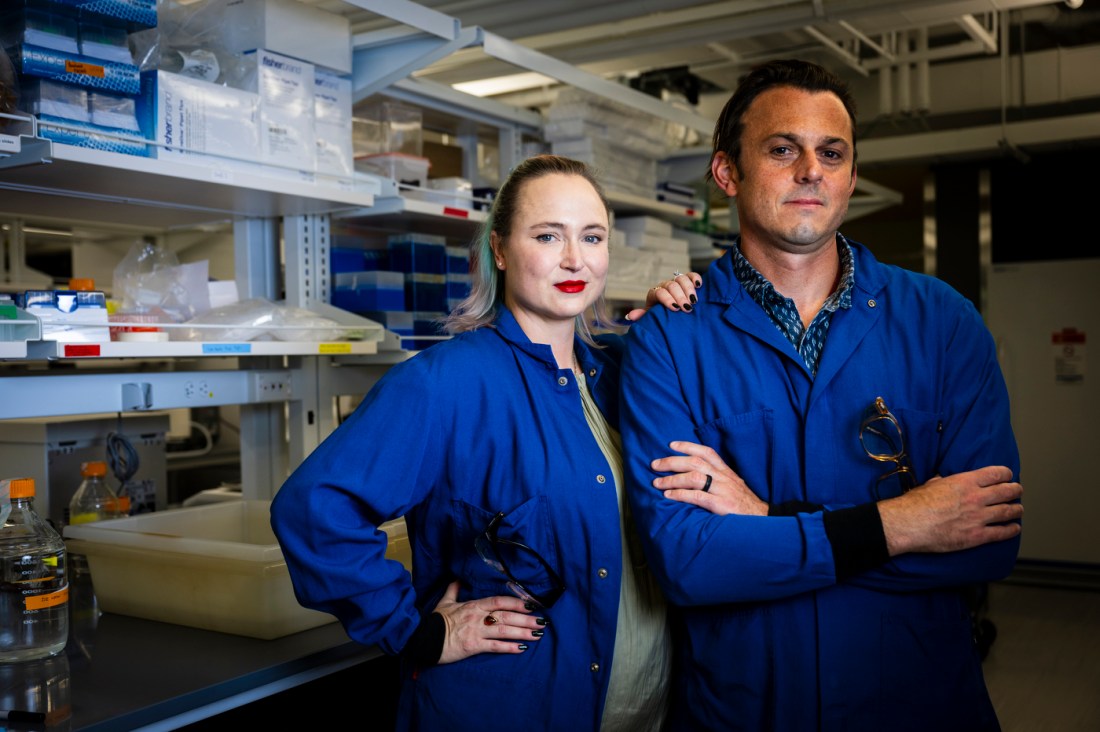 Stem cells are “undifferentiated,” kind of like a blank slate, says Abigail Koppes, left. She and her husband, Ryan Koppes, developed a way to turn them into Schwann cells, necessary for nerve repair. Photo by Alyssa Stone/Northeastern University
Stem cells are kind of like a blank slate, says Abigail Koppes, who is also married to Ryan. This means they can turn into other kinds of cells as the body grows, maintains itself or recovers from an injury.
“We believe that these cells are more readily differentiated into Schwann cells [and are] easier to collect from patients,” says Katelyn Neuman, a former Ph.D. student in Ryan Koppes’ lab who co-led the project.
Once the stem cells are removed, the researchers can culture those cells in a “magic potion,” Abigail Koppes says with a laugh, that encourages the stem cells to transform into Schwann cells. “You can feed them different cues that make them turn into one cell or another. And so by coaxing them down a certain pathway, with proteins and media components, basically we can trick them into becoming” Schwann cells, she says.
Currently, the primary method surgeons employ to repair damaged peripheral nerves — which branch off from the spinal cord to other parts of the body — involves removing a different nerve from the back of the patient’s calf and recovering the limited number of Schwann cells from that nerve, then using those cells in the damaged area, Ryan Koppes says.
In cases of extreme or multi-limb injury, surgeons may simply not have access to enough Schwann cells, he says.
It is possible to use Schwann cells given by a donor, but the number of biomarkers that need to match between patient and donor usually makes this option impractical, Abigail Koppes notes, which makes rejection a concern.
In their method, however, because the stem cells come from the same patient who will receive the Schwann cells, there is also less concern about the transplanted cells being rejected.
But their method could help eliminate the need to remove nerves altogether.
Abigail and Ryan Koppes, alongside Neuman, recently received a patent for the discovery. The next steps, says Abigail Koppes, involve preliminary human trials using nasal stem cells taken from cadavers.
Noah Lloyd is the assistant editor for research at Northeastern Global News and NGN Research. Email him at n.lloyd@northeastern.edu. Follow him on X/Twitter at @noahghola.