
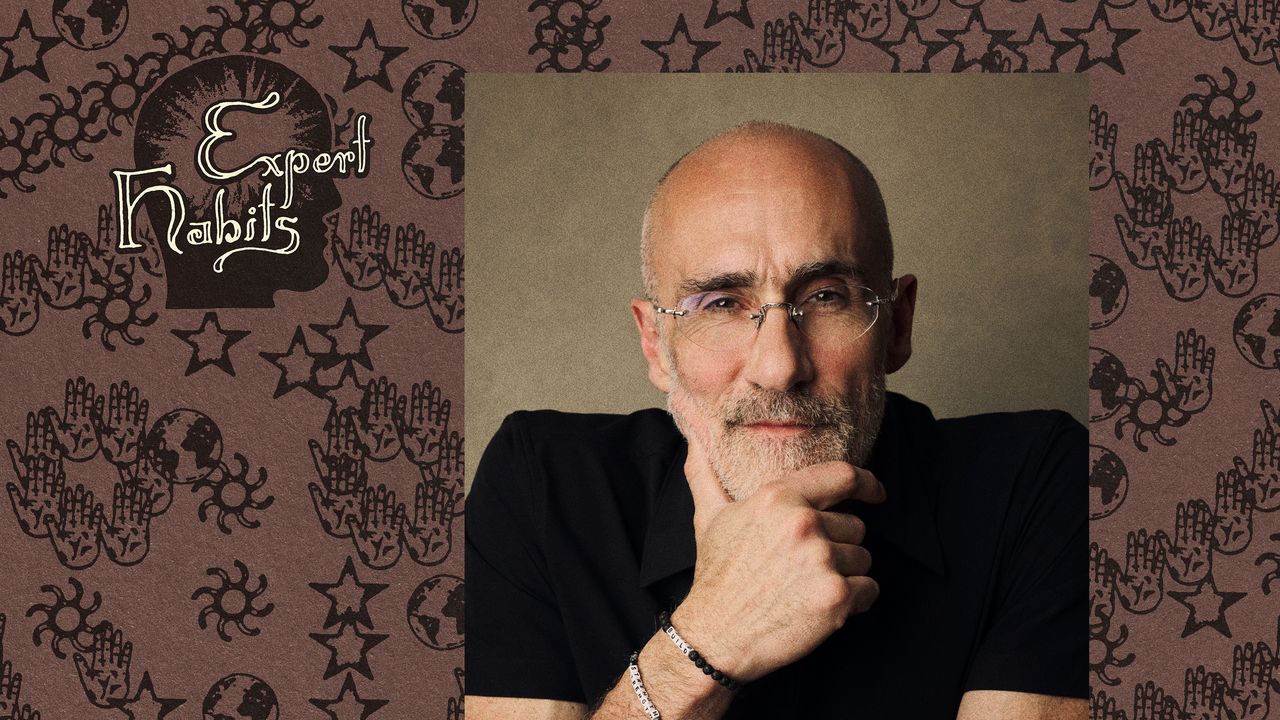
This is Expert Habits, a regular column in which thinkers, leaders, and other high performers talk about the habits and routines that help them live a better life.
Arthur C. Brooks has made a living by studying the myriad mysteries and meanings of life. Writing weekly columns about happiness for The Atlantic, penning three books about how to craft a better life, and teaching a class at the Harvard Business School literally called “Leadership and Happiness” all make Brooks well-equipped to handle the rigors of modern existence. “I’ll spend the rest of my life writing, speaking, and teaching about the science of happiness,” Brooks said in a recent video chat.
His latest venture, a book titled The Meaning of Your Life: Finding Purpose In An Age of Emptiness, is out today. Per the book’s description, its purpose is to use science and evidence-based approaches to help you, dear reader, “find the meaning you need to live a happy, fulfilling life.” Now 61, the man with an eclectic background—he is also an accomplished French hornist, and in the ’90s, he did military research on a special project for the Air Force—shares his expert habits that can turn your life from unfulfilling to unstoppable.
Become a morning person
Arthur C. Brooks: “You’re more of a morning lark than you think, and you can be more of a morning lark than you are. Mornings are just absolute magic time for productivity and creativity and happiness. There’s an ancient theory in Hindu philosophy, Vedic physics, actually. It’s called the Brahmamuhurta. In Sanskrit it’s called the Creator’s Time. It was the ancient idea that if you get up an hour and 38 minutes before dawn, there’s special properties and how it will affect your day. Getting up before dawn—especially if you witness the sunrise—more productivity, more focus, more creativity, more happiness. If you’re getting up when the sun is warm, you already made a big sacrifice. But it starts the night before, so you got to go to bed.”
To sleep better, limit caffeine and booze
“I don’t drink any alcohol, which is a really important thing. I mean, alcohol wrecks your sleep. I do 100 speeches a year, they’re usually at night. And so guess what? I’m going to go to bed later than I want. I like to get up at 4:30 every morning. When I was 30, I drank coffee at 4 in the afternoon. Now if I drink coffee after 11 in the morning, I’m going to be cleaning the garage at 3 A.M. That’s because the half-life of caffeine, it gets longer and longer the older that you get. I’m 61, so when I talk to people who are my age, they’re like, “I can’t sleep anymore. It’s because I’m old.”
I say, ‘When’s your last cup of coffee?’
‘3 PM.’
‘That’s too late.’
‘I’ve always had that.’
‘Well, guess what? Your body changed!’
Psychoactive substances become more delicate, actually. That’s an important thing to keep in mind. I drink about 380 milligrams of caffeine a day, which corresponds with one large venti dark roast from Starbucks. Dude, I’m from Seattle. It’s a small, local company. By the way, I got nothing against big business. That is a great product.”
Wait 90 minutes after you wake up to drink caffeine
“I use [coffee] as a nootropic. I don’t use it as an alarm clock. I use it to focus, not to wake, and the reason is because I’m actually using it in a way where the caffeine is not interfering with A2A adenosine receptors. If you use it to wake up, you’re going to crash in the afternoon. If you let the adenosine in your brain—which makes you groggy—if you let it clear endogenously and then you have your caffeine, then you’ll get focused for work, but you won’t crash later. But the key thing is, don’t drink coffee within the first 90 minutes after you wake up. You want the adenosine to clear naturally. I usually wait three hours. I wake up at 4:30 and I drink coffee at 7:30 typically. That’s when I get the maximum impact. I’m just ready to go.