
Looking to take your workout routine up a notch?
There’s one exercise that combines high-intensity resistance training and bursts of cardio in one. Using surprisingly simple movements, this method builds strength, power and endurance — but it’s also easy on the joints.
It requires a tool that may get overlooked at the gym: a sled.
Here’s why you should embrace your inner Balto:
Trainer Tip of the Day: Try a Weighted Sled
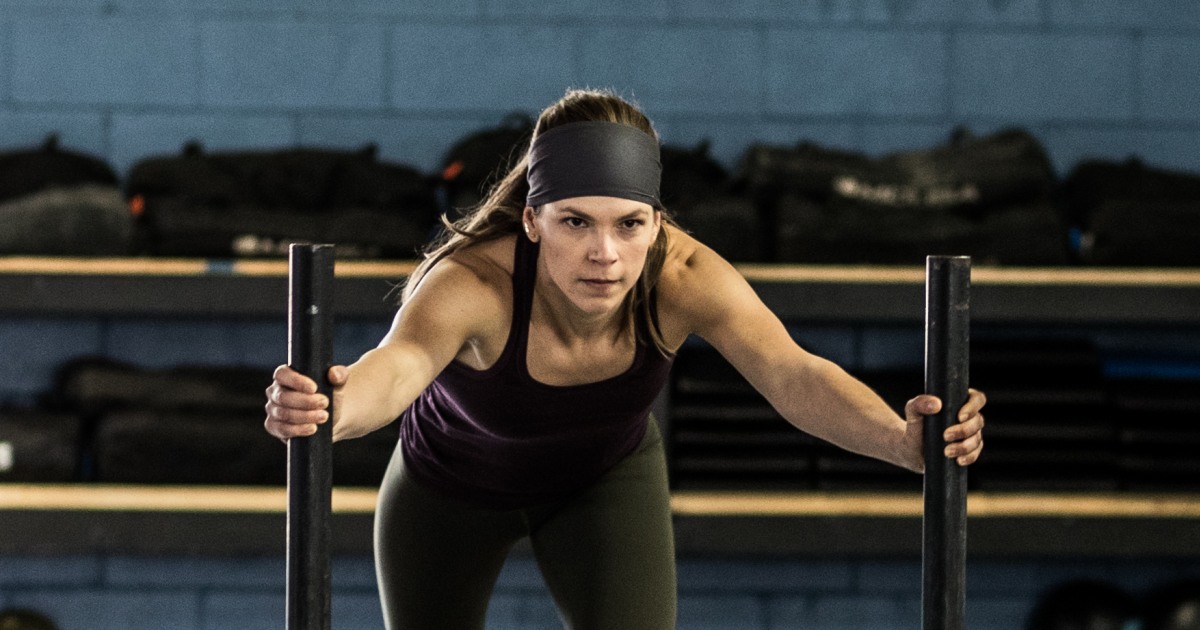
Sled training involves pushing, pulling or dragging a weighted sled across turf, James McMillian, Start TODAY trainer and president of Tone House, previously told TODAY.com.
We’re not talking about the kind of sled you use on snow days. This specialized tool has a base with a loading bar for weights and upright posts with handles. Weight plates are loaded on to create resistance, says McMillian, and you either push or pull the sled over a certain distance or time interval.
“When you push the sled, you’re leaning forward and driving (it forward) through the ground, which intentionally targets the quads, calves, glutes and core,” McMillian explained. Sled pushes also engage the shoulders and chest.
When pulling or dragging the sled — either using straps or a TRX trainer — it “lights up” the hamstrings, glutes, biceps and upper back muscles. “Backward sled drags are (also) great for strengthening the knees,” McMillian explained.
Why It Matters
Mixing sled pushes and pulls will give you an intense, full-body strength training and cardio workout in a short period.
Sled work builds lower body strength and explosive power. At the same time, it gets your heart rate up to boost cardiovascular endurance and burn a lot of calories.
“It’s a very effective piece of equipment. … There’s no momentum or cheating involved — the harder you push (or pull), the more work your body has to do,” McMillian said.
Sled training is one of Al Roker’s favorite routines because it allows him to get a more efficient workout in less time.
You can customize the weight, distance or speed to suit your goals. “Sleds are so valuable (because) they are fully scalable. You can add heavy weight for elite athletes or keep it light and focus on controlled movement for beginners,” McMillain noted.
Sled training is also easier on the joints than traditional lifting.
“It’s low impact because there’s no eccentric loading like in squats or jumps,” said McMillian. It’s a great tool for older people, rehab work, or anyone who wants to strength and condition without beating up their body.
How To Get Started
Weighted sleds are an effective tool for everyone, regardless of age or fitness level, McMillian explained.
First, you’ll need a sled and an appropriate surface — turf or rubber flooring are usually best.
A typical weighted sled costs around $75–200, but many gyms offer sleds. Always call ahead to check first.
Proper technique is crucial. If you’re new to sled training, the best strategy is to learn how to do pushes and pulls under the guidance of a certified trainer.
Once you master sled exercises, you can increase the weight or distance to continuously build strength and endurance.
TODAY’s Expert Tip of the Day series is all about simple strategies to make life a little easier. Every Monday through Friday, different qualified experts share their best advice on diet, fitness, heart health, mental wellness and more.