
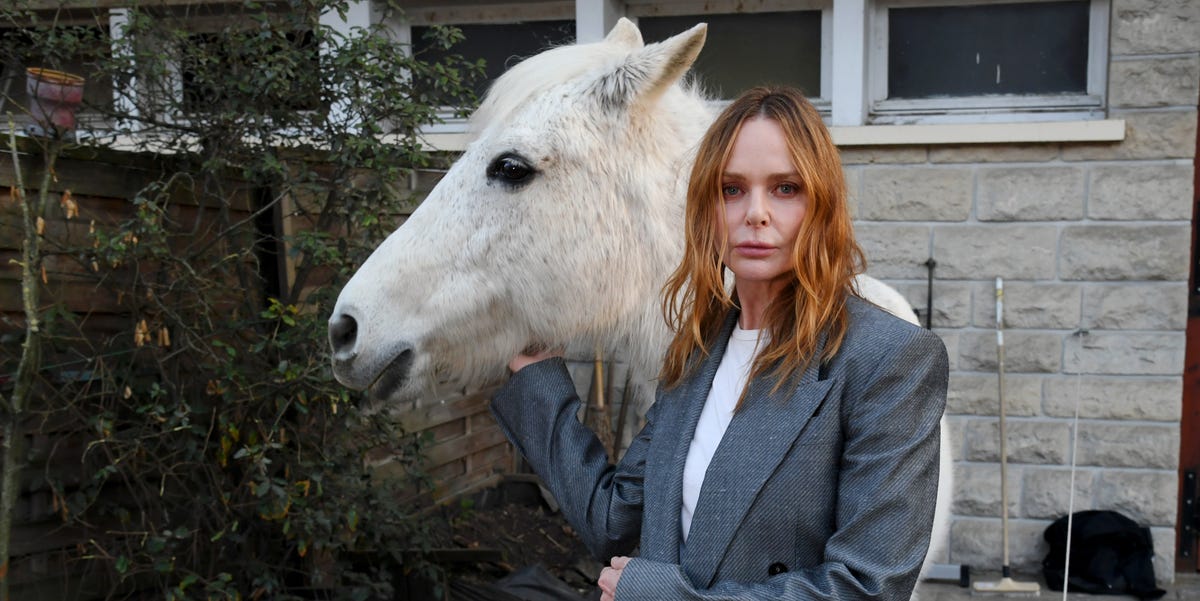
Stella McCartney has never been short on conviction. When her eponymous brand launched 25 years ago, it became the first major luxury-fashion house truly dedicated to producing cruelty-free, eco-conscious clothing. This means no fur, animal leather or feathers and no harmful processes – instead looking to innovative, sustainable materials from day dot.
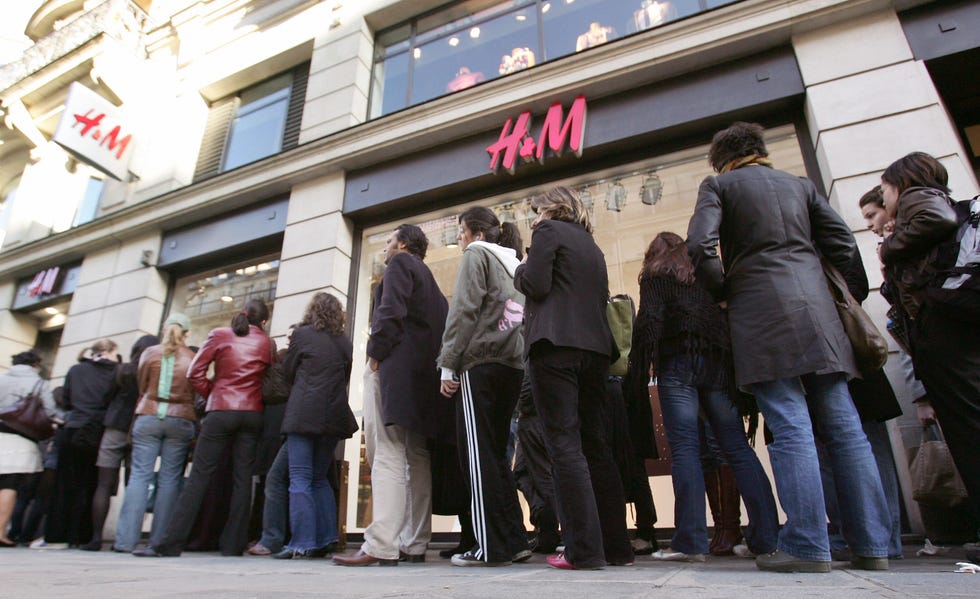
When she collaborated with H&M in 2005, on a sell-out collection that saw hoards of shoppers queueing out the door, these were standards she insisted upon. “I only agreed to do it if it was all sustainable,” says the designer, “I obviously was going to do it forever, but these guys didn’t have to… but to their credit, they continued.”
 JEAN-PIERRE MULLER
Queues for McCartney’s first collaboration with H&M in 2005
At the time, it felt quite radical, sustainability being at odds with the model of fast-fashion. But, it demonstrated what was possible, and enabled McCartney to welcome in a wider audience to her label. “I’m not an elitist brand; I’m the opposite,” she says. “I want people to come to Stella. I want them to be part of Stella.”
It also became a foil to the historically exclusive model of luxury fashion. “Very few houses can do these kinds of collaborations because they’re super snobs. Elitism is what keeps those brands alive, the fact that you can’t access them. People are so fucked up that they want to buy into it, they’ll do anything for it.”
 miguel medina
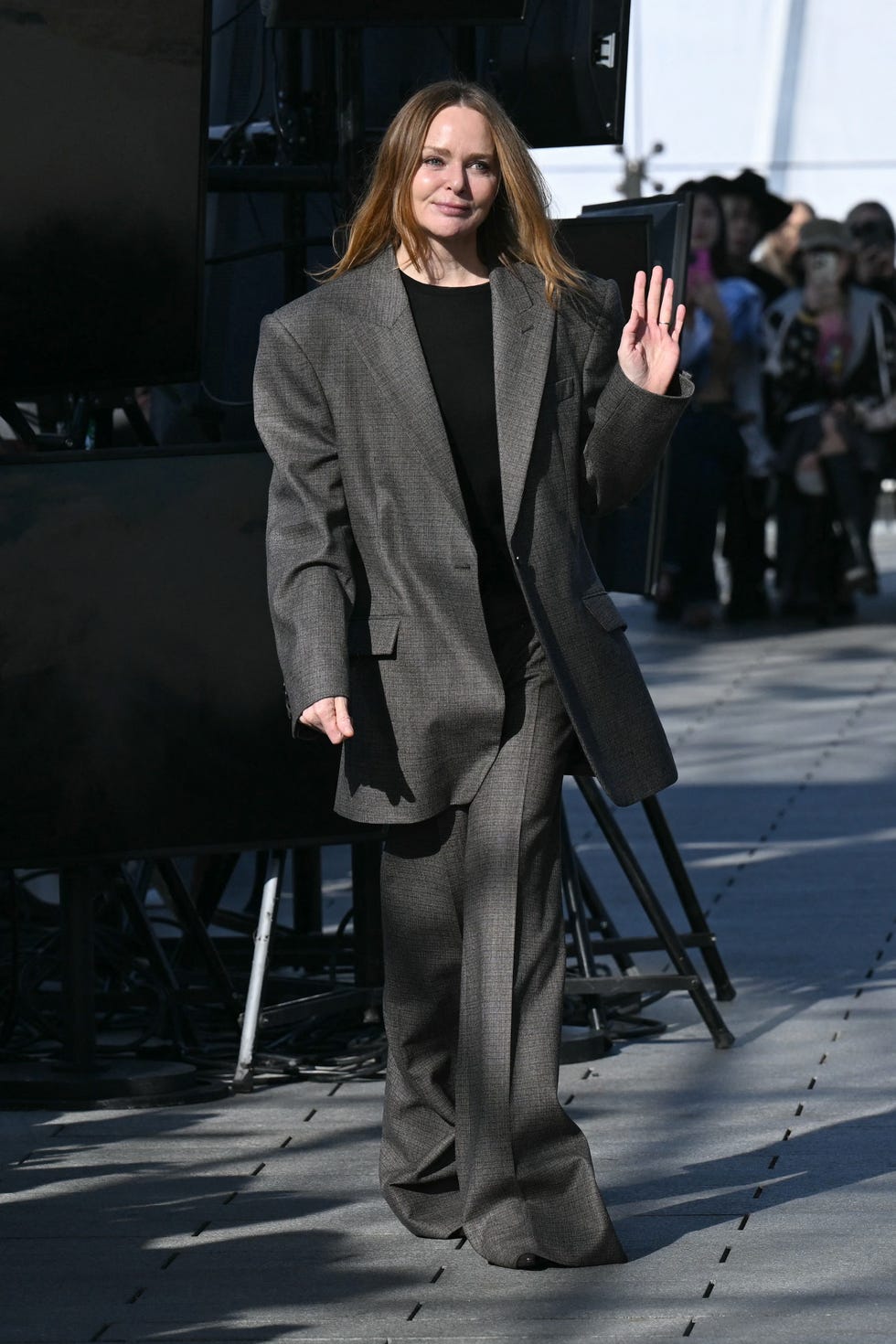
At Paris Fashion Week for A/W 25
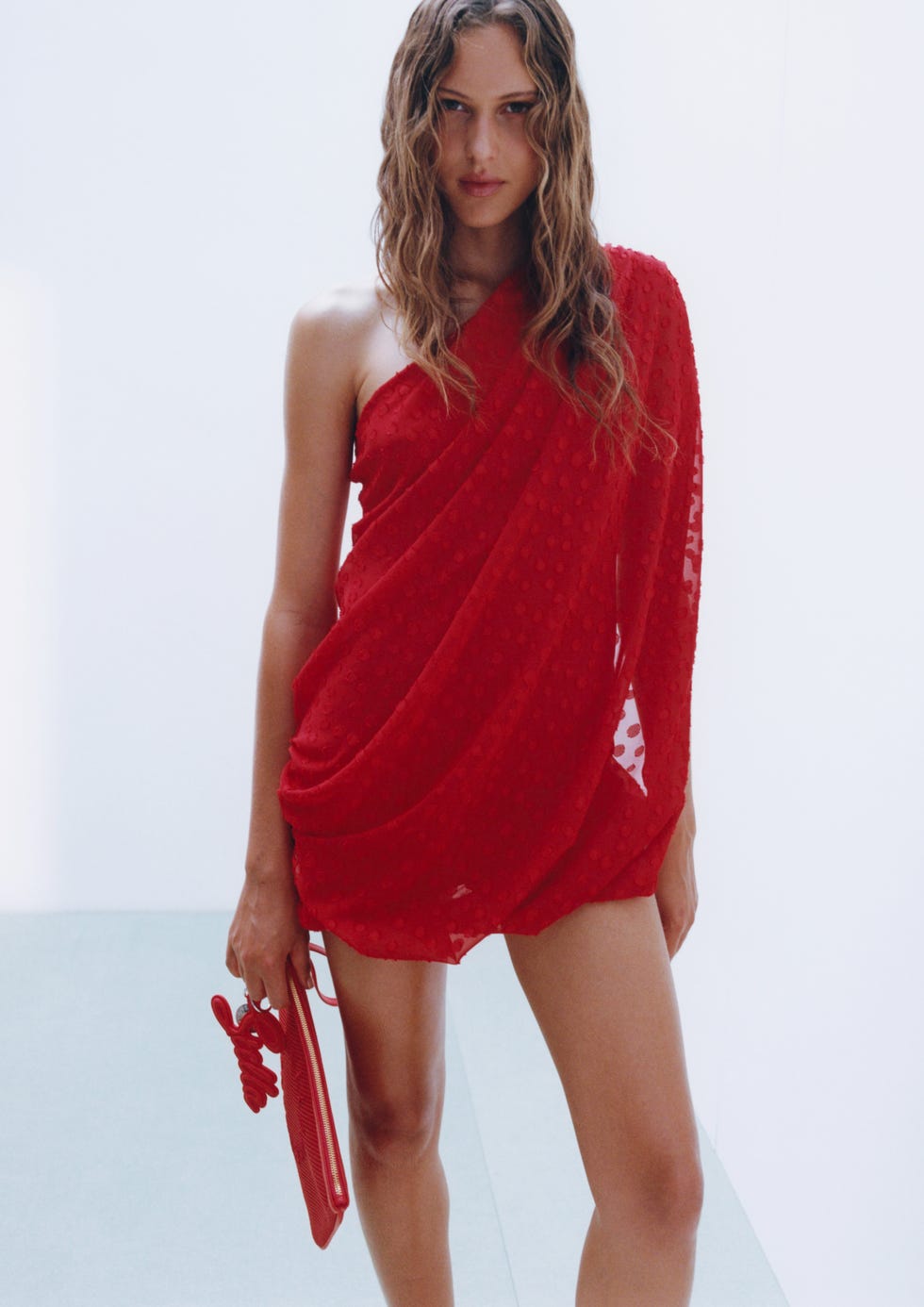
Of course, elitism does not serve McCartney’s mission – on which she remains laser-focused as she teams up with H&M for a second time. Two decades since their first collaboration, she is the first guest designer ever to be invited back. The result is a collection entirely based on recycled and organic materials. It pays homage to the Stella McCartney archives of wearable, feminine pieces: chic tailoring, cool denim, silky chemises, a touch of Nineties grunge here, a splash of shimmer there. Falabella chains appear on the neckline of ribbed tanks, her cherry motif reimagined in eco sequins. All impressively luxe.
“I want women – and men, and everyone in between – to feel great [wearing this collection],” says McCartney. “It was very much about making people feel better and letting them express who they are, with a wardrobe that can be worn multiple times. I can take those trousers and put them with that T-shirt or that jacket. That’s how I came out as a designer: I did looks. I was very conscious that I wanted to provide a solution.”
 h&m
h&m
Adwoa Aboah in Stella McCartney x H&M 2026
 h&m
h&m
A look from the collection
While clothes from high-street brands don’t tend to hold much resale value, this isn’t the case with H&M’s designer collaborations. Pieces created with Simone Rocha, The Vampire’s Wife and indeed McCartney, in 2005, are still coveted on second-hand platforms like Vinted and eBay. “This stuff will hold its value. I believe very much in resale and investing better, because you’ll make your money back – or it can become a vintage piece,” she says.
While McCartney relished revisiting some of her most iconic designs, it wasn’t nostalgia that sealed the deal for a second collaboration with H&M – it was unfinished business. “I wanted to come and do something,” she says. “I knew that we could have amazing products, but I also knew that I would be able to have an informative conversation with people who wouldn’t normally be interested – a community of people who do need to know the negative impact of normal fast fashion,” McCartney pauses, before adding, “or normal luxury fashion, quite frankly.”
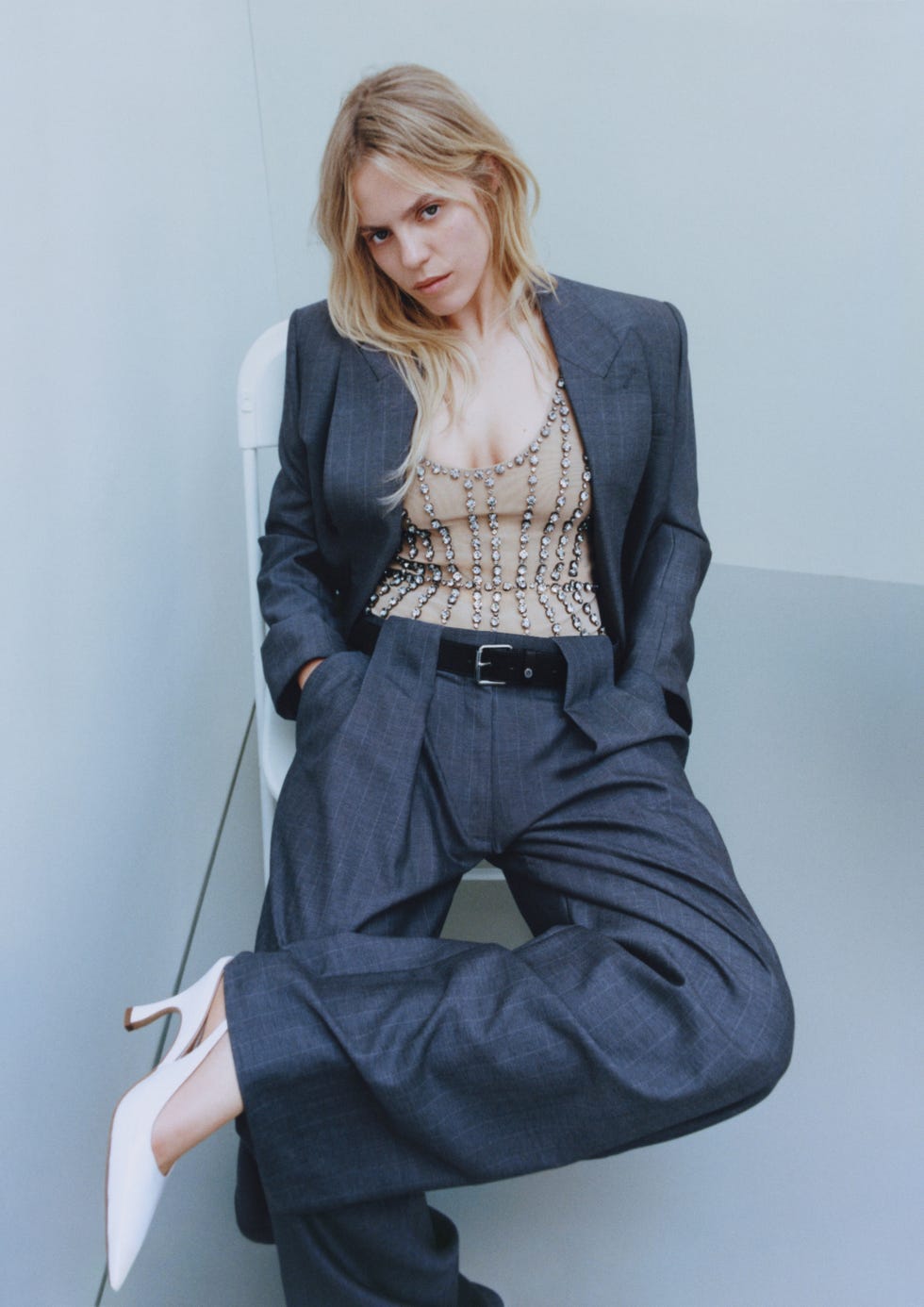 h&m
h&m
Stella McCartney x H&M
While much has shifted in the conversation around ethical fashion since 2005, McCartney notes a recent regression to that progress. “I’d like a more sustainable consciousness to come back, because it’s slightly left the building,” she laments. Indeed, with more than one billion animals still killed for leather each year, and animal agriculture responsible for 80 per cent of the Amazon’s deforested areas – also driving 14.5 per cent of the world’s greenhouse-gas emissions – there is a long way to go. “I am a very small brand comparatively; I can be perceived as much bigger than I am,” she says. “To see other houses that have much bigger margins and more money than any businesses in the world not using a recycled metal and not having that conversation… it really is shameful.”
She says there was “a moment in fashion when everyone woke up”, with impactful movements such as PETA’s ‘I’d rather go naked than wear fur’ campaign, in which Pamela Anderson famously modelled in 1997 – but animal products have experienced a renewed vogue. “People are bringing fur and exotics back,” says McCartney. “That’s how fickle humans are, sadly. I would like that anger and compassion to come back.”
She continues to work closely with emerging material pioneers – for example, investing in mushroom leather – but scaling those solutions remains a hurdle. “I see innovation brands come and go. I’m working with them every day, but they can’t scale up, they can’t get the price points down and they go out of business. So, for me to be able to go, ‘You’re going to get an H&M order in,’ makes me feel really proud.”
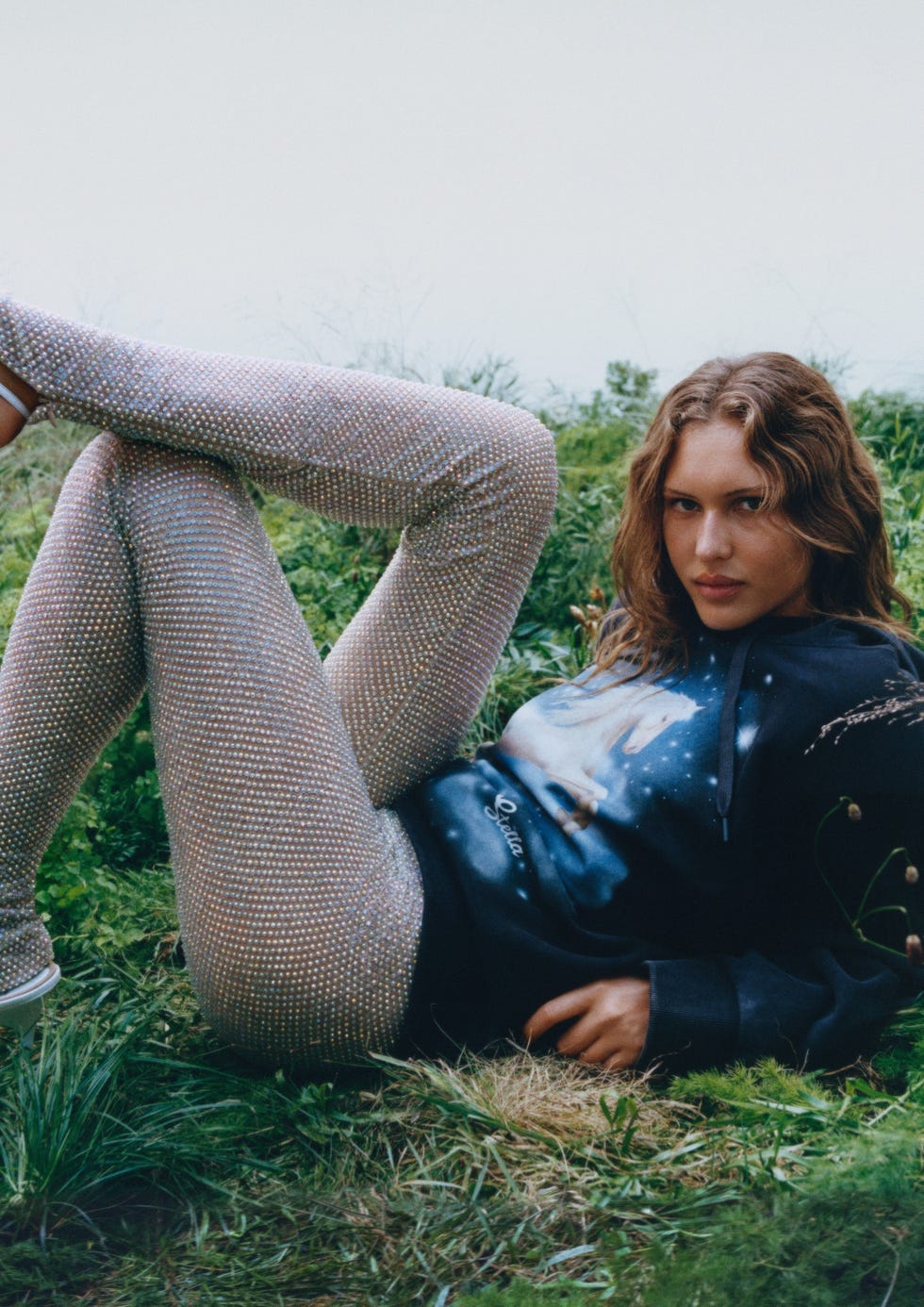 h&m
h&m
Stella McCartney x H&M
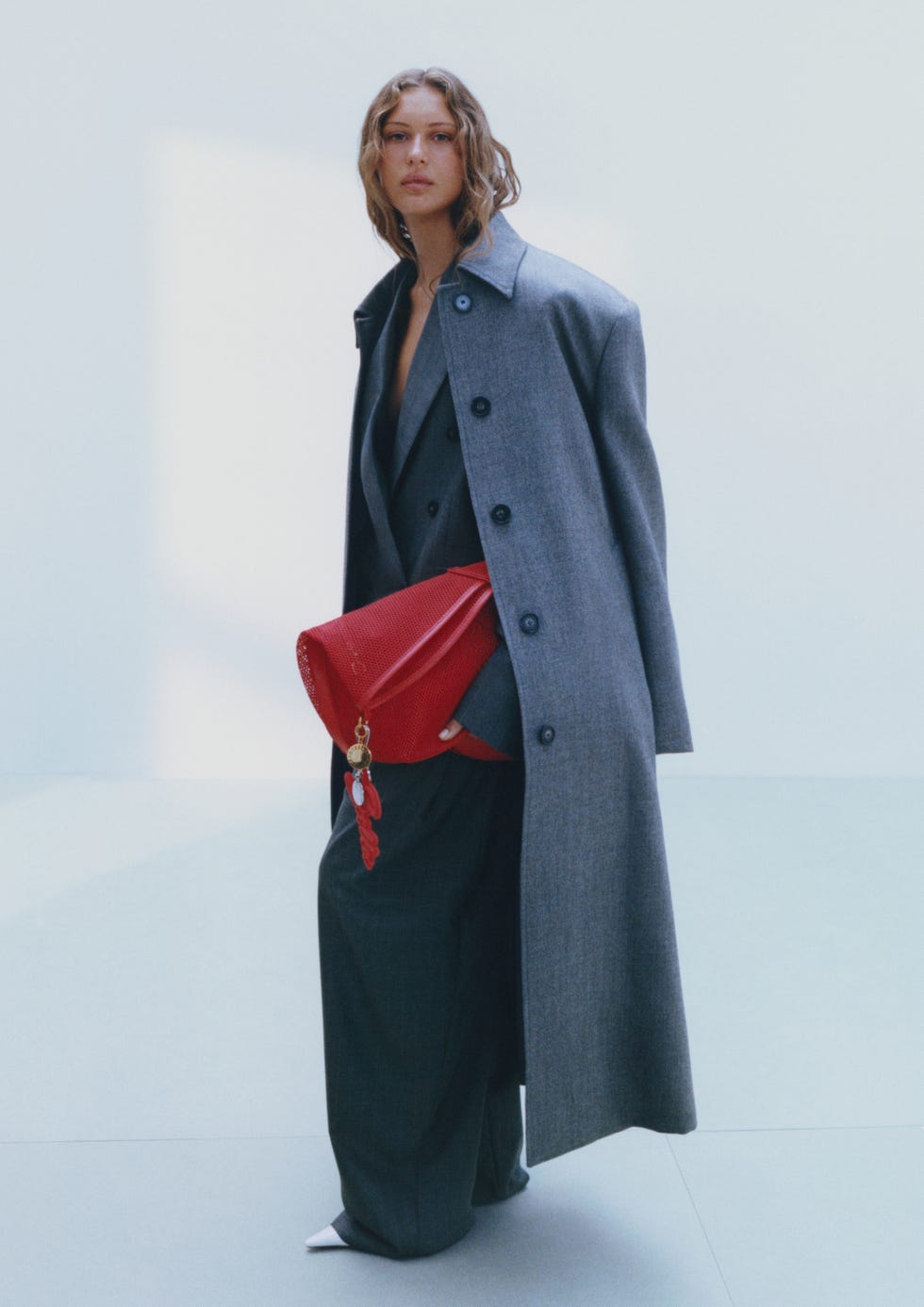 h&m
h&m
Stella McCartney x H&M
Indeed, McCartney is under no illusion that the broader cultural conversation around sustainability is moving in a straight line. Part of her strategy with her second H&M collaboration has been to widen the conversation beyond the echo chamber of like-minded people, in the form of an Insights Board. This comprises the model and H&M global brand ambassador Amelia Gray, the fashion editor and journalist Susie Lau, the model and founder of Gurls Talk Adwoa Aboah, the singer, artist and activist Anitta and the entrepreneur and sustainability innovator Kiara Nirghin – together with McCartney and H&M’s experts.
“One of the main things in choosing that group of people was not having a bunch of sustainable people in there: having young women who have a point of view, who have a platform, who aren’t particularly sustainable and understanding why they’re not, or what makes it uninteresting or uncool,” says McCartney. “I’m normally in a room of the converted talking to the converted – that’s not really what we’re trying to do here. I’m trying to make a meaningful shift.”
With an impact already so greatly felt, it’s clear she’s ready to make some tidal waves.
Related StoryRelated Story