
Follow us
Add us as a preferred source on Google
Newsletter
Subscribe to our newsletter
If you spend most of your days seated, your hips could be paying the price.
“When we’re in a seated position for hours at a time, the hips remain bent for a prolonged period, and it’s common to stand up at the end of the day and feel stiffness or tightness,” says Dr Marivi Lao, a physical therapist with Spear Physical Therapy.
To fix that, she suggests moving around regularly and doing targeted stretches, like the three below.
Latest Videos FromFit&Well
“A good starting point is doing one to three repetitions of each stretch, holding for about 20-30 seconds per side, two to four times per week,” she says. “If someone enjoys stretching and it feels good for their body, they can certainly incorporate these into a daily routine.”
Mobility is different for everyone and Lao says you should bear that in mind when working on your flexibility.
You may like
“I think of mobility as having enough comfortable range of motion to move through your day without feeling restricted,” she explains. “I also tell people that stretching shouldn’t be a competition with themselves.”
In each stretch, you should feel a gentle-to-moderate pulling sensation, but you shouldn’t be forcing your way into a position or feeling pain.
“If you find yourself holding your breath, tensing your entire body, or fighting to get farther into the stretch, that’s usually a sign to back off a little,” Lao advises.
For the best results, the physical therapist recommends teaming this mobility routine with some targeted hip-strengthening exercises, like resistance band marches.
Here’s how to do the stretches.
What to read next
Supine Figure 4 Stretch – YouTube
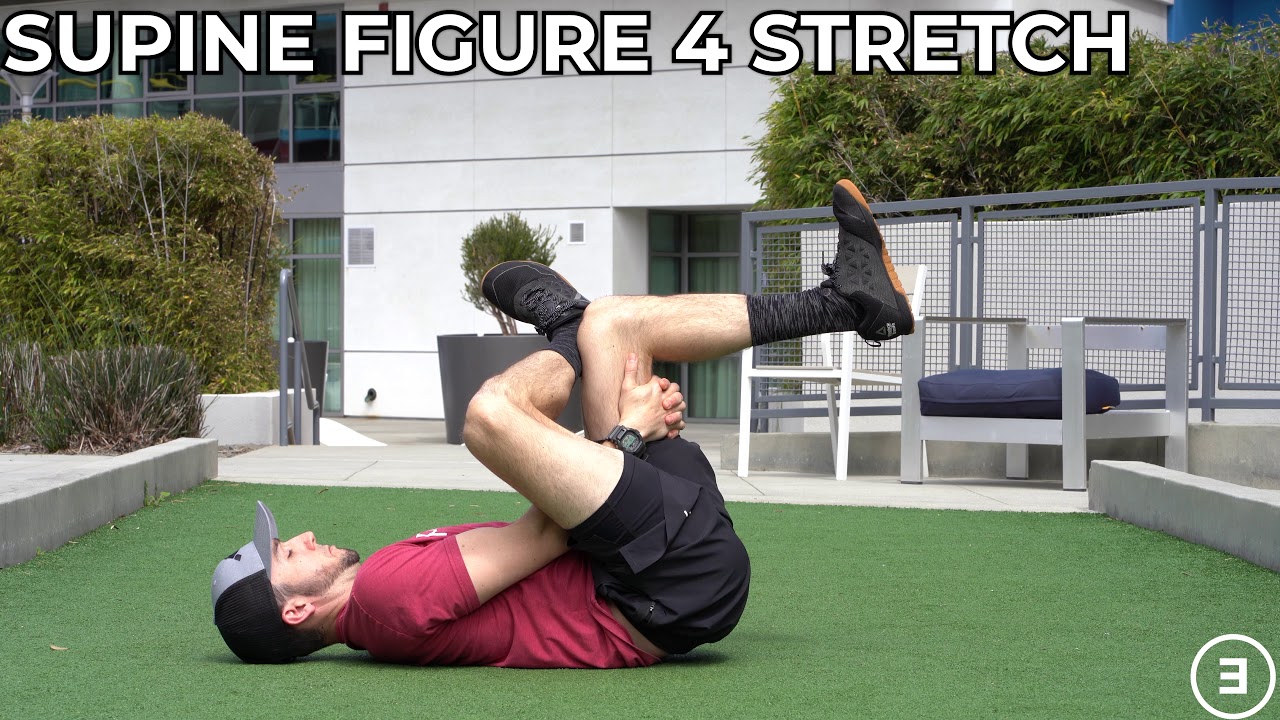
Sets: 1-3 Hold: 20-30sec each side
Lie on your back with your knees bent and feet flat on the floor.Cross your left leg over your right, with your left ankle resting above your right knee.Lift your right foot off the floor.Grasp your right thigh with your hands.Gently pull your right knee towards your chest until you feel a stretch in the left hip.Hold for 20 to 30 seconds.Switch sides and repeat.
Therapist tips: “I like to keep the crossed foot flexed and encourage people to relax their shoulders and pelvis rather than trying to force themselves deeper into the stretch,” Lao recommends.
“You should feel this mostly through the glute and outer hip. If you’re feeling it in the knee or getting a pinching sensation in the hip, that’s a sign to back off and adjust your position.”
If you struggle to get down to the floor for this move, try performing it on your bed.
2. Kneeling hip flexor stretch
Half Kneeling Hip Flexor Stretch – YouTube
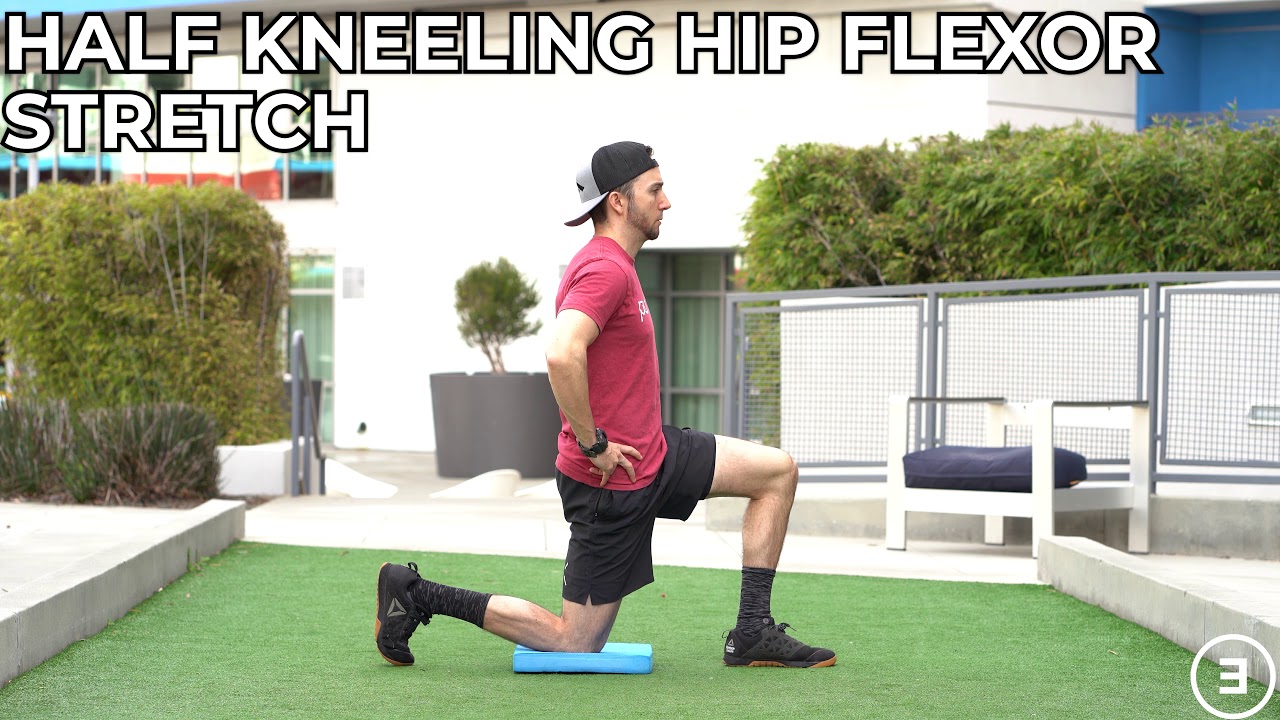
Sets: 1-3 Hold: 20-30sec each side
Kneel on the floor.Place your right foot on the floor in front of you, with your knee bent to 90°.Tilt the front of your pelvis up slightly.Move your torso forward until you feel a stretch in the front of your left hip.Squeeze your left glute to deepen the stretch.Hold for 20 to 30 seconds.Switch sides and repeat.
Therapist tips: “One of the most common things I see [with this move] is people arching their low back and pushing their hips forward to get a bigger stretch,” says Dr Lao.
“It might feel like you’re getting more range, but you’re often just borrowing the movement from your low back. The movement should come from the hip.”
If you prefer a standing stretch, you can do this lunge version instead.
Core Exercise: Supine Twist – YouTube
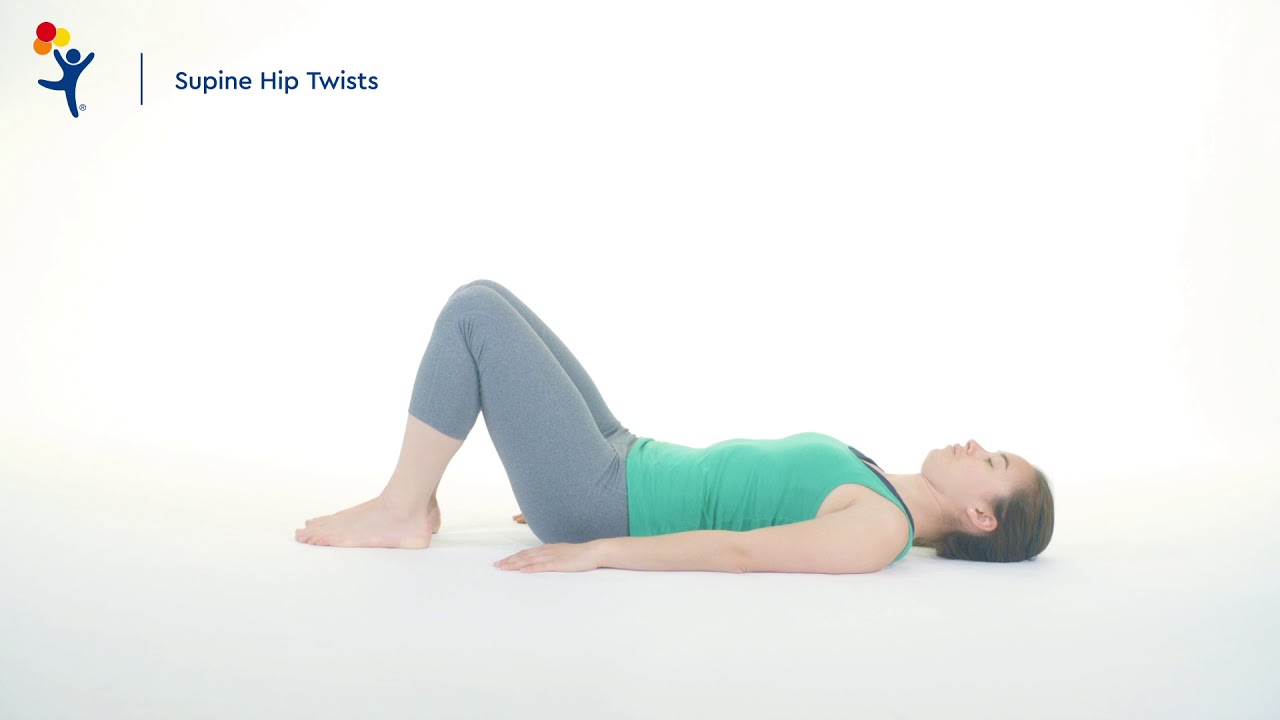
Sets: 1-3 Time: 20-30sec
Lie on your back with your knees bent and feet flat on the floor.Slowly lower your knees to the left.Pause for a few seconds.Lift your knees back to the starting position.Gently lower your knees to the right.Pause for a few seconds.Lift your knees back to the starting position.Continue slowly alternating between your two sides for 20 to 30 seconds.
Therapist tips: “Think of this as gently exploring rotation rather than trying to get your knees all the way to the floor,” Dr Lao suggests.
“I like to encourage people to move slowly and breathe through it. Let the hips rotate while keeping your upper body relaxed. Your shoulder may lift a little depending on your individual range, and that’s okay.”
This is another one you can perform on your bed if you struggle to get down to the floor.