
It’s a new year, but the same old rules will continue to apply in fitness: variety, consistency, and constantly working on learning new muscle movements. With the evolution of exercises so rapid and constant, it is difficult to keep up. There may be times when you do an exercise that seems appealing and works and then just forget about it as the year goes by. But it’s important to keep them in your routine if they’re working for you.
Having written about hundreds of exercises for Lounge over the years, I must admit that I have forgotten about some that I considered brilliant at the time. Having gone through my notes, I feel that it is time to bring back some absolute gems (along with my regular favourites) for 2026. The five exercises that I’m going to talk about will cover every major muscle group.
Also Read | Why the deadlift is falling out of favour with fitness enthusiasts
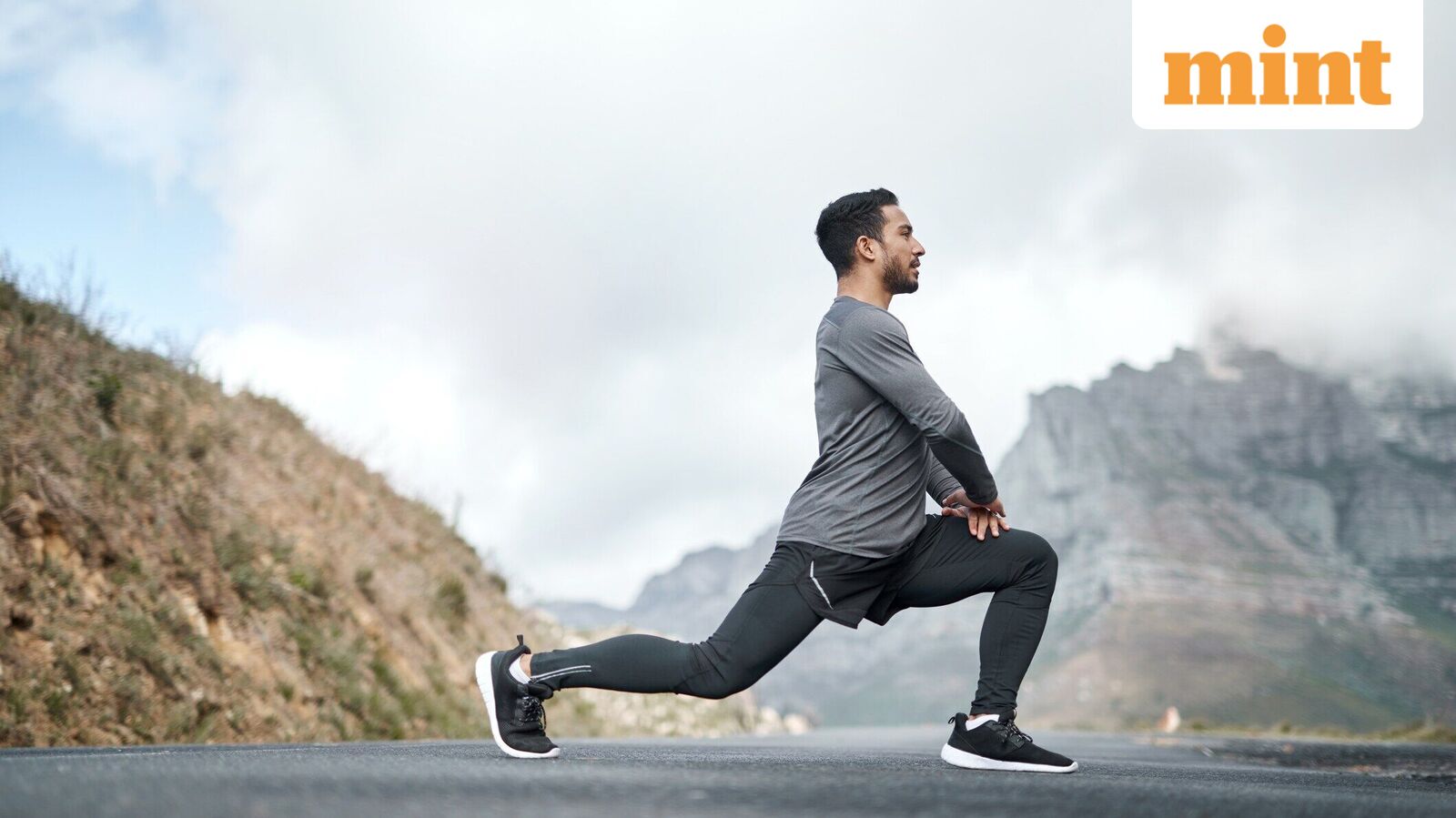
Three-way lunge: It’s important to exercise across all the planes of movement of the human body. These are sagittal (forward and backward), transverse (rotations and twists) and coronal (up and down). If you use your lunging movement across all three planes, it will be a gamechanger for you.
For the full benefits, you will need to maximise every rep, if you do them one by one. Do two reverse lunges (one on each side), then two side lunges, and then take a quarter turn and perform a slightly rotated forward lunges. You can also start simple with forward, reverse, and sideways lunges before adding the twist variant. If you manage to pull this off, you will essentially be doing half a dozen lunges in each round. Anything between three to five rounds would be a really good set in itself. Progress by adding weights. For more on this, read my Lounge article titled, Why you need to do lunges for stronger legs and butt.
Decline push-ups: This is the overlooked push-up. And one you certainly need to do if push-ups are part of your routine. Even if you just add these to your chest day, that too will make for a big change. Decline push-ups are done with the feet elevated, with the torso in a downward angle towards the floor. It’s a common misconception that this exercise is for the lower pecs, perhaps because of its cousin—the decline bench press. In fact, doing a push-up in this angle adds extra load on the shoulders and upper chest. So yes, you do need strong shoulders for this, but the move also hits a critical part of the chest which many people find tough to activate. Do the incline push-up to hit the lower chest. These are easier and gentler on the shoulders.
Hip fall-backs: This isn’t just one of the most unique exercises to learn, but an absolute keeper as well. This is the only exercise that strengthens the hip flexor, the muscle which lies at the front of the hip and on the upper thigh—a vital muscle for healthy walking, running, and to bend the knee.
Stretching it feels amazing, but just lengthening it cannot fix issues with the hip flexor. One of the most obvious weak spots in the lower body, it needs to be fixed by adding a load to it regularly, and only the hip fall back can target it with great success.
Place a heavy dumbbell on the side of a bench and hook one foot into it. Sit across (perpendicular) to the bench and let the body fall back with the free foot bent 90 degrees at the knee. Engage the core and fall back until you feel the hip flexor engaged and stretched and go until the point you feel you can use it to pull the body back into sitting position.
Also Read | Why you need to do the tricep dumbbell kickback for stronger arms
Alternating chest presses and single-arm overhead presses: Single-arm exercises are the best way to build balanced strength. And this can be difficult to achieve especially for the chest and shoulders. Alternating presses come to the rescue here. You can do this on the bench or the floor. Get two dumbbells but press only the left arm up while keeping the right one down. For the next rep, press the right arm up while the left one is on its way down. Some trainers also call this the elevator press because of how one side moves up while the other is travelling down.
The single-arm overhead press doesn’t quite operate on the same principle. To perform this one, you need to use just one dumbbell and press it up for a set number of reps, before moving on to the next arm. The free arm in this case is used to balance the body or support the working shoulder. This variant allows the shoulder to lift heavier loads.
Also Read | Understanding shoulder AC joint injuries, and how to treat it
Sprint Interval Training: Add sprints to your routine if you’re using the treadmill. There is certainly something magical in covering distances and working on step rates and heart rates, but as a short cardio activity, sprint interval training is the cleverest way to burn calories and add a different dimension to training. This doesn’t mean it’s better than any other form of long-form cardio, but it’s as important to be able to exert force and speed in short bursts, and then stop before hitting the green light again at high intensity.
Being able to do both is the ideal cardio training. I work up to a high speed on the treadmill (between 12-16 speed depending on how I’m feeling), and do between three to six rounds of 30 seconds of running and one minute of rest. The effects of this have also made themselves felt in longer distances.
Pulasta Dhar is a football commentator and writer.