
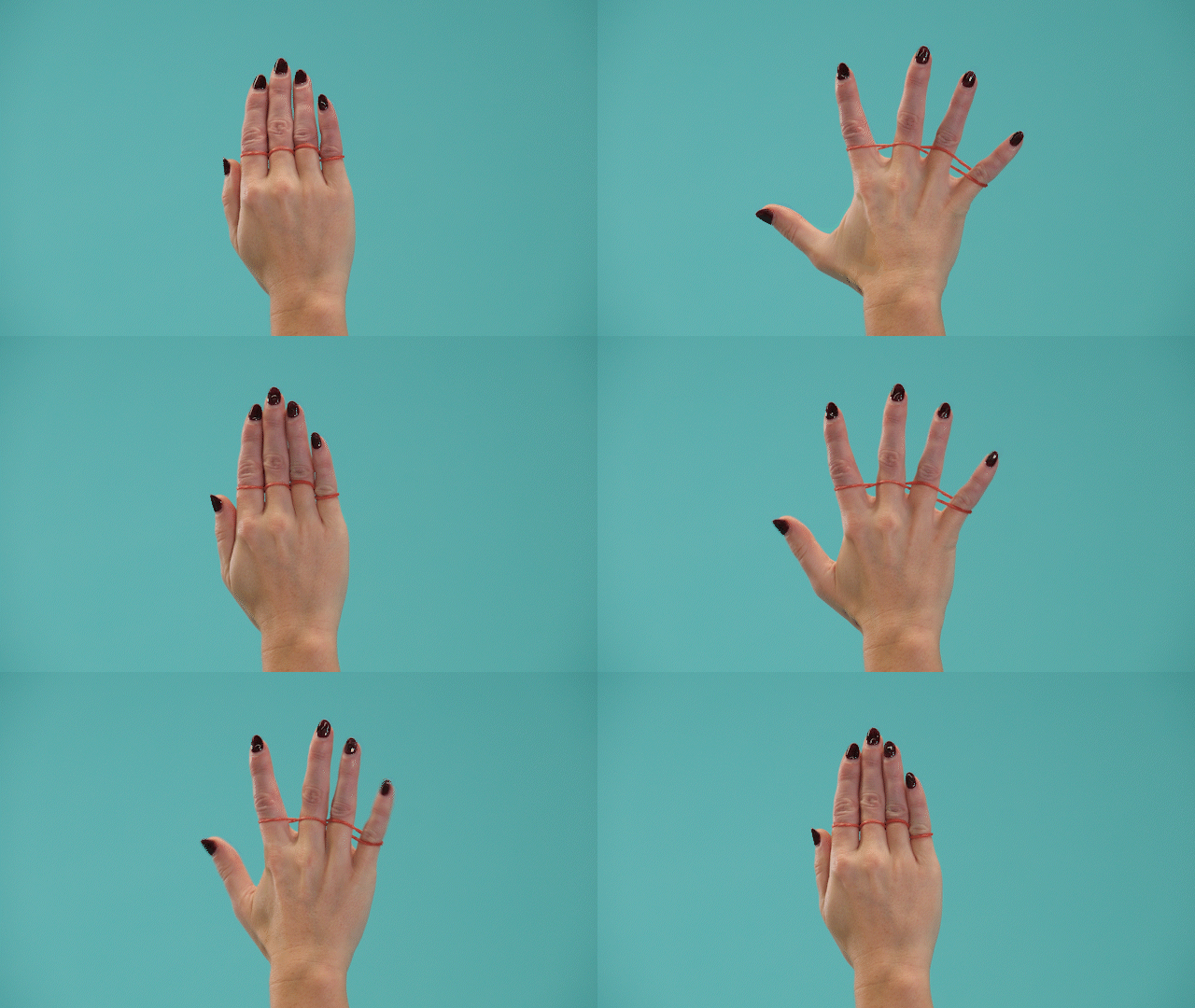
We need it for everything from carrying shopping to opening jars and signing our name. Grip strength — or the force our hand can exert around an object — is so important it’s often deployed as a marker of overall health.
Studies show a link between low grip strength and an increased incidence of diseases such as lung cancer and type 2 diabetes, while other research has found lower grip strength associated with a greater risk of cognitive decline.
Yet all too often we take it for granted, until everyday activities we once did without thinking start to feel difficult. Like all muscles, those required for grip weaken with age. Grip is also affected by proprioception, or the body’s ability to sense its position, communicated from receptors in muscles and tendons and processed by the brain, “which declines from around 50”, says Nell Mead, a physiotherapist and the author of How To Be Your Own Physio.
Damage to joints caused by conditions such as osteoarthritis and nerve-related conditions such as carpal tunnel syndrome can make gripping more difficult.
• Read more expert advice on healthy living, fitness and wellbeing
As our society becomes more automated, activities involving hands, such as wringing out clothes and writing, are being increasingly consigned to the past and this may also play a part. For example, one nine-year longitudinal study in the journal European Geriatric Medicine found a “slight decline” in the grip strength of older adults, equivalent to a typical 65-year-old’s grip strength declining to that previously seen in a 69-year-old.
A good grip is also vital for reaching our wider fitness goals, as anyone whose failing grip on a dumbbell has shortened a weightlifting session will tell you. Poor grip often leads to bad form, which increases the risk of injury.
Contrary to popular belief, grip doesn’t just involve hand and finger muscles, but your whole arm, including the shoulder stabiliser muscles that position the arm in the correct place and the forearm muscles that control your fingers. “It’s all part of one chain,” Mead says. “Weakness anywhere can compromise your grip strength.” Fortunately, there are ways to improve yours.
1. Wrist flexor stretch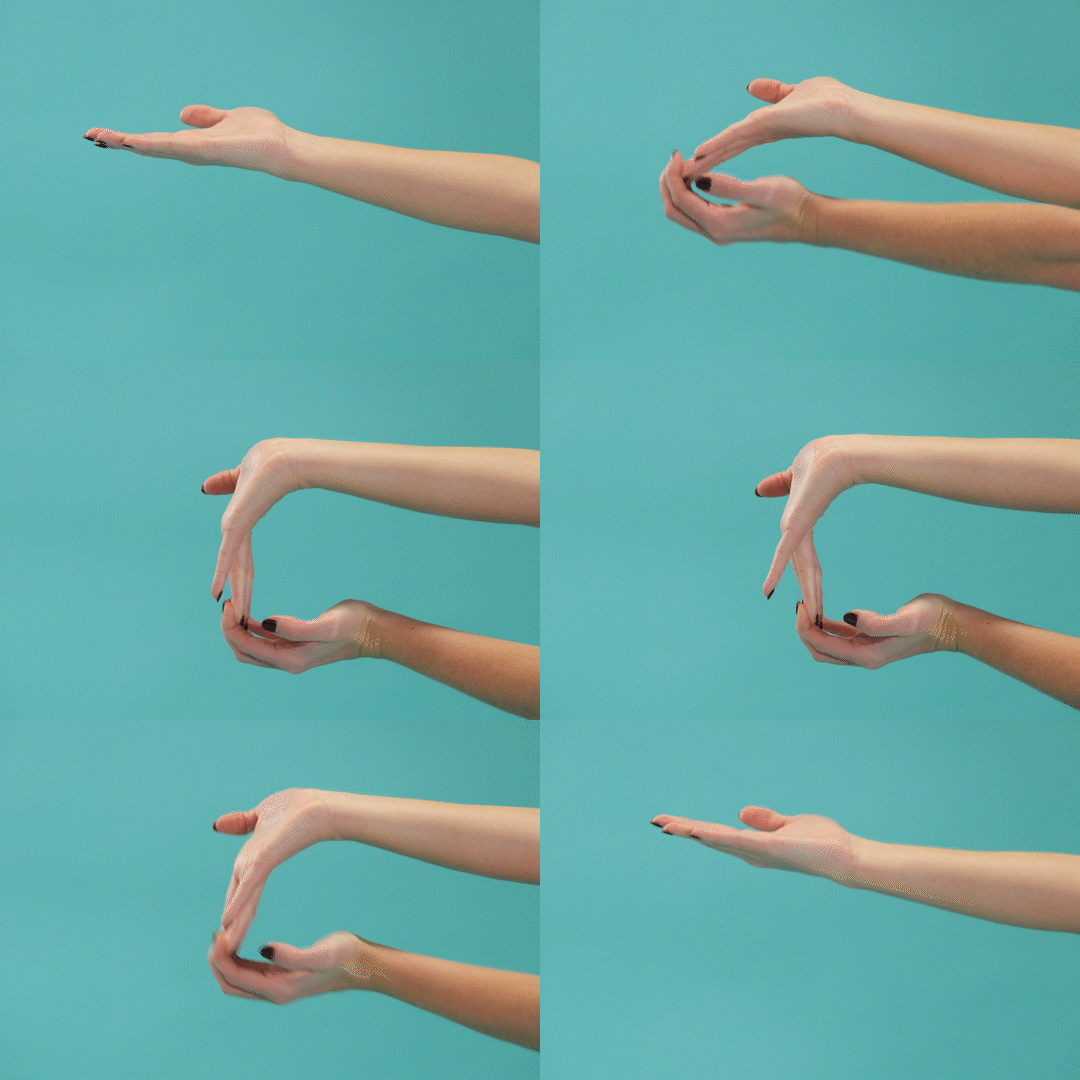
MICHAEL LECKIE FOR THE TIMES
Start with a stretch to improve blood flow in the flexor muscles on the underside of the forearm, which helps the muscles involved in grip to work together more effectively. “We don’t tend to stretch our wrists very often, so don’t get much flexibility through them,” says Mead, who advises warming up for two to three minutes with gentle arm circles, wrist circles and shoulder rolls before working on grip strength, and adds: “Always stop if you feel sharp pain.”
Seated or standing, extend your right arm straight in front of you, palm facing up. Use your left hand to gently pull your right hand down and back so your fingers are pointing towards the floor. Hold for up to 30 seconds and repeat on the other side. Do five sets.
• The seven essential exercises that improve the way you move
2. Wrist extensor stretch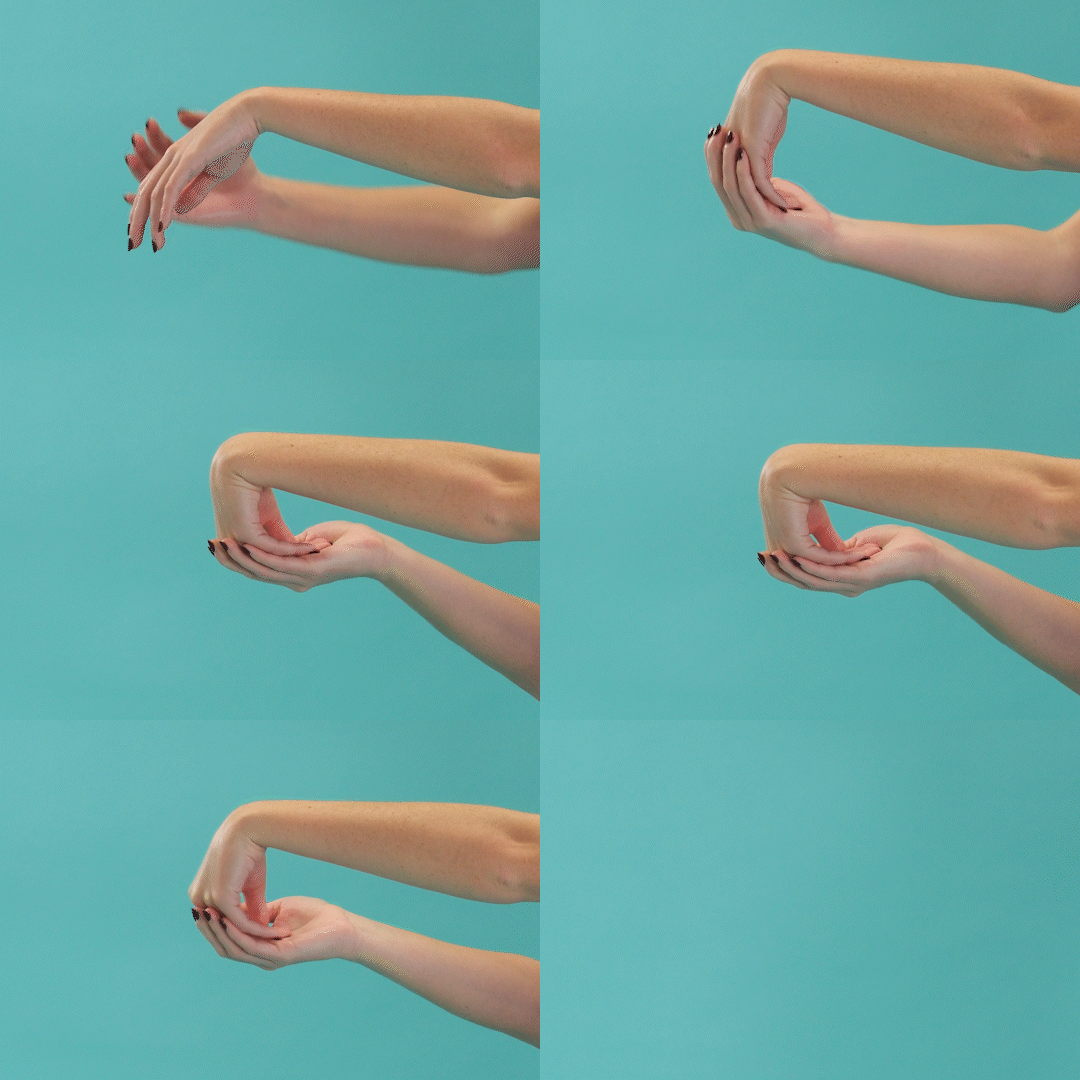
MICHAEL LECKIE FOR THE TIMES
This improves flexibility in the extensor muscles on the back of your forearm, which can enhance grip. “When these muscles get short, tight and irritated, they pull on the elbow,” Mead says. Sitting or standing, extend your right arm straight in front of you, with your palm facing down. Bend your wrist so your fingers are pointing down, using your left hand to pull your hand towards you to increase the stretch. Hold for up to 30 seconds and repeat on the other side. Do five sets.
3. Finger abduction with rubber band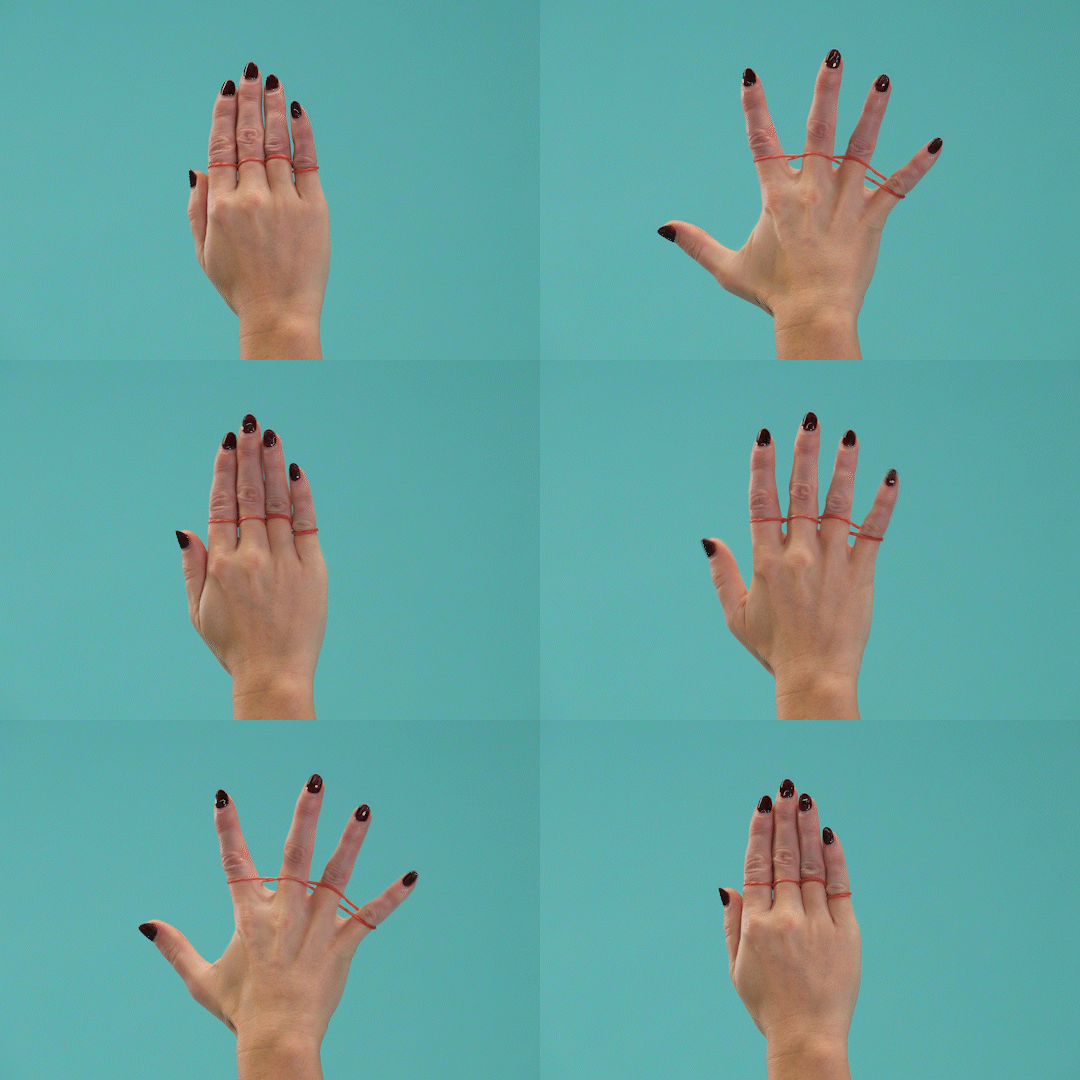
MICHAEL LECKIE FOR THE TIMES
Strengthen the small muscles in the hand with the help of a rubber band to provide resistance. “Resistance abduction — pulling your fingers apart — is not something we do very often, so those muscles tend to weaken before others,” Mead says.
Place a rubber band around your fingers, crisscrossing it between each finger. Push your fingers out against the resistance of the band, then release. “The closer the band is to your fingertips, the tougher it will be,” Mead says. Make the exercise easier by not twisting the band between each finger, or harder by adding a second band. Do ten on each hand.
• The five easy tests to assess your true fitness
4. Closed chain scapula press-ups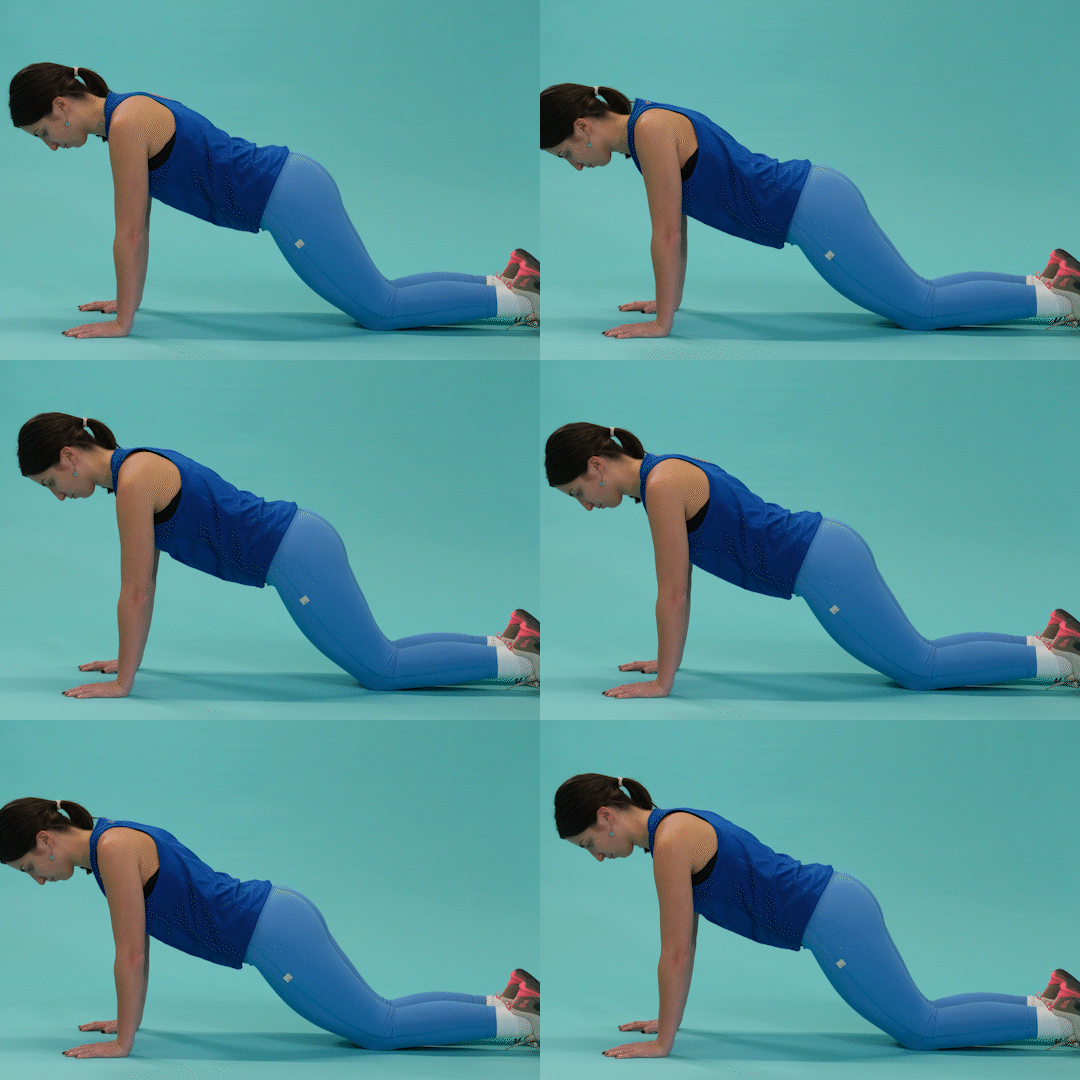
MICHAEL LECKIE FOR THE TIMES
These strengthen your serratus anterior, the fan-shaped muscles on the side of your chest, underneath the armpit and along the ribs, which stabilise the shoulder blades, and scapular stabilisers, the muscles that control the movement of the shoulder blades. “Poor shoulder-blade control compromises the entire kinetic chain down the arm, reducing the efficiency of your grip,” Mead says. “This exercise builds the stable foundation from which your arm operates.”
Start in a press-up position — on your knees if necessary — with hands directly under your shoulders. “Without bending your elbows, push your torso up through your hands to separate your shoulder blades, then lower down by dropping your torso so your shoulder blades come together at the back.” With your arms straight your torso should only be able to raise and lower a few inches. Mead suggests three sets of 10 to 15 repetitions, two or three times a week.
5. Assisted dead hangs
MICHAEL LECKIE FOR THE TIMES
Hanging exercises are brilliant for improving shoulder stability, Mead says, while this exercise also strengthens finger muscles and forearm flexors, which bend the wrist and fingers. You don’t need a pull-up bar — any stable overhead beam will do. “You can use the door frame,” Mead says. “I hang off the landing.”
Grip the beam, and to avoid trying to hold your entire body weight with your arms, either place your feet on a box on the ground or bend your knees slightly with your feet on the ground. As you get stronger, “gradually reduce the pressure through your feet, taking more weight through your grip”, says Mead, who advises hanging for three sets of 30 seconds, with a minute or so in between.
6. Farmer’s walks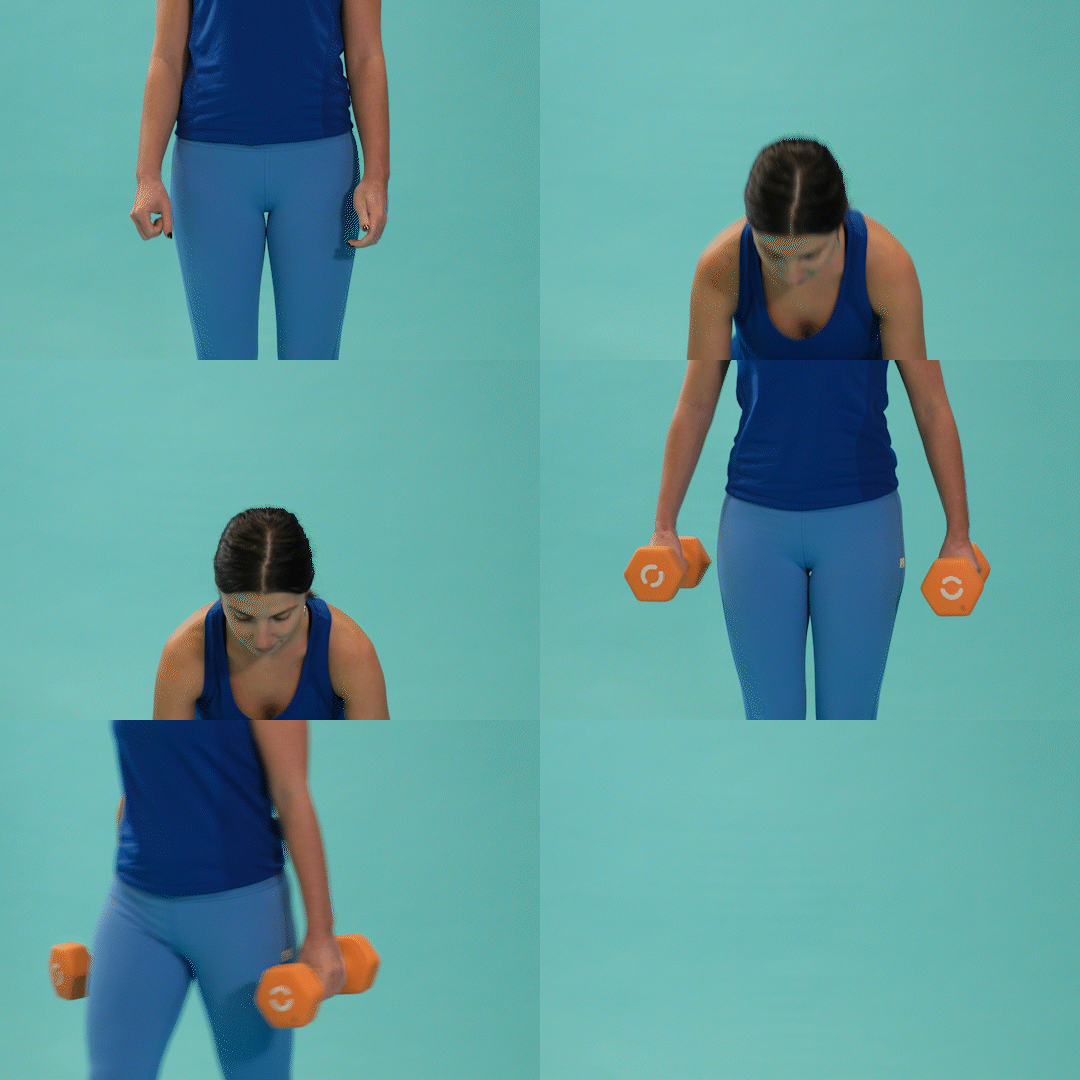
MICHAEL LECKIE FOR THE TIMES
A multipurpose exercise that strengthens finger muscles, improves grip endurance and strength, improves shoulder stability and works the core muscles, which help the shoulder girdle — the bones and joints that connect your arms to your trunk — to generate force more effectively. “It challenges every link in the chain simultaneously, mimicking real-world carrying tasks,” Mead says.
Pick up two heavy objects of an equal weight, whether dumbbells, kettlebells or heavy bags, that you can hold for about a minute. “Walk steadily for 40 to 60 metres, keeping your shoulders down and back, chest up, neck long, chin tucked in and core engaged,” Mead says. You don’t need an exciting route — up and down the hallway is fine. Try three to four sets.
• One minute of exercise a day ‘could add years to your life’
7. Wrist roller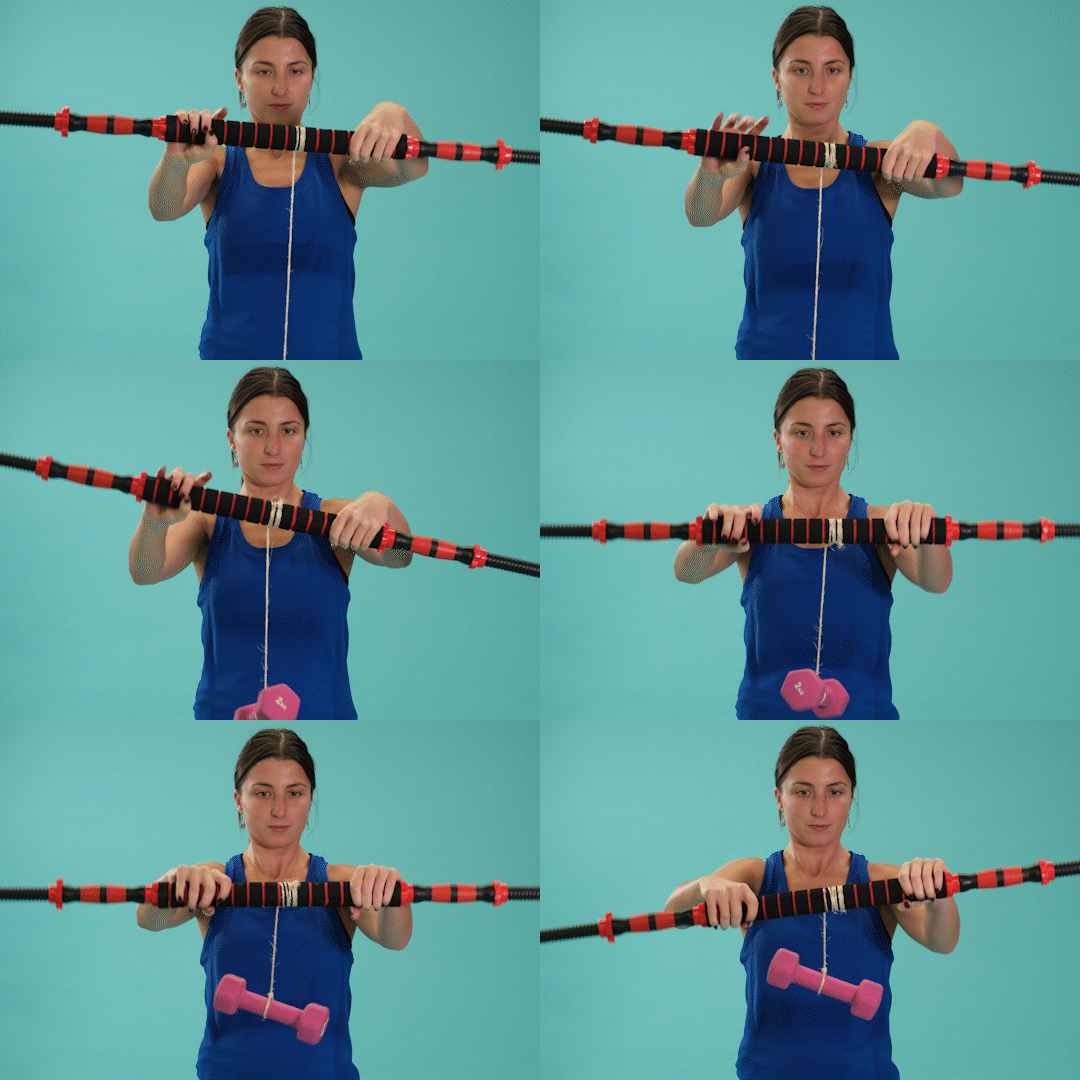
MICHAEL LECKIE FOR THE TIMES
These exercises strengthen wrist extensors and wrist flexors, both of which “directly attach to the fingers”, Mead says. Attach a rope to the centre of a stick or broom handle and tie a light weight — 2kg to 5kg — to the other end. When holding the stick at shoulder height, the rope should end about 60cm from the floor.
“Standing, hold the stick out in front of you at shoulder height with both hands, palms down, keeping your shoulders down and back and your chin tucked in. Wind the rope up by rotating your wrists. Let go with one hand, twist with the other, and vice versa,” Mead says. “Then slowly unwind.”
This works the extensors. To work the flexors, repeat the exercise holding the stick with both hands and your palms facing upwards, rolling the stick towards you, one hand at a time. Do two to three sets of two to three full winds in each direction.
8. Plate pinches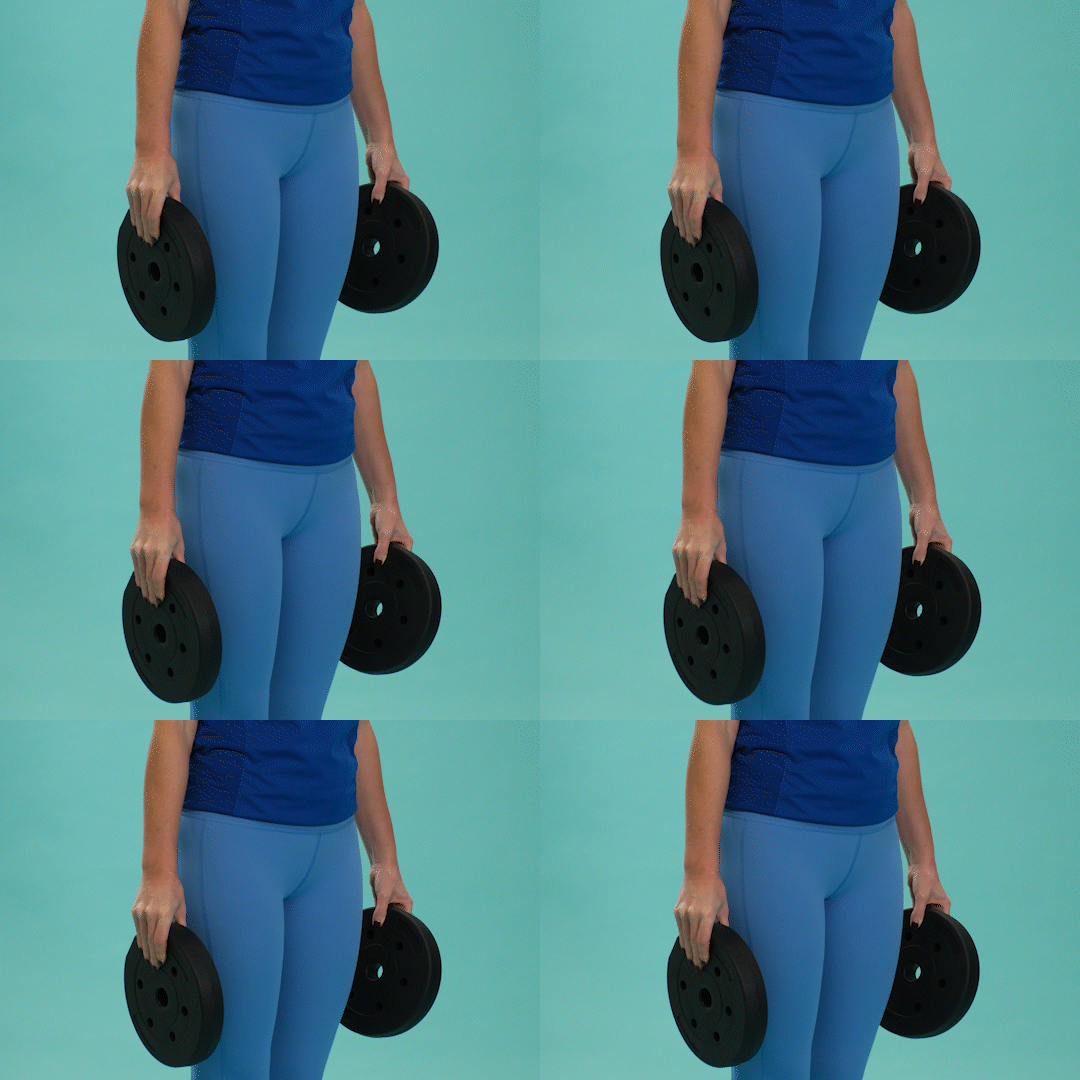
MICHAEL LECKIE FOR THE TIMES
This works the pinch grip — holding something between the thumb and fingers without the palm involved — that requires fine motor control (small, controlled movements) and is used in activities such as writing and turning a key in a lock. Research has found it is particularly susceptible to age-related decline.
Standing, arms by your sides, back straight, hold a 2.5kg to 5kg weight plate vertically in one hand between your thumb and fingers. “Hold for 20 to 30 seconds. Rest, then repeat with the other hand,” Mead says. “For extra difficulty, use a plate with smooth sides rather than one with raised edges.” Do three sets.
• Five upper back exercises to improve your posture
9. Fingertip wall landings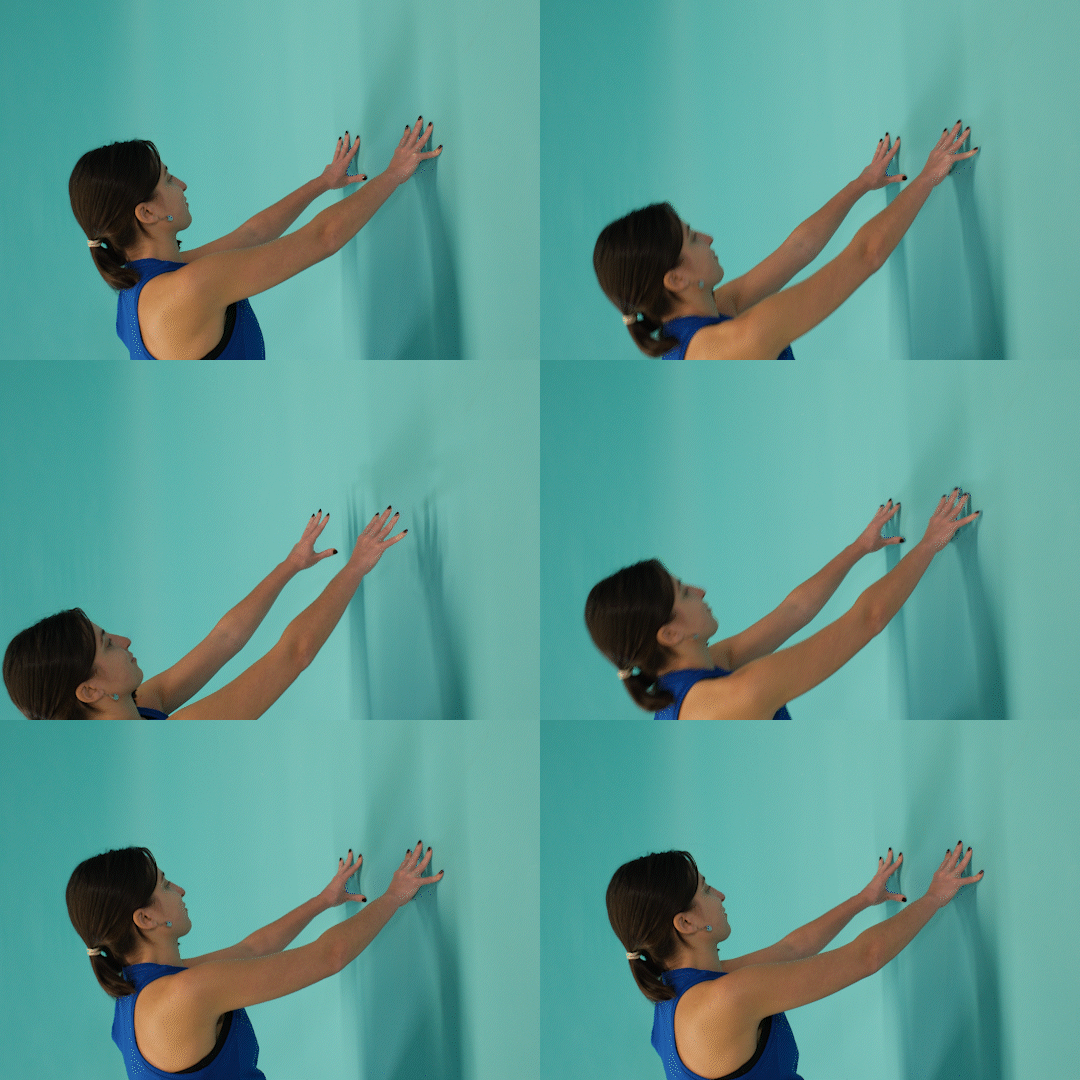
MICHAEL LECKIE FOR THE TIMES
A variation on a wall push-up, pushing off with your fingertips rather than the heels of your hands, to engage the forearm extensors, improve proprioception and fine motor control.
Stand facing a wall just over arm’s length away, feet hip-width apart. “Lean forward and place your fingertips — not palms — on the wall at shoulder height, letting your elbows bend very slightly,” Mead says. “Lean in so your weight pushes through your fingertips, then push back, briefly lifting your fingertips off the wall before catching yourself on your fingertips again.”
Use your fingertips to control the landing. “That’s where strength is built,” Mead adds. “As you get stronger, do this with one hand instead of two, faster and with more dynamic bounces.” Do three sets of eight to ten.