
Instead we should look at quick and easy ways we can make our health even better.
We may not be able to get back to a state when we were at our fittest, but there’s plenty of advice out there to help us feel younger, brighter and more on top of things.
And who wouldn’t want a bit of that?
So, this week I’ve done a trawl through my various regular and dependable health websites for points you might find interesting.
Do you worry that your sense of smell is not what it was? Lots of men and women do feel that way as they age.
But does it matter? Well, yes it does.
You miss out on a lot in life if this sense is impaired. In fact, it can even be dangerous.
Alarmingly, some people can’t even smell smoke when their house is on fire.
Medically too, there are concerns about loss of smell.
According to New Scientist in a report last May, a reduced ability in what we can smell is linked to the development of both Parkinson’s disease and Alzheimer’s.
They also highlighted a recent study which showed that individuals with a strong sense of smell have slower cognitive decline than the rest of us.
So, the big question is, what can we do to improve things?
Many experts now recommend that we should focus on sniffing certain scents.
This advice has certainly been influenced by the fact that during Covid so many of us lost the ability to smell anything while ill with the virus, and I have often heard people say that they have never recovered from that.
Then, especially at this time of year, we tend to get upper respiratory tract illnesses which can also reduce our normal capacity to identify and appreciate fragrances.
Luckily, most individuals recover what they had before, but sometimes not very quickly.
What then are the scents that could boost our smell-ability?
They are reckoned to be citrus fruits, eucalyptus, cloves and rose.
You can buy these as essential oils from many health food shops, but there are also ready-made test kits on sale from Amazon and other online sellers.
It seems that retraining the nostrils takes a while but does work for many. So, you might want to investigate if this is for you.
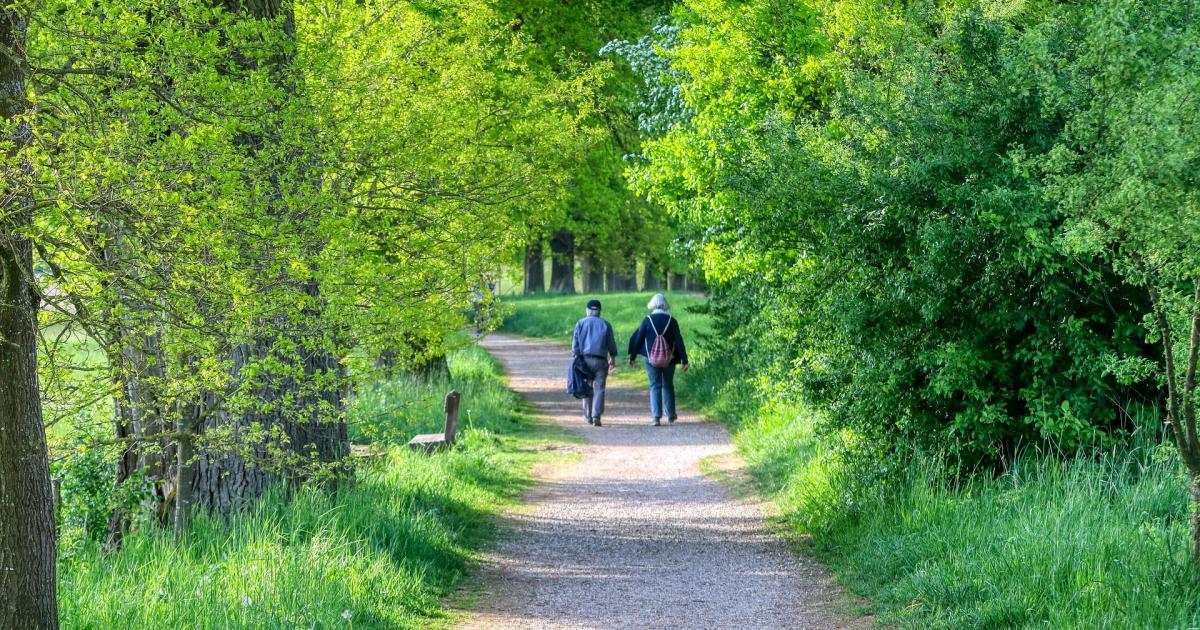
Lots of you, I know, walk for pleasure and exercise.
And that’s great.
In fact, walking is one of the best and easiest forms of exercise and we need to do it if we don’t want to lose mobility.
Even a short walk a day can work wonders.
But fitness experts tell us that we can increase our balance and coordination and indeed live longer if we also do some resistance training, such as a bit of weightlifting.
Before you dismiss this as a step too far, you don’t have to enrol at a gym to do this.
Or even buy dumbbells.
You could start by simply carrying shopping back from a convenience store to your home rather than taking the car.
This could make a big difference if you do it regularly.
Gardening too can involve quite a bit of lifting.
Obviously, you don’t want to be doing anything that could damage your back, so be sensible. But do think about moving and carrying normal sized flowerpots and such like.
Another tip to keep yourself as young as possible is to persist with opening screw top jars even if they’re tight.
Tapping a reluctant to open jar on a work surface usually helps. As does wearing rubber gloves to give you a better grip.
But always try to do it yourself rather than pass it on to your partner or a younger relative.
According to Dr Jack Moseley, good grip strength is a reliable predictor of longevity. He also claims it is associated with less heart disease and less cancer and better brain health.
I found several short videos online showing how you can improve your grip by doing simple exercises with a small towel.
All you do is roll up the towel, hold it at each end and then twist it as if you’re wringing it out. You can do it with wet or dry towels.
It seems to be very effective and something we can do for ourselves that will make a difference.
Finally, you may pride yourself on your ability to do a particular puzzle every day, such as a crossword, and I’m sure it’s enjoyable and satisfying.
But research shows that we should mix things up a bit, because doing the same type of puzzle every day, particularly by the same compiler, gradually becomes less beneficial cognitively.
Our brains relish more of a challenge, so perhaps you might want to add in a different, extra puzzle some days to make it work harder.
Studies show that brains thrive on difficult tasks – so testing them in this way should be very good for you.