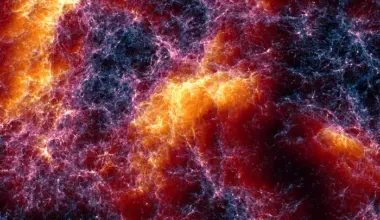
SScience Read More Smithsonian scientists launch “Lumina” simulation to model early universeOctober 26, 2026 A rendering of the cosmic web about 650 million light-years across, produced by the Lumina simulation. The fine…
SSpace Read More Why IISc should be Isro’s JPLOctober 26, 2026 Where you stand changes what you see. There’s something telling about the relationship between IISc and Isro. The…
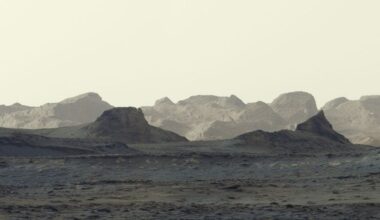
SSpace Read More NASA’s Curiosity Rover Unveils a Spectacular New View of Mars at DawnOctober 20, 2026 The captivating shapes of wind-carved crags called yardangs are revealed in this zoomed-in crop of a broader panorama…
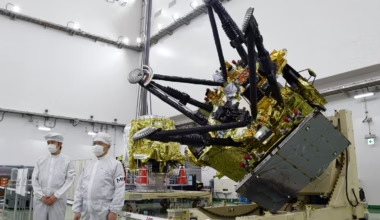
SScience Read More Japan to launch spacecraft on a mission to get samples from a Martian moonOctober 18, 2026 TOKYO — Japan is set to launch a spacecraft on the world’s first mission to bring back samples…
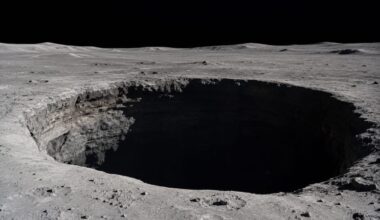
SSpace Read More NASA Is About to Investigate What Lies Beneath a Giant Hole on the MoonOctober 17, 2026 Artist’s concept of a potential lunar cave beneath the Marius Hills region of the Moon. NASA-backed scientists plan…
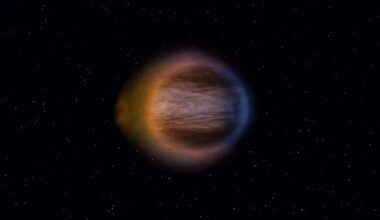
SScience Read More “Transmission Strings” mapping reveals 3D shape of exoplanet atmospheresOctober 15, 2026 The shape of WASP-17b’s atmosphere mapped using transmission strings. The planet has a broad banded jet around the…
SScience Read More Nuclear propulsion: Could nuclear engines transform deep-space exploration?October 8, 2026 As space exploration technologies accelerate, an engine that can traverse deep space equally fast is needed- and nuclear…
SScience Read More Astronomers Confirm Discovery of the Youngest Known Exoplanet EverOctober 6, 2026 How are planets born, and how do they grow? This is an essential question in astronomy, one that…
SSpace Read More New center boosts nuclear isotope output for deep-space missionsOctober 2, 2026 Canada is moving to expand its role in supplying nuclear isotopes that could power spacecraft on long-duration missions.…
SScience Read More Bangkok Post – Radio waves coming from an alien planet may be a cosmic firstSeptember 30, 2026 An undated image provided by the National Aeronautics and Space Administration (Nasa) shows an artist’s concept of the…
SScience Read More New Satellite Engine Could Use Earth’s Atmosphere as Fuel To Stay in Orbit IndefinitelySeptember 26, 2026 Fully Assembled RF Helicon-based Plasma Thruster. Credit: F. Romano A satellite engine that uses atmospheric gases as fuel…
SSpace Read More People think Earth dies when the Sun becomes a red giant in five billion years — the more likely end is a billion years from now, when a star already 30 percent brighter than at birth pushes CO₂ too low for C3 plants, then a moist greenhouse strips the oceans of hydrogen and leaves a sterile VenusSeptember 20, 2026 The Sun is roughly 4.6 billion years old and about halfway through its main-sequence lifetime. The popular conception…