
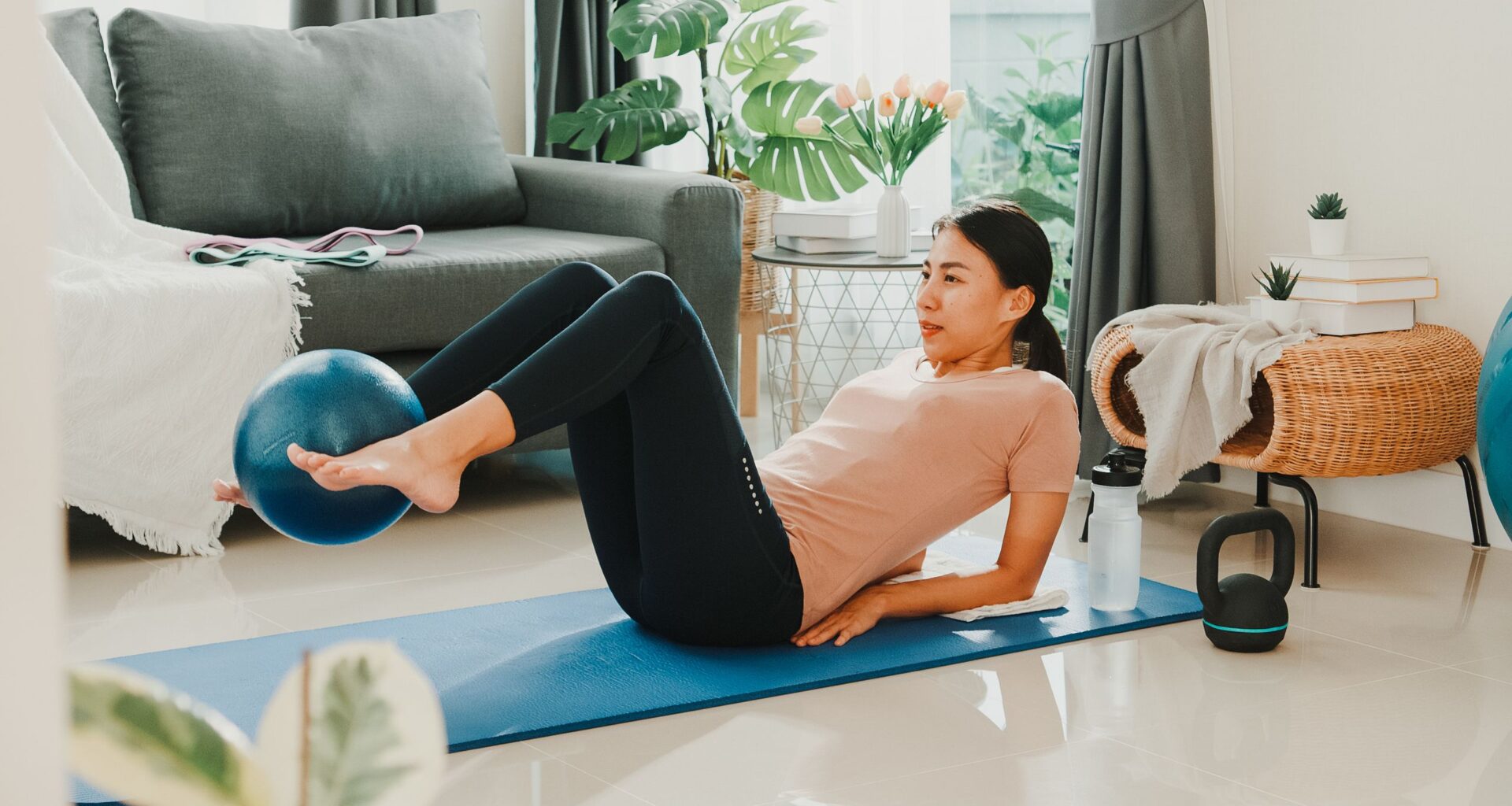
Pilates balls look like unassuming little tools, but they can take your workout to the next level.
“A Pilates ball can either support the body or intensify the work, depending on how it’s used,” explains James Shaw, a Pilates instructor.
Shaw says that placing the ball between the thighs and ankles can encourage engagement in the deep core, while holding it between your hands can improve awareness of how your upper-body muscles are moving.
You may like
The ball can also support you if you find certain Pilates exercises too challenging. For example, you can place it behind your back during floor work, so your core doesn’t have to work as hard.
Have one to hand? Try these three exercises to feel how they can elevate your practice.
Sets: 3 Reps: 100
How to do it:
Lie on your back, with your knees bent, arms by your sides, and the Pilates ball held between your ankles.Straighten your arms toward the ceiling.Extend your legs so that they’re at a 45° angle from the floor.Curl your head and shoulders up and away from the mat and position your arms so they’re parallel to the floor.Pump your arms up and down rhythmically while inhaling for five seconds and exhaling for five seconds.Complete 100 repetitions in total before moving on to the next exercise.
Shaw explains that the addition of the ball to this classic exercise increases the challenge and ensures the work comes from the mid-body muscles rather than the hip flexors.
To make it easier, keep your legs bent at the knee and your shins parallel to the floor.
Sets: 3 Reps: 10-15
You may like
How to do it:
Sit with your knees bent and your feet flat on the floor.Place a Pilates ball under the small of your back.Wrap your arms around your legs or extend them forward.Inhale and curl your spine back, keeping your feet on the floor.Exhale as you use your core muscles to roll back up to the starting position
Shaw says that placing the ball behind your lower back during this move will offer some support, but you’ll still be required to engage your core and move your spine.
This means you’ll build abdominal strength, improve your mobility and learn to activate the muscles around your center.
Sets: 3 Reps: 10-15
How to do it:
Lie on your back with your legs straight and your arms extended toward the ceiling, holding the Pilates ball.Inhale, and curl up your head and shoulders from the mat.When your shoulder blades are off the mat, lift your legs too, keeping them extended. Your body should come to be in a V shape, with your hands and feet almost touching.Transfer the ball from your hands to your ankles.Slowly roll back to the starting position with the ball between your ankles, then repeat, transferring the ball back into your hands.
“By transferring the ball between the hands and ankles, we increase the level of coordination, balance and core control required,” says Shaw.
“This variation challenges the whole body to work together.”