
The key to lifelong fitness is adapting your workout routine to match your body, not the other way around. Changing energy, hormone levels, and bone density in our 50s means focusing on movements that keep our bodies and minds strong.
One person who knows all about the best exercises for women over 50 and how we should exercise is orthopaedic surgeon, Dr Vonda Wright. She’s a leading researcher on longevity, bone health, and a mobility expert. Her recent book, Unbreakable, aims to help women achieve lifelong independence and give them tools for ageing with power.
You may like
Dr Wright’s routine 3 hours of walking
“On a weekly basis, we need to be spending at least three hours a week walking, broken up into 45-minute sessions, so at least four times a week,” says Dr Wright. “Put on your favourite podcast, go learn all week.”
This needs to be walking at a “brisk pace” but “not so fast that you’re out of breath, but not so slow that you can solve world peace in your conversation”, she says.
If you’re new to walking as a workout, this can sound like a lot. With the invention of the best walking pads, you can do some of these steps indoors while watching television, working, or talking on the phone, which may help you do more.
When you’re comfortable with this, Dr Wright advises adding in a stint that gets your heart rate up “really high”. She suggests walking really fast, jogging, or running for 30 seconds, then taking a few minutes to recover, and doing this for four rounds every week.
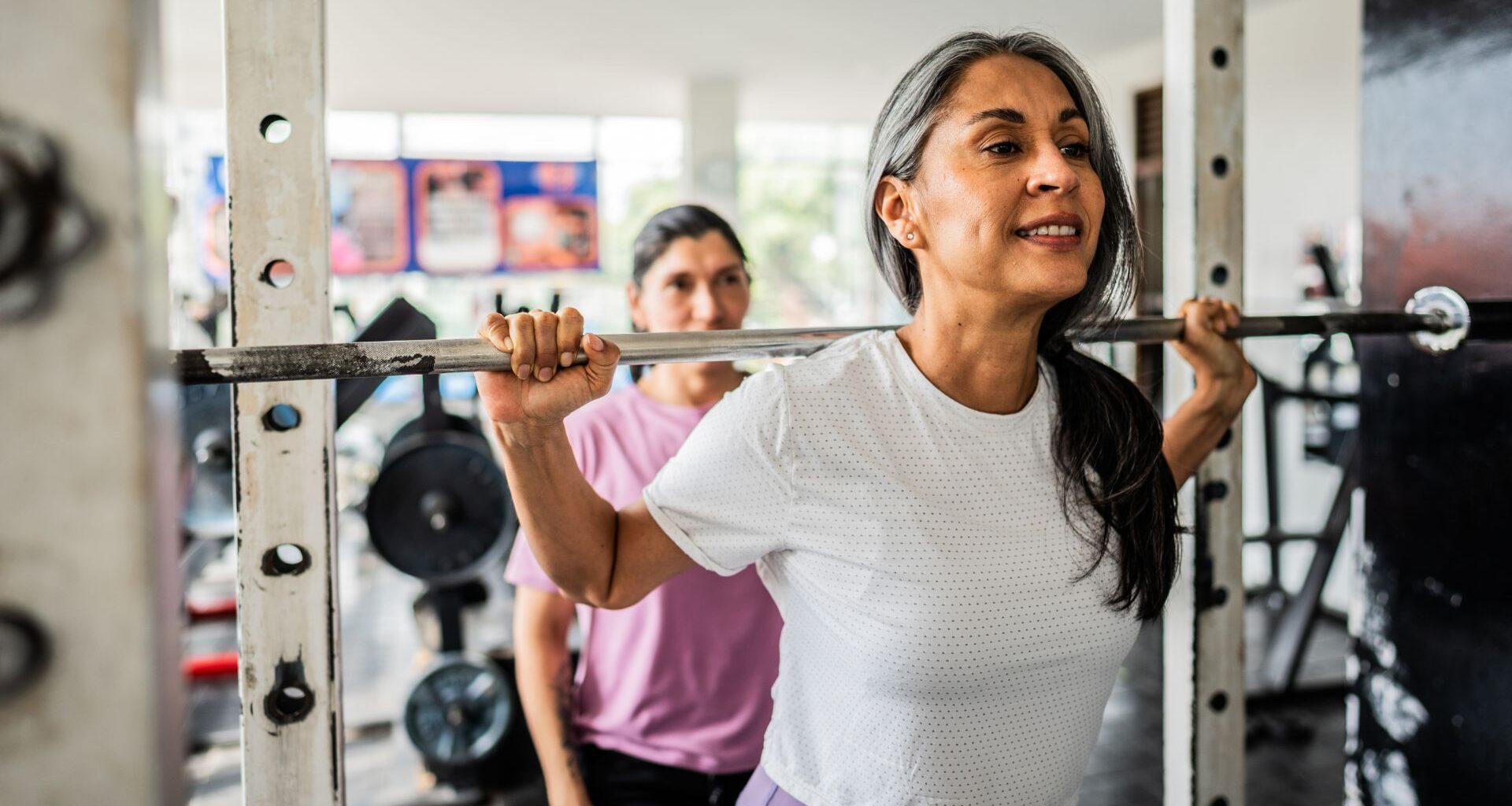
Lifting heavy twice a week
“We must learn to lift heavy” twice a week, says the doctor. “Heavy means what you can lift four to six times. We want to lift to fatigue.”
Fatigue is a term used to describe during repetitions until you can’t do any more. If you can do the repetitions of the exercise more than six times, it’s time to go heavier.
This could be a dumbbell workout at home or a weights circuit at the gym. Where you lift weights doesn’t matter nearly as much as the intensity you put into it. So, that could mean starting off with a bodyweight workout for beginners or callisthenics for beginners and working your way to using weights over time.
You may like
“If we’re starting at just body weight, it may take you six months, maybe nine, to learn the technique and work up, but it is so worth it,” says the doctor. “Heavy is an individual thing, and it’s just something we work towards.”
It’s never too late, either, the doctor is keen to stress. “I have plenty of examples of women starting in their 60s. There’s no age limit on this.”
She also tells Mel that “every woman should be able to do 11 push-ups” – and isn’t prepared to let anyone off gently. When asked by Mel if “on the knees is ok?” Dr Wright says no, but you can “build up” to doing the requisite 11 by learning how to do a push-up from scratch.
“I used to teach classes,” she tells Mel. “My starters started out with 51% body fat. They could not hold a plank and literally couldn’t walk around the track. Over three months, we met with them twice a week. We did a variety of weight-bearing exercises. They not only completed a 3.2-mile walk-run, but they could hold a plank for two minutes.”
Why should ‘every woman’ do this routine?
For years, doctors and scientists have said that cardio and strength workouts, with some balance exercises sprinkled in, are some of the best exercises for longevity. Dr Wright is one of them – she “prescribes” this routine to women as a type of “medicine”. “All of those 33 chronic diseases that people die of are directly treated by moving. Moving your body is the medicine that positively affects them all,” she says elsewhere in the episode.
Strength work, which includes walking and lifting weights, helps build bone density and muscle, reducing the risk of osteoporosis and sarcopenia (muscle loss). It improves metabolism, which can help with natural weight loss, and improves quality of life with age by helping us to stay independent.
The advice wasn’t wasted on Mel, who is already a huge advocate for exercise, having recently shared that walking is a non-negotiable in the morning.
In a video shared to Instagram, Mel revealed the “amazing benefits” of starting the day with exercise. “When you blow through your excuses first thing in the morning, you’ll blow through your excuses for the rest of the day,” she told her followers.
“When you start your day like this every day, you will be SHOCKED at how your life changes,” she said.
Building healthy habits is important as we age. Just a few minutes of exercise every day can do your body a world of good. Researchers from Johns Hopkins University recently found that doing just over half an hour of exercise each week can protect your brain health, with more exercise contributing to more protection against dementia and other age-related conditions.
The NHS recommends that adults aged 19 to 64 should do 150 minutes of moderate-intensity activity every week to help prevent serious health conditions.