
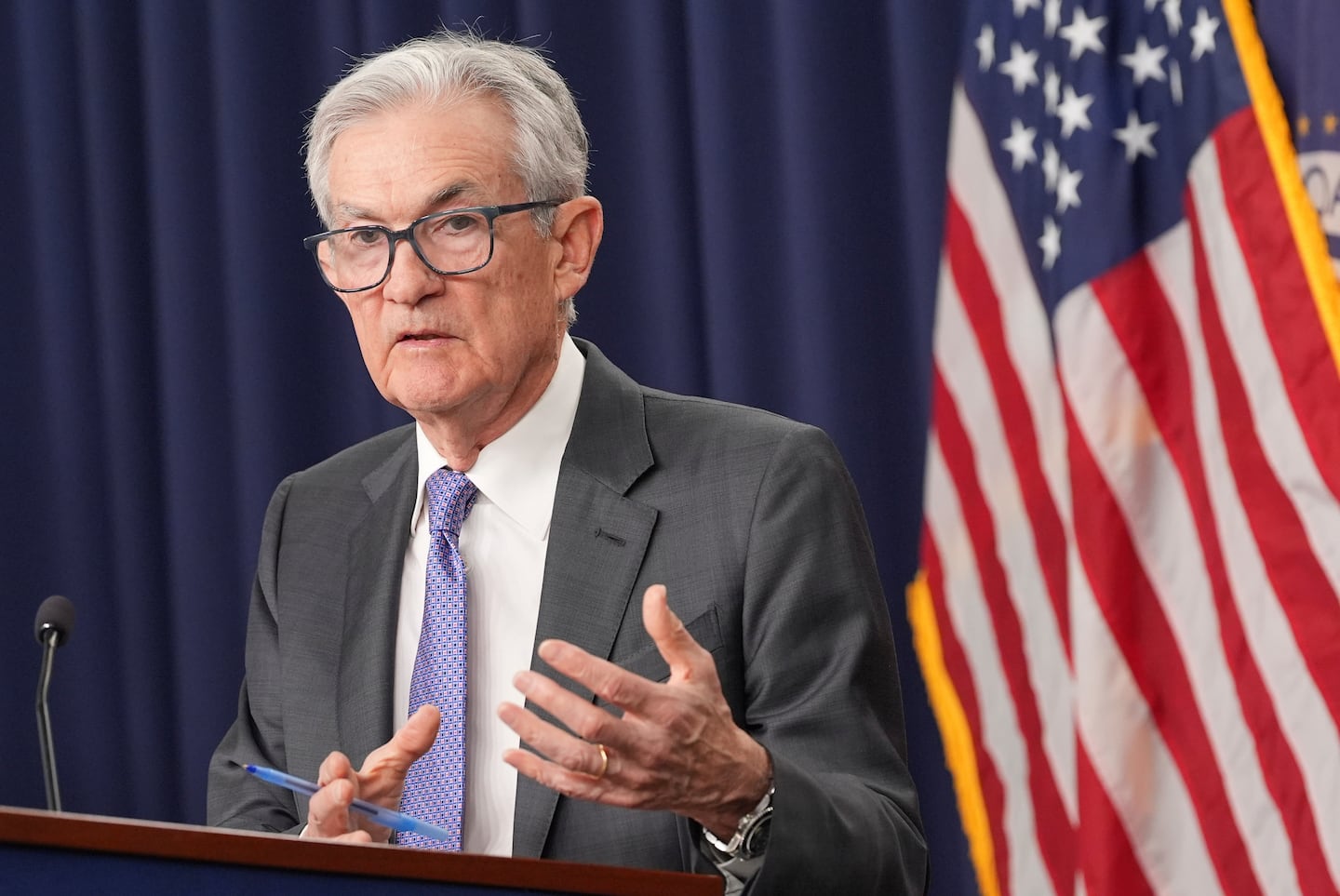
Federal Reserve officials gather about every six weeks to assess the economy and whether interest rates are at the right level to support its goals of maximum employment and low, steady inflation.
The outcome is rarely a nail-biter. Financial markets loathe surprises, and Fed policymakers go to great lengths to telegraph their actions in advance.
That was the case Wednesday when they voted to cut the central bank’s benchmark lending rate by one-quarter of a percentage point, exactly as investors had expected. The move nudged the federal funds rate — which influences borrowing costs for mortgages, credit cards, and business loans — to the range of 3.5 percent to 3.75 percent, the lowest in three years.
What truly makes “Fed Day” matter is what comes after the vote: a news conference in which the Fed’s chair typically signals where policymakers see the economy heading — and how they might respond if things don’t go as planned. Four times a year, the central bank supplements its rate decision with projections on economic growth, inflation, and employment.
On Wednesday, the message boiled down to this: Inflation remains too high, the job market has gone cold, and officials were divided not only on the rate reduction, but also on the path forward.
Fed chair Jerome Powell said the quarter-point cut, plus two others since September, should be enough to shore up hiring while allowing inflation to resume falling toward the Fed’s 2 percent target.
But two voting committee members dissented, preferring to leave rates where they were, while one official — newcomer Stephen Miran, appointed by President Trump, who says rates are too steep — voted for a half-point reduction. There were also six unofficial “silent” dissents from officials who signaled their objection to the rate cut by excluding it from their projections of the appropriate federal funds rate at the end of the year.
“What you see is some people feel we should stop here and that we’re at the right place and just wait. Some people think we should cut once or more this year and next year,” Powell told reporters.
(The rate committee has 19 members: seven Fed governors, the president of the New York Fed, and the other 11 regional Fed bank presidents, four of whom vote on an annual rotating basis.)
Here are more of the key Fed Day takeaways:
The economy should pick up next year
Gross domestic product is expected to grow by 2.3 percent in 2026, based on the median estimate of policymakers. That’s not a gangbuster pace, but it’s an improvement from 1.7 percent this year.
The increase includes about 0.2 percentage points of business activity that was delayed due to the federal government shutdown from October through mid-November, Powell said.
The job market has stalled
The US unemployment rate was 4.4 percent in September, the highest in four years, according to the most recent Labor Department report. It will end next year more or less in the same place, the Fed’s projections show.
Powell said that employer demand for workers has declined, but labor supply growth has also slowed. Productivity improvements should drive the economy forward even as hiring sputters, he said.
Tariffs are keeping inflation elevated
The Fed’s preferred inflation measure rose 2.8 percent in September compared to the same period the year prior, a pace the Fed sees slowing to 2.5 percent next year.
Services inflation has eased, but the cost of many goods is moving higher as the full impact of Trump’s tariffs kicks in. Powell expects the increases to peak in the first quarter if no major new import levies are introduced.
“If you get away from tariffs, inflation is in the low twos,” he said.
Interest rates may not fall much in 2026
Policymakers’ median forecast was one rate cut next year, unchanged from their September estimate.
But there was a wide divergence among officials. Seven indicated they favored holding rates steady for all of 2026, suggesting that they expect inflation to remain sticky. Eight signaled support for at least two cuts, suggesting they see a pickup in unemployment as a bigger risk that hotter inflation.
Powell’s powers of persuasion prevailed
Despite the diverging views, Powell persuaded nine meeting participants to back the quarter-point cut out of concern that the job market is even weaker than it appears.
Government data show that the economy has added an average of about 40,000 jobs a month since April. But Powell said that figure will probably prove too high when the Bureau of Labor Statistics does its periodic revisions. Employers may have shedded about 20,000 jobs a month since the spring, he estimated.
Powell’s term as chair ends in May. Trump has made clear he will appoint a successor who will push for aggressively lower rates. A leading candidate is Trump economic adviser Kevin Hassett, who has faithfully echoed his boss’s view that rates are holding back the economy.
Whether it’s Hassett or another pick, the next Fed chair will take the job at a time of unusually sharp divisions among policymakers.
“We were a little bit successful.”
— Elon Musk, the world’s richest person, when asked by podcaster Katie Miller about his time overseeing the now-disbanded Department of Government Efficiency.
Hospital heroes: Rob Hale, CEO of Quincy’s Granite Telecommunications, and his wife, Karen, donated $100 million to Boston Children’s Hospital. The hospital will use the gift, the largest in its history, to help build a $640 million pediatric psychiatric hospital in Brighton.
Oval Office unbound: The Supreme Court on Monday seemed likely to expand presidential control over independent federal agencies, signaling support for President Trump’s firing of board members.
Nothing to see here: Taking a big political risk, Trump tries to deny reality on inflation and affordability.
Price pressures: As deadlines for open enrollment draw near, more than 10,000 Massachusetts residents have dropped health plans obtained through the Massachusetts Health Connector. The increase in lapsed coverage comes as premiums tied to expiring federal subsidies are projected to soar.
Contested closing: UMass Memorial Health is standing by its decision to shut a maternity unit at its Leominster hospital in 2023, despite a recent state audit that said the health system could have used state grants to support the program.
DEI disclosures down: Forty-two of the top 100 public companies in Massachusetts left race and gender data about their executive ranks and boards out of securities filings this year, up from just eight a year ago, according to The Boston Club’s annual report.
Skyline signage: JPMorgan Chase & Co. plans to move its Boston offices to the new South Station Tower and is seeking city permission to put in name atop the building.
Skinny bundles: YouTube TV will offer more than 10 genre-specific programming packages that are cheaper than its full streaming service, including one with access to ESPN Unlimited, FS1, and NBC Sports Network.
Re-upped: ABC signed Jimmy Kimmel to a one-year contract extension, months after the late-night talk show host was temporarily suspended over remarks following the assassination of conservative activist Charlie Kirk.
$7,166,000,000
— Donations to organizations since last December by MacKenzie Scott, the author, philanthropist, and ex-wife of Amazon founder Jeff Bezos, bringing her total giving since 2019 to $26.3 billion.
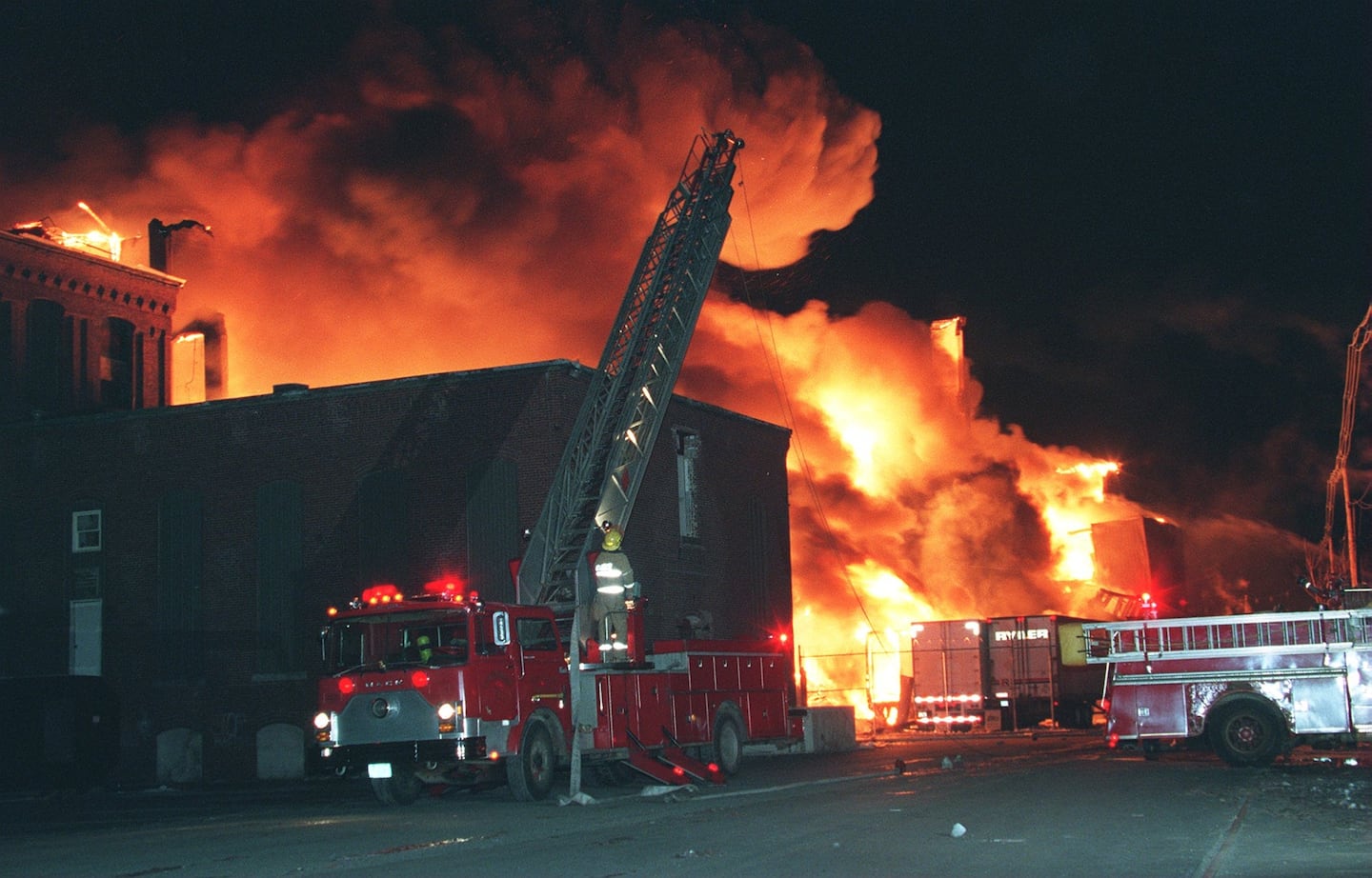 The Malden Mills complex was destroyed by fire on the night of Dec. 11, 1995. The Boston Globe/Boston Globe
On this date 30 years ago, Malden Mills burned to the ground, and owner Aaron Feuerstein took his first steps toward becoming a folk hero at a time of rampant corporate greed.
Feuerstein could have taken the insurance money and retired.
Instead, the next day, with the rubble still burning, he announced he would pay his 3,100 employees — including 1,400 at the textile factory on the Lawrence-Methuen line — for three months while the company scrambled to restart operations. He vowed to rebuild the mill complex.
Feuerstein kept his promise, but Malden Mills was burdened by the debt he took on to rebuild. By 2001, the company was forced into bankruptcy. It was eventually sold to a private equity firm, the Lawrence plant was shuttered, and a few years ago the company, now called Polartec LLC, changed hands again.
Feuerstein died four years ago.
👋 Thanks for reading. And thanks to everyone who emailed me with memories of what they were doing when they heard the news that John Lennon had been killed. Trendlines will be back on Monday.
✍🏼 If someone sent you this newsletter, you can sign up for your own copy.
Larry Edelman can be reached at larry.edelman@globe.com.