
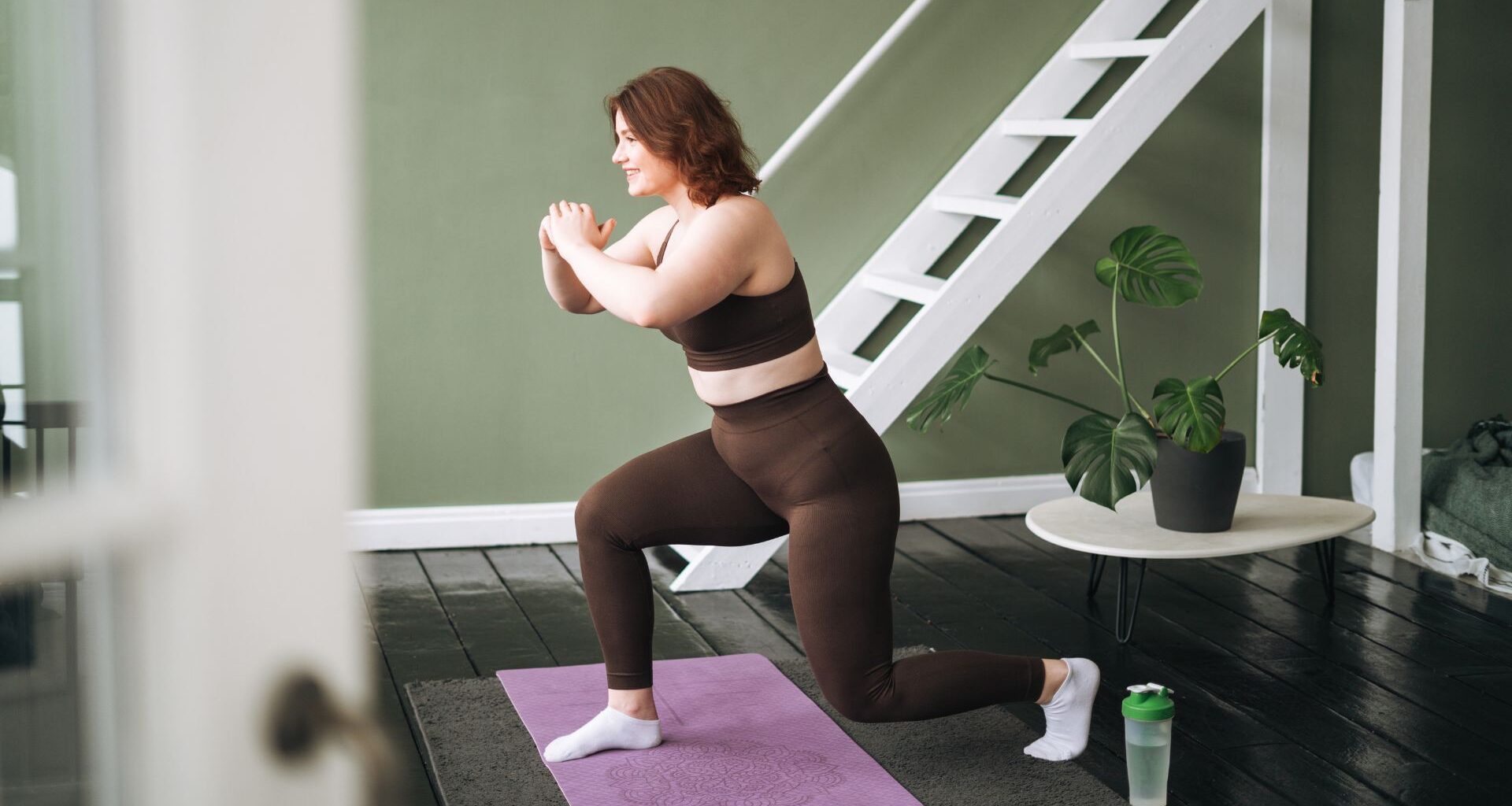
Good core strength is key to staying mobile and keeping good posture. To build it, many people do core exercises like sit-ups, crunches, and Pilates-inspired moves. While these certainly have their place, yoga is an overlooked practice.
As well as helping the superficial core muscles (like the abdominals) get stronger, doing yoga as a workout includes many deep core exercises that can strengthen the muscles that sit around the spine, in the trunk, and across the pelvic floor. These are what really matter when it comes to improving your body’s internal support and preventing injury.
You may like
Try these 4 deep core exercises in yoga1. Bear Plank (Bharmanasana)
The controlled hover in this movement “lights up the deep transverse abdominals”, says Sophie, who is also the co-founder of Radiant Waves Yoga, Surf & Wellbeing Retreats.
Here’s how to do it:
Come down onto your yoga mat on all fours, placing your hands directly under your shoulders and knees under your hips. Tuck your toes.Engage your core by pulling your belly button towards your spine and tucking your tailbone.Lift your knees so they hover above the ground by about two inches, keeping your back flat.Try to hold the position for 30 seconds.Slowly lower your knees back to the ground.2. Revolved Crescent Lunge (Parivrtta Anjaneyasana)
The multifidus is a muscle deep in your back that runs along the side of the spine. Keeping it strong with deep core exercises is key to stabilising your whole body. The twist in this exercise “challenges the obliques and multifidus, which is brilliant for core control and balance”, says Sophie.
Here’s how to do it:
Begin in a low lunge position on the mat with your hands in front of your chest.Take a breath, and on the exhale, lift up and twist your torso over your front leg. Bring your elbow to rest on the outside of your front knee.Exhale, twisting your torso over your front leg, resting the opposite elbow outside the front knee.Keep your spine long and raise your chin to look toward the ceiling.Repeat on both sides, holding each for 30 seconds.3. Three-Legged Downward Dog with Knee-to-Nose Pulses (Tri Pada Adho Mukha Svanasana)
“While lifting one leg shifts your centre of gravity, drawing the knee to the nose engages the entire core in this pose, and especially the deep stabilisers,” says the instructor.
Here’s how to do it:
You may like
Start in the downward dog position, hands pressed down against the floor and body in a ‘V’ shape. Pull your shoulder blades back and down, engage your core.Inhale, lift one leg straight up toward the ceiling behind you, keeping your hips level with the ground and other leg stable.In one flowing movement, bring the same leg under your body and towards the middle of your outstretched arms.Hold the position for a moment, then push the same leg back up to the ceiling.Repeat for 30 seconds then switch sides.4. Side Plank (Vasisthasana) with optional top-leg lift
The side plank is just as popular in a home Pilates workout as it is in yoga. Vasisthasana is “one of the most effective poses for deep lateral core strength”, says Sophie. “The balance element ensures you’re firing stabilising muscles, not just the outer obliques.”
Here’s how to do it:
Start in a high plank position and position your hands directly under your shoulders.Slowly rotate your feet so the outer edge of one foot is on the floor, and keep your body stable in one line. Lift your body up off the floor.Once stable, extend one arm straight up towards the ceiling, engaging your core.Hold this for 30 seconds, before slowly bringing your hips down.5. Boat Pose (Navasana) with high to low variations
“Moving between high and low boat requires controlled, steady breathing and strong engagement through the pelvic floor and lower abdominals,” says Sophie.
Here’s how to do it:
Sit on the floor, your knees at a 90-degree angle and feet flat on the floor.Engage your core and bring your shoulder blades back and down.With control, lift your legs and upper body up and bring your arms out in front.Hold for a moment, making sure your core is still engaged.Lower yourself down, stretching your legs out and bringing your arms out straight, palms facing up.Benefits of yoga for the deep coreBetter posture and spinal support: By strengthening the deep core muscles, you can expect to feel your posture improve and experience better spinal support. “This will make everyday movements like sitting, standing, or lifting feel easier and more comfortable,” says Sophie.May reduce back pain: Deep core exercises are often some of the best back exercises, too, as they strengthen the spinal stabilisers, improving lower back and pelvis support, which may help ease lower back pain.Improved balance and stability: A strong core is a foundation for the rest of the body, the instructor explains. “It supports everything from gentle yoga flows to daily tasks like twisting and reaching, helping you feel steadier, more coordinated, and in control of your movements.”Reduced risk of injury: “Finally, when your deep core is engaged, your body distributes weight and pressure more evenly, rather than overloading the lower back or hips,” she says. “This helps limit aches, strains and niggles, and ultimately makes everyday life, exercises, and even lifting children or shopping bags safer and more comfortable.”Why is it important to have a strong core?
We focus a lot on our upper-body and lower-body muscles, and with good reason. These are essential for lifting and moving in daily life. However, our strength when twisting, sitting, standing, reaching, and doing many of the movements in our upper-body workouts and lower-body sessions comes from the core.
Just as a strong core can improve posture, a weak one can lead to poor posture and injuries away from exercise, as other muscles work to overcompensate for the core.