
Getting the balance right between sleep and exercise could play a crucial role in protecting against illness and early death, scientists say.
New research suggests there is a ‘sweet spot’ where the two overlap – and that more sleep is not always better when it comes to staying active.
In a large international study, researchers found that people who slept for around six to seven hours a night tended to clock the highest number of steps the following day, while those sleeping longer were less active.
The study, led by scientists at Flinders University in Australia and published in the journal Communications Medicine, analysed data from more than 70,000 adults across nearly 250 locations worldwide, tracked over three and a half years.
Participants used consumer sleep trackers and fitness devices, allowing researchers to monitor sleep duration and daily step count.
Those who slept for around six hours walked the most, logging nearly 340 more steps the next day than people who slept for eight hours.
Even those who slept for seven hours took around 237 more steps than eight-hour sleepers.
When researchers plotted sleep against activity, they found a U-shaped curve – with both too little sleep (under six hours) and too much sleep (over eight hours) linked to fewer steps the next day.
The findings are significant because both short sleep and low physical activity are independently associated with higher risks of heart disease, diabetes, obesity, depression, inflammation and all-cause mortality.
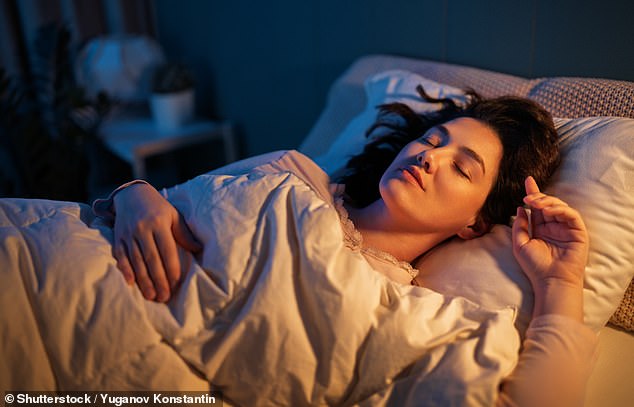
A fresh study has revealed the amount of sleep that maximises step count the next day
Previous research suggests walking around 8,000 steps a day is enough to reduce the risk of heart disease and early death, challenging the long-held 10,000-step target.
Yet the new analysis shows how difficult it is for people to hit both recommended sleep and activity levels.
Only 12.9 per cent of participants managed to combine seven to nine hours of sleep with at least 8,000 steps a day.
Meanwhile, 16.5 per cent averaged less than seven hours of sleep and fewer than 5,000 steps, a level associated with sedentary behaviour.
The researchers also found that sleep influenced activity more than activity influenced sleep, suggesting poor sleep may be a major barrier to staying active.
Older adults over 60 and people with a BMI above 32, classed as obese, were also less likely to reach higher step counts.
John Flinton, a doctoral researcher at Flinders University and the study’s lead author, said the results highlight a mismatch between idealised health advice and real life.
‘Only a small fraction of people are able to achieve sufficient sleep and adequate physical activity on a routine basis,’ he said.
‘This raises important questions about how realistic current public health guidelines are when considered together.’
However, he cautioned that the findings should not be taken as advice to deliberately cut sleep. The study did not account for exercise intensity or other forms of activity such as swimming, and participants were more likely to be health-conscious than the general population.
Instead, the researchers say the results underline the need for more flexible, realistic health guidance that recognises how sleep and exercise interact in everyday life.
Share or comment on this article:
Experts pinpoint the perfect amount of exercise AND sleep to reduce the risk of illness and early death