
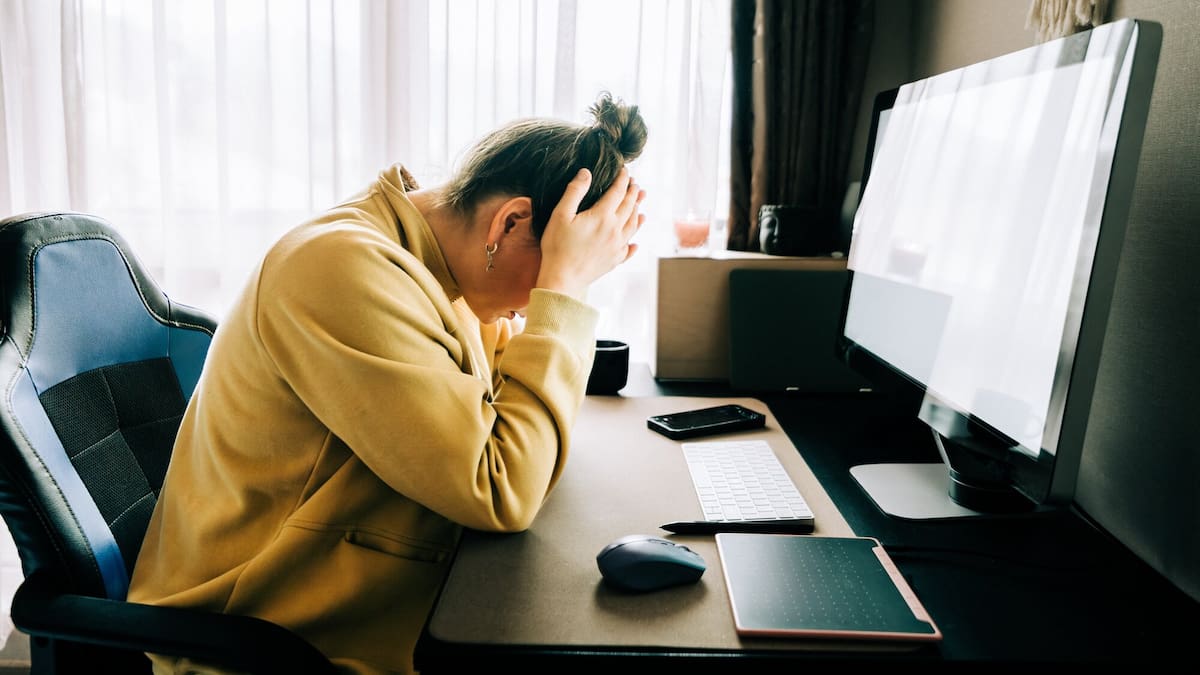
The key is to understand when this response has become disproportionate to the stimulus and therefore unhelpful.
He says signs this might have happened include when stress begins to feel out of control, impinging on other aspects of your life such as sleep, eating and relationships.
“Other people might comment on it: ‘Oh, you’re so stressed’ or ‘you’re so wound up’ or ‘you’re never present’.”
When this happens, he says, one of the immediate things you can do is to focus on your breathing.
“If we go back to fight or flight, then we know when people come into that mode, their breathing does tend to change. We tend to breathe at a much more shallow and fast rate. And that in itself prolongs that stress, that fight-or-flight response. So just stopping and paying attention to your breath can be enough to create that micro-pause and be a circuit-breaker.”
In recent years, breathwork has been the subject of much attention and scientific research, suggesting it can be a powerful antidote to stress. Controlled breathing helps downregulate the sympathetic (fight or flight) nervous system and activate the parasympathetic (rest and digest) system.
Breathwork practitioner Gemma Rose says relaxing breathing techniques can help people not only release stress but also increase their nervous system’s capacity for stress. A regular practice of 20-30 minutes of focused breathwork yields the best results, Rose explains; however, a shorter practice is still beneficial.
One technique she suggests is locking yourself in the toilet for five minutes: “You’re locking the door, you’re turning the light off and ideally you’d have some noise-cancelling headphones with you, but they’re not essential,” she says. “And you’re going to shut your eyes so you’re depriving your senses as much as possible. And then you’re going to breathe in for a count of two through the nose and out for a count of two through the mouth.”
She suggests putting a song on through the noise-cancelling headphones and breathing in that rhythm for the length of the song.
“And by the end,” she says, “you would have activated your parasympathetic nervous system, which signals to the body that it’s safe to rest, it’s safe to come out of that stress response.”
Naturopath Alena Winter says that after working for several years as a naturopath, she noticed stress was a factor in almost every one of her clients’ health issues. Then she discovered the term “nervous system regulation”.
For a lot of people, she says, chronic stress comes from a dysregulated nervous system, when the body perceives a threat that doesn’t exist. For example, you might be checking your emails but feeling a level of stress more appropriate for escaping from a dangerous situation.
Dealing with this, she says, doesn’t have to take a lot of time, doesn’t have to be complicated and doesn’t have to cost you anything at all.
It begins, she says, with noticing when it’s happening so that you can identify what’s contributing to it. It might be eating the wrong foods for breakfast – not enough protein is a common failing – or drinking too much coffee.
But some stressors are beyond one’s control – the demands of one’s children, for instance. For those, she says, it’s essential to slow down so you can get curious about your reaction and explore other ways of responding.
“When we rush through our day, our nervous system feels as if we’re being chased. It doesn’t know that we’re not – that there’s not a true threat present when we’re acting like there is.
“I like to say urgency is optional. Even if we have a lot on, slowing down by 10 or 20% can be enough to just take the edge off and to help us to feel a little bit calmer.”
Posture is another tool, she says. By holding a tight, tense posture, you send messages of threat to your nervous system. If you notice yourself doing this, she suggests dropping your shoulders, relaxing your face and taking some deeper breaths, signalling to your body that you’re safe.
Another way one can soothe frayed nerves is through the stomach. The connection between gut and brain, known as the gut-brain axis, is a rapidly growing field of study, and the gut is now often referred to as the second brain, due to its influence on the body and mind.
Gastroenterologist and group leader at the Malaghan Institute of Medical Research Tom Mules says it’s not unusual for patients with gut issues to describe a stressful event that triggered the onset of the disease or contribute to flare-ups. There is also now good evidence that stress can lead to inflammation not only in the gut but elsewhere in the body.
So, if you’re looking for ways to alleviate stress, it’s worth considering anti-inflammatory foods that are good for the gut, like the Mediterranean diet.
He says, “I’m a real believer that if you can improve your gut health, that’s going to improve the health of your of your whole body, including your brain, and will allow you to deal with stress in a better way, and may actually help to reduce stress.”
Alena Winter says her dietary recommendations to clients also share features of the Mediterranean diet: high-fibre, plenty of plant-based food and non-starchy vegetables, plus a high-quality protein source with every meal, starting at breakfast, which for most people, she says, is the meal in which we’re most lacking protein.
Diet can play a role in managing stress. Photo / 123rf
Sleep is also vital to managing stress, she says. Not just going to sleep early but ensuring the quality of those hours is high. Winter says to prioritise a “good eight hours” of sleep each night, and to do so may require you to have a wind-down period: some quiet time, having a cup of herbal tea and doing something that relaxes you.
“I like to say it’s almost impossible to parallel park a car that’s driving on the motorway. So, we want to slow the car down to be able to park it, to be able to fall asleep.”
Psychologist Sutherland says noticing the symptoms of stress is the first step to dealing with them. It’s not really possible to block them out, he says and it’s important not to try, since failing can lead to a vicious cycle in which the stress is exacerbated by the failure.
“There’s a level of what we call ‘Acceptance of having uncomfortable feelings’,” he says, and suggests embracing it with a “prescribed worry time”. During a 20- or 30-minute block – not right before bed – you unpack what is on your mind.
“That won’t be a particularly pleasant time, so you might want to end that with something a bit more pleasant that you enjoy doing. But, during that time really sitting down and figuring out ‘what are the elements and what I’m worried about that I can control, what can I influence and what are those things that concern me but I really have no ability to influence whatsoever’.”
All of the experts spoken to for this article agree that there is no silver bullet for stress. All use the word “holistic”.
Sutherland says that when he trained in psychology, “the brain was at the centre of it all” but today, psychology is “a much more holistic discipline” that considers how the mind and body interrelate and impact one another.
Just as stress affects both body and mind, both body and mind must be considered as we seek a calmer, steadier 2026. Eating, sleeping and breathing might not be the most glamorous ways to deal with a life full of stress, but if you’ve read this far, you’re obviously not here for the glamour.
Now go put on a pair of noise-cancelling headphones with some nice calming music, lock yourself in the toilet and breathe like your life depended on it.