
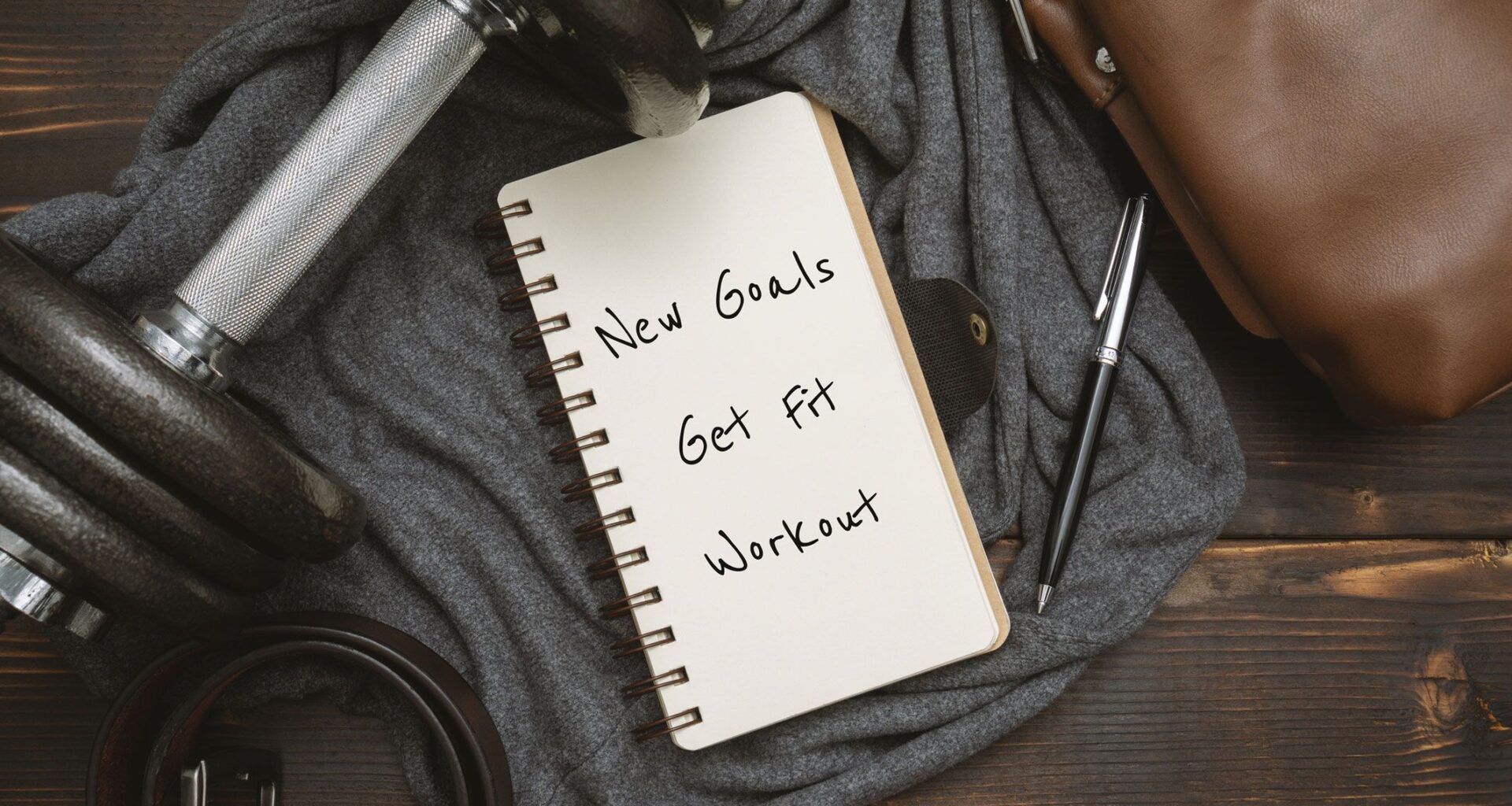
It is an all-too-familiar cycle: As the New Year starts, we are brimming with motivation, promising ourselves that this is the year we finally get fit. We go to the gym regularly, diligently track our workouts and fill our schedules with fitness classes two weeks in advance. But then reality sets in. Life gets busy, motivation drops, and our fitness goals start fading into the background. For many, that ultimate surrender comes around ‘Blue Monday‘ — the third Monday in January. This is when we tend to crumble under the weight of unrealistic expectations and fading motivation, and finally consign our fitness goals to history.
The good news is that this vicious cycle can be broken. Behavioral science is getting ever closer to understanding what makes us kickstart and maintain an exercise routine, and what derails or slows down our efforts to form new habits — and we can use that knowledge to our advantage.
With that in mind, we asked experts in psychology, physiology and fitness coaching for their advice on how to successfully establish an active lifestyle in 2026. Here are six simple, science-backed tips that can help you finally get fit.
You may like
1. Start small

(Image credit: Getty Images)
This is the most important one. If you want to succeed with your New Year’s fitness resolutions, do not overload yourself from the get-go. When you set a lofty goal like “work out every day,” you are more likely to get anxious about it, procrastinate and, ultimately, abandon it altogether.
Instead, focus on tiny habits, a concept popularized by the Stanford behavioral scientist B.J. Fogg — scale the behavior down to something so small it feels almost effortless.
“Psychologically, starting small works because it avoids triggering the brain’s threat response, which is activated when the perceived cost of a change is high. Tiny, manageable goals create early mastery experiences that boost dopamine and strengthen self-efficacy: the belief that ‘I can do this,’ Dr. Michael Swift, a British Psychological Society media spokesperson and clinical director at Swift Psychology, a counselling service in Birmingham, U.K., told Live Science by email. “Even a few minutes of movement is enough to begin building the neural pathways that underpin habit formation.”
Top tip: Forget the marathon: start with a stroll or a 15-minute bodyweight workout in your living room. The goal here is not to train like an athlete from day one, but to successfully repeat a new behavior. Consistency beats intensity every time in the habit-formation phase.
“People tend to set the bar really high when they are starting a new exercise routine. It is important to choose a program that you will enjoy, and that is going to fit into your lifestyle and be sustainable long term,” Michelle D’Onofrio, a Pilates instructor and co-founder of Yatta Studios, a chain of boutique exercise studios in the U.K., told Live Science by email.
It is also worth noting that this slow-burn approach has tangible benefits for your muscular health and general well-being. “Your body adapts to new physical stress through progressive overload — gradually increasing intensity, duration, or frequency so muscles and cardiovascular system can adapt safely,” D’Onofrio said.
If you do too much exercise too soon, you are more likely to struggle with brutal bouts of DOMS (Delayed Onset Muscle Soreness) and even painful injuries.
You may like
Today’s best deals on beginner-friendly exercise equipment
2. Schedule and stack it

(Image credit: Getty Images)
Motivation is a fickle fuel source — it starts bright and intense, but fizzles out quickly. Scientists know that our actions are heavily automated, with most of our behaviors being cued by time, location or preceding events.
Exercise is no different. If you plan and schedule your workouts in advance, you give yourself a powerful cue and a direct call to action that helps when your motivation inevitably runs low. This is why people who create and follow a specific plan detailing when, where and how they would exercise are more likely to follow through than those who do not plan their workouts at all, according to a 2013 meta-analysis published in the journal Health Psychology Review. This phenomenon is called “implementation intention.”
Top tip: Move exercise from a vague “I should” to a non-negotiable appointment. Use time blocking — put your exercise session in your daily calendar, just like a meeting with your boss or a school class, then set a reminder. Simple yet effective.
“Too often people think a gym session has to be a massive time commitment, or that they need to overhaul their lives completely to exercise. That’s rarely realistic and often backfires,” Steve Chambers, a senior personal trainer and gym manager at Ultimate Performance in Manchester, U.K., told Live Science by email.
“Start by mapping out your real-world schedule (work hours, family, social commitments, sleep, stress etc), then build a custom plan that fits around your life, not the other way around,” Chambers advised.

(Image credit: Getty Images)
When planning a new activity, use habit stacking. In essence, this is the practice of piggybacking a new exercise routine onto an existing habit. For example, “After I get home from work and put my keys down, I will immediately change into my workout clothes.” This method uses the established neural pattern of the old habit as a runway for the new one.
“Habits form through the cue-routine-reward loop. You are more consistent when exercise is tied to a stable anchor such as ‘after breakfast’ or ‘after work’,” D’Onofrio said.
Also, tie in temptation bundling — combine doing something you ought to do with doing something you love. “This could mean that you only listen to your favourite playlist or podcast whilst doing your workout,” Rex Fan, a lead behavioural insights advisor at Bupa Health Clinics in the U.K., told Live Science by email.
This also means that you should remember to reward yourself. “When you structure in your workout, why not also structure in something nice to look forward to afterwards? It could be anything from a nice coffee to a phone call with a friend,” Fan said.
Today’s best deals on beginner-friendly fitness trackers
3. Make exercise fun
(Image credit: Getty Images)
If you frame exercise purely as a punitive tool for weight loss, or penance for all the hours spent watching your favorite TV show, your brain will subconsciously resist it. Doing something because it feels good is far more sustainable than doing something out of guilt or peer pressure. If you want to increase your chance of succeeding with your New Year’s fitness resolutions, make exercise as fun and engaging as possible.
“From a neuroscience perspective, the brain repeats what it finds rewarding, and attaching positive emotion to movement accelerates habit consolidation. Pairing activity with something enjoyable, such as music, a favourite podcast or the satisfying tick of crossing off a plan, enhances the brain’s reward circuitry and reinforces the behaviour,” Swift said.
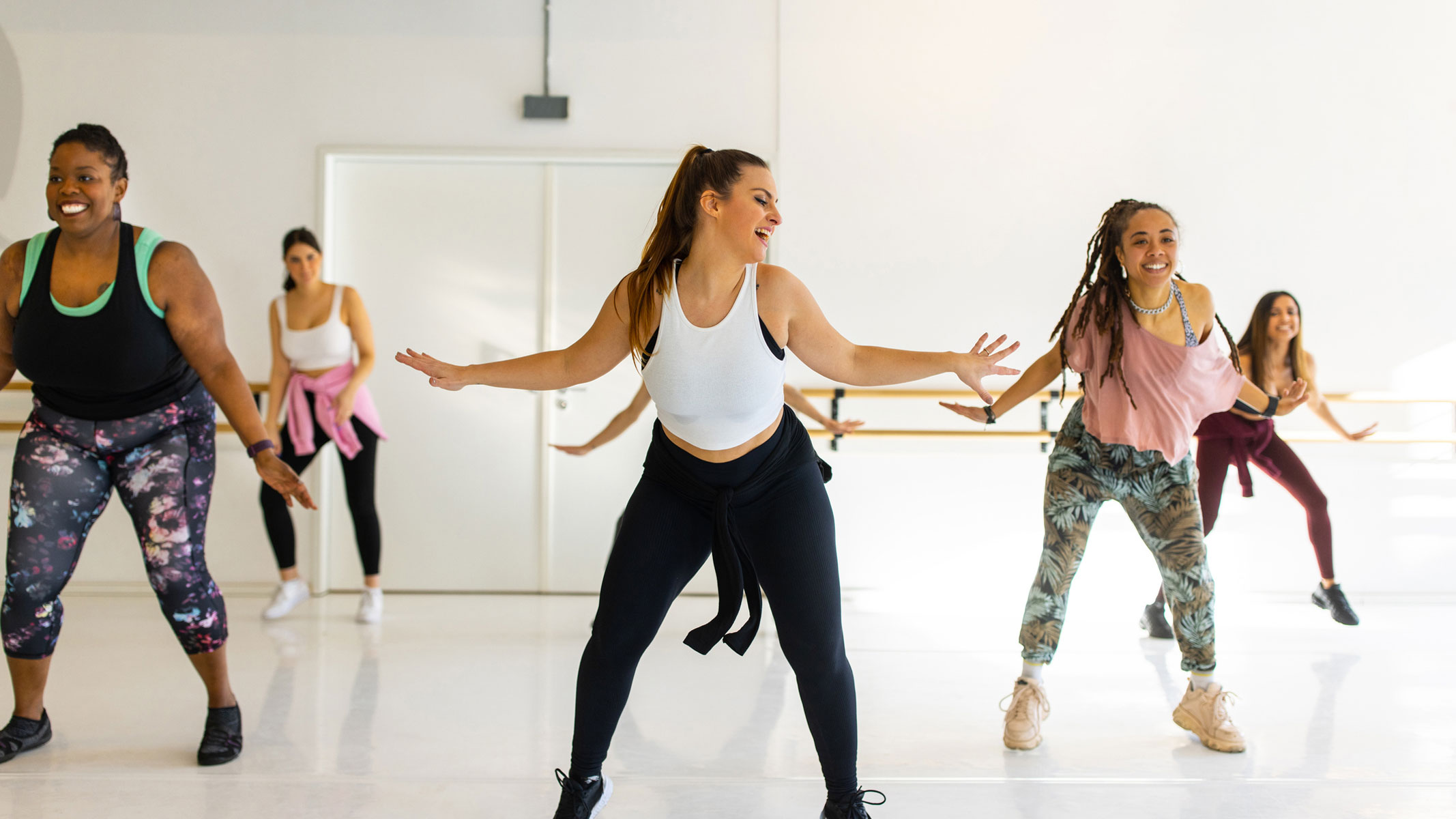
Top tip: This one is simple — do what makes you happy. If you are not a fan of gym workouts or the thought of going for a run makes you queasy, consider dancing, martial arts or some of the more atypical sports, such as frisbee, futsal, Quidditch or trampoline. Every movement counts.

(Image credit: Getty Images)
As Dr. Nicolas Berger, a senior lecturer in exercise physiology at Teesside University in the U.K., told Live Science by email: “Dancing on your own, with your friends, or partner is a brilliant way to improve coordination and cardiovascular fitness, which is low impact but good for your joints and bones. It also brings massive social benefits, improving mental health as well as self-confidence. It’s one of the best ways to do exercise without feeling like it is.”
If going to a Zumba class or hopping on a trampoline does not appeal to you, consider some of the less strenuous activities you can do in the great outdoors. “Is there a sea or lake nearby? Rent a kayak or rowing boat, even a pedalo. This all helps with upper body, lower back and core strength,” Berger said. “Any outing where you have to walk a lot and maybe carry a backpack is beneficial. If it is interesting, you will not notice it is exercise.”
All in all, by making exercise easy, accessible and rewarding, we work with the brain rather than against it, giving new routines the best possible chance to take root, Swift concluded.
Today’s best deals on running headphones
4. Optimize for convenience
(Image credit: Getty Images)
Human behavior is often governed by “friction costs” — the more steps, decisions or effort required to start a task, the less likely we are to do it. Our brains naturally gravitate toward the path of least resistance, and exercise is no different. If you want to increase your chance of succeeding with your New Year’s resolutions, identify and remove or minimise any potential barriers and hurdles that can slow you down on your fitness journey.
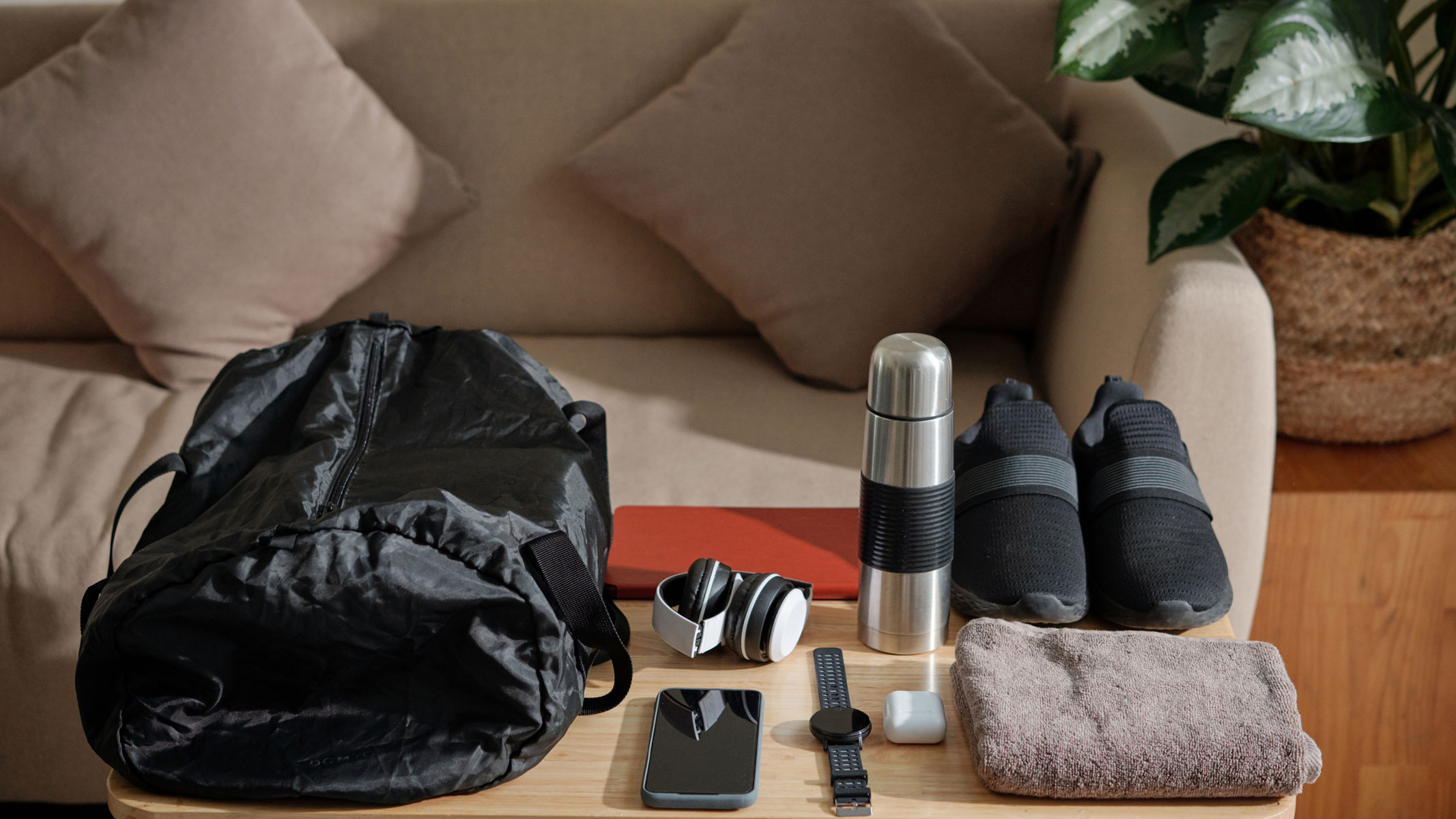
“One of the strongest findings in behavioural science is that motivation is unstable, so the goal is to design the behaviour to require as little activation energy as possible,” Swift explained. “Reducing friction by laying out clothes the night before, choosing an activity with minimal setup, or linking movement to an existing cue engages the brain’s habit system, which favours predictability and ease. When a task feels simple, the prefrontal cortex does not have to work as hard to overcome resistance, making follow-through far more likely.”
Top tip: Identify your potential barriers and challenges (lack of time? no access to exercise equipment? poor sleep?), then make a plan to remove or minimize them as much as possible. In simpler terms, make starting your workout as easy and frictionless as possible. For example, the night before your scheduled exercise session, place your workout clothes by the bedside and your water bottle by the door. Have your workout video bookmarked or your podcast playlist ready. If morning gym travel is the hurdle, join an online fitness class from the comfort of your living room.
The hurdle is almost always in the starting, not the continuing. Getting over that initial friction is half the battle.
Today’s best deals on sleep trackers
5. Embrace imperfection

(Image credit: Getty Images)
All-or-nothing thinking is a major hurdle to succeeding on your fitness journey. You miss one day of training, convince yourself you have failed and abandon the entire effort. However, getting fit is a marathon, not a sprint. Sometimes a little self-compassion goes further than bashing yourself for not living up to your expectations.
“When people interpret lapses as normal variability rather than personal failure, they are far more likely to resume,” Swift said.
Top tip: Try the “two-day rule.” It is simple: never let yourself skip your planned exercise for two days in a row. Life happens. You’ll get sick, work will run late, or motivation will dip. Permission to miss one day is crucial to prevent shame and the subsequent spiral. But by committing to not missing a second day, you build resilience and prevent a lapse from becoming a collapse. This builds self-compassion and a flexible, sustainable mindset, which is far more durable than rigid perfectionism.
“In practice, that means: Accept that progress won’t always be linear. There will be plateaus or regressions. That doesn’t mean failure. Be forgiving of slip-ups, but don’t give up! If you fall off the wagon, then get on again next session.” Chambers said.
6. Involve others

(Image credit: Getty Images)
Last, but not least: involve other people. According to a 2017 systematic review published in the journal International Review of Sport and Exercise Psychology, social support can have a small but significant impact on helping you stick to your new exercise routine long-term. Whether it is the local running club, a guided Pilates session or working out with your gym buddies, having someone to check in with you on a regular basis can be a huge motivator. It does not even have to be someone you are particularly close to.
“Sharing your intentions with someone you trust, like a fitness coach or health adviser, can help you to stay closer to your goals. Speaking to a health adviser may also help you to prepare for the physical demands of a new workout, depending on your individual health,” Fan said.
Top tip: Train with a partner (friend, spouse) or have a regular “gym buddy.” Join a fitness class, whether in your local leisure center or online. Start a fitness blog. The options are endless!
“If you know someone’s counting on you, you are more likely to show up. Having a system of external accountability dramatically raises the odds that you won’t just ‘fall off the wagon,” Chambers concluded.