
Sleep looks peaceful on the outside, but inside the brain, it is anything but quiet. Neurons pulse, blood flows, and hidden rhythms rise and fall like slow ocean tides.
For decades, scientists believed that one of the slowest of these rhythms, called the infraslow brain rhythm, was a special feature of mammals, closely tied to deep, non-dream sleep. However, a new study suggests the rhythm isn’t exclusive to mammals.
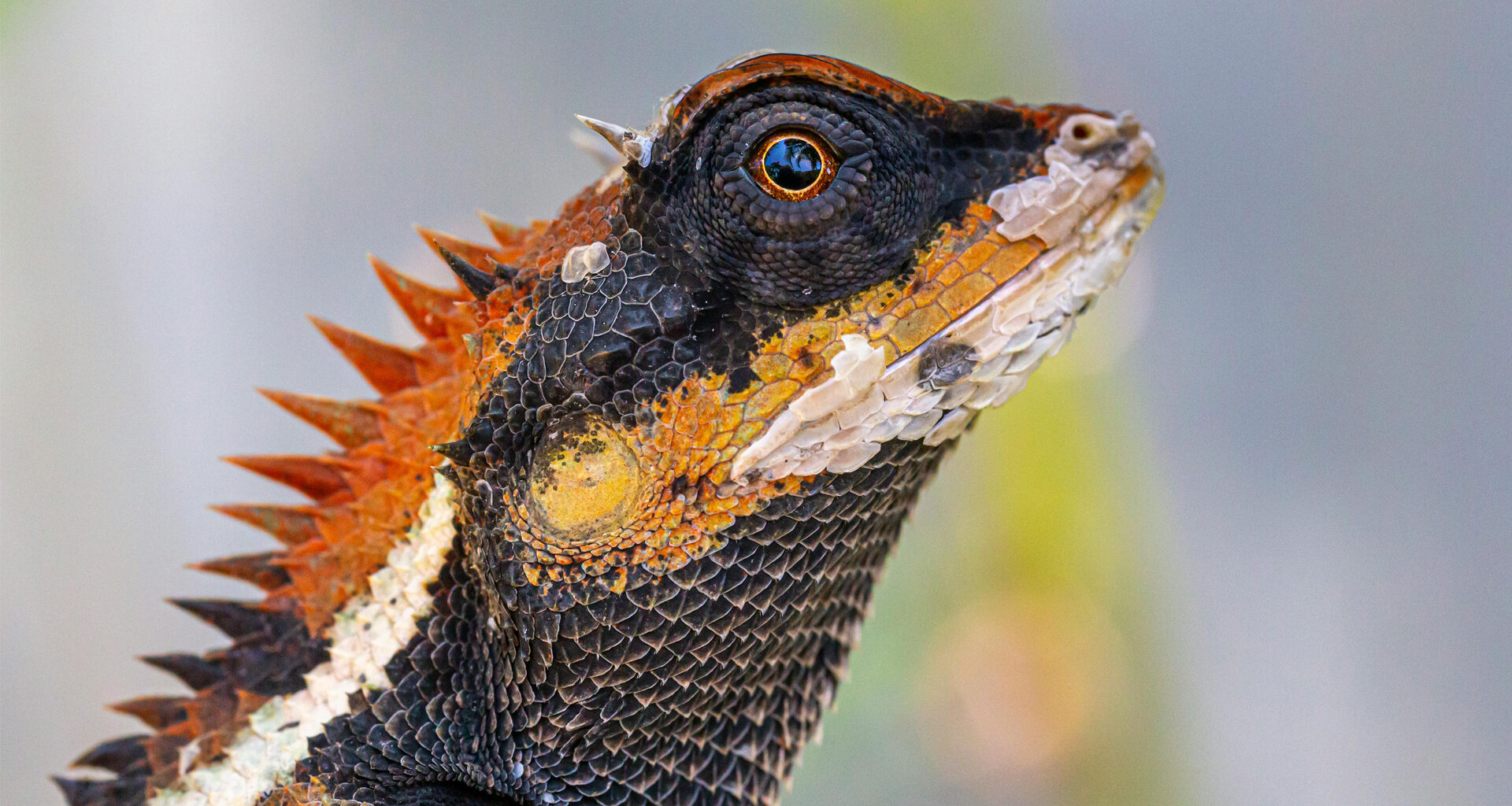
By recording brain activity in lizards, researchers have uncovered the same ancient rhythm in reptiles, suggesting that this key part of sleep evolved more than 300 million years ago — long before mammals even existed. Moreover, they recorded the same rhythm in birds, proving that it is a common feature among complex organisms.
This discovery challenges how scientists think about the origins of sleep and hints that the basic machinery of sleeping brains is far older and more universal than anyone suspected.
Going deep into the origins of sleep
Understanding sleep has always been difficult because it leaves no fossils behind. Scientists can’t dig up ancient brains, so they’ve had to infer how sleep evolved by comparing living animals.
Until now, that comparison was incomplete, largely focused on warm-blooded animals like mammals and birds. Reptiles, which are cold-blooded and evolutionarily older, remained a missing piece of the puzzle.
That gap made it hard to know whether different sleep states, such as REM and non-REM sleep, evolved recently or were inherited from a common ancestor. This new work finally fills in that missing chapter.
The project began more than a decade ago, when neuroscientist Paul-Antoine Libourel joined a sleep research team in Lyon to explore the question: where did sleep states come from? To find the answer, his team turned to reptiles, which split from the evolutionary line leading to mammals and birds around 300 million years ago.
Recording brain activity in lizards, however, is far from easy. Some species are small, delicate, and highly sensitive to stress. Standard lab equipment is too bulky and power-hungry.
To overcome this, the researchers worked with engineers at the Lyon Institute of Nanotechnology to build a tiny, low-power brain recorder called a biologger. Small enough to be worn comfortably, the device can record brain signals, heart rate, breathing, muscle tone, and eye movements — all at the same time.
This technology later became the foundation for a startup company, Manitty, and is now used to study sleep in animals and humans in real-world environments.
Testing biologger on lizards and others
Using these custom-made devices, the team recorded sleep activity in seven lizard species, including geckos, chameleons, agamas, and bearded dragons. They didn’t just track brain waves. They also measured how the animals’ hearts slowed, how their breathing changed, and even how blood flow in the brain rose and fell.
In some cases, they used functional ultrasound imaging to directly observe changes in brain blood vessels, both in lizards and in mice, allowing them to compare species side by side. When the researchers analyzed years of data, a striking pattern emerged.
Across reptiles, birds, rodents, and humans, the brain showed the same slow rhythm, cycling over tens of seconds. This infraslow rhythm wasn’t limited to neurons; it involved the whole body, including blood circulation and physiological signals.
In mammals, this rhythm is strongly linked to non-REM sleep, the phase associated with dreams, physical restoration, and brain maintenance. Finding it in reptiles revealed that this rhythm is not a recent innovation, but a deeply conserved feature of animal sleep.
“This rhythm involves not only brain activity but also physiological processes and peripheral vascularization, indicating that it is a global, organism-wide rhythm,” Libourel said.
The significance of infraslow brain rhythm across species
If reptiles share this infraslow rhythm with mammals and birds, it means that some core functions of sleep appeared very early in vertebrate evolution. One possibility is that the rhythm helps the brain clean itself by moving cerebrospinal fluid that washes away metabolic waste — a process already proposed for mammals.
Another idea is that the rhythm causes brief fluctuations in alertness, allowing sleeping animals to periodically check their surroundings and reduce the risk of being eaten.
At the same time, the findings challenge how sleep stages are defined. In humans, sleep is neatly divided into REM and non-REM stages, with dreaming strongly linked to REM sleep. Reptiles do not appear to organize sleep in the same way.
“This does not imply that reptiles do not dream; rather, it suggests that their sleep-state organization differs from that of mammals, despite sharing some conserved processes such as the infraslow rhythm,” Libourel added.
Also, while the rhythm looks similar across species, scientists still don’t know whether it serves exactly the same purpose in reptiles as it does in mammals. Proving this will require experiments that directly test how the rhythm affects brain cleaning, vigilance, and survival.
Next, the researchers plan to expand their studies to other animal groups, including amphibians and fish, and to dig deeper into the biological mechanisms that generate the infraslow rhythm.
By tracing sleep back to its deepest roots, they hope to uncover why sleep is so essential and why evolution has guarded it so carefully for hundreds of millions of years.
The study is published in the journal Nature Neuroscience.