
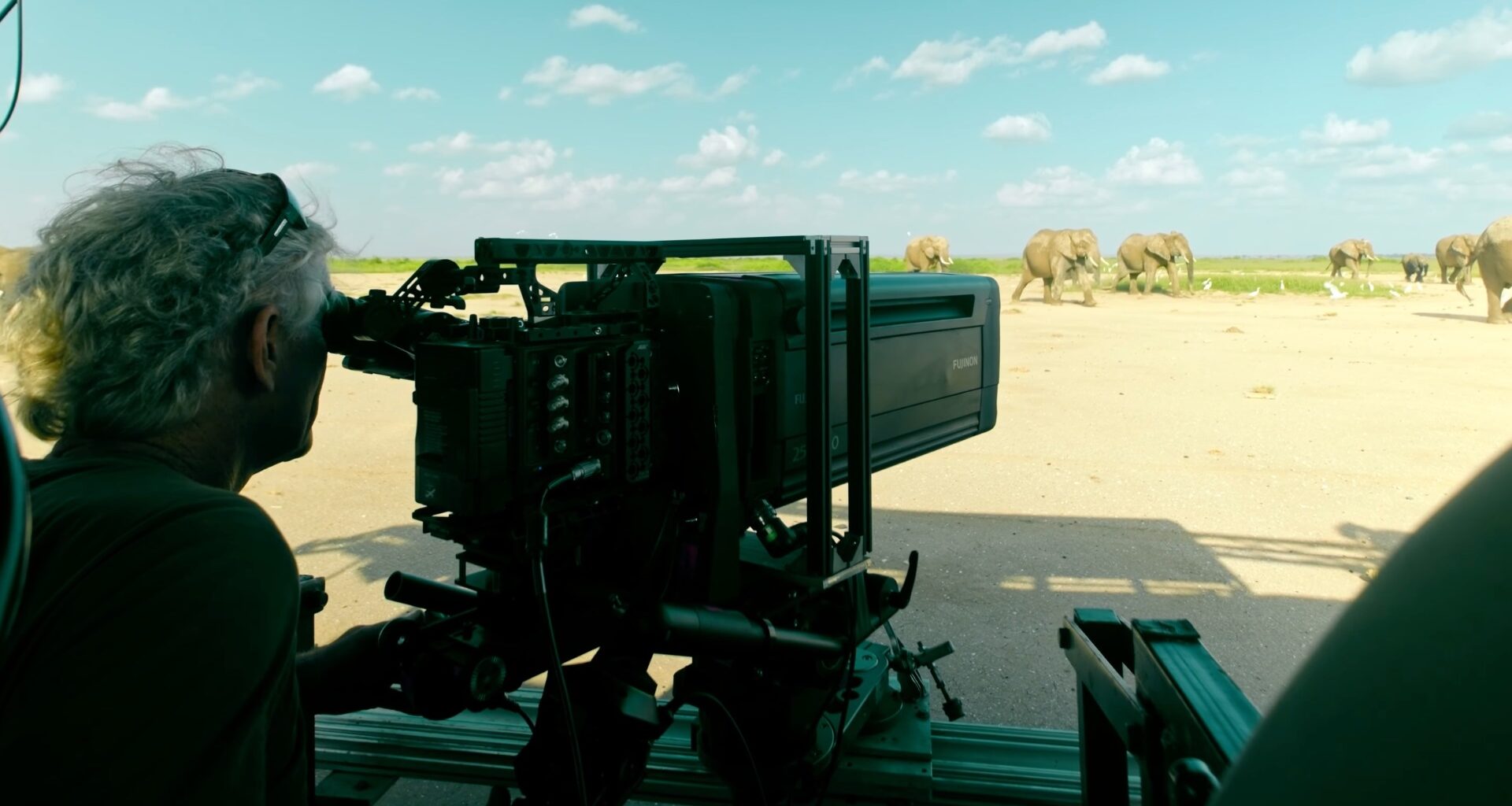
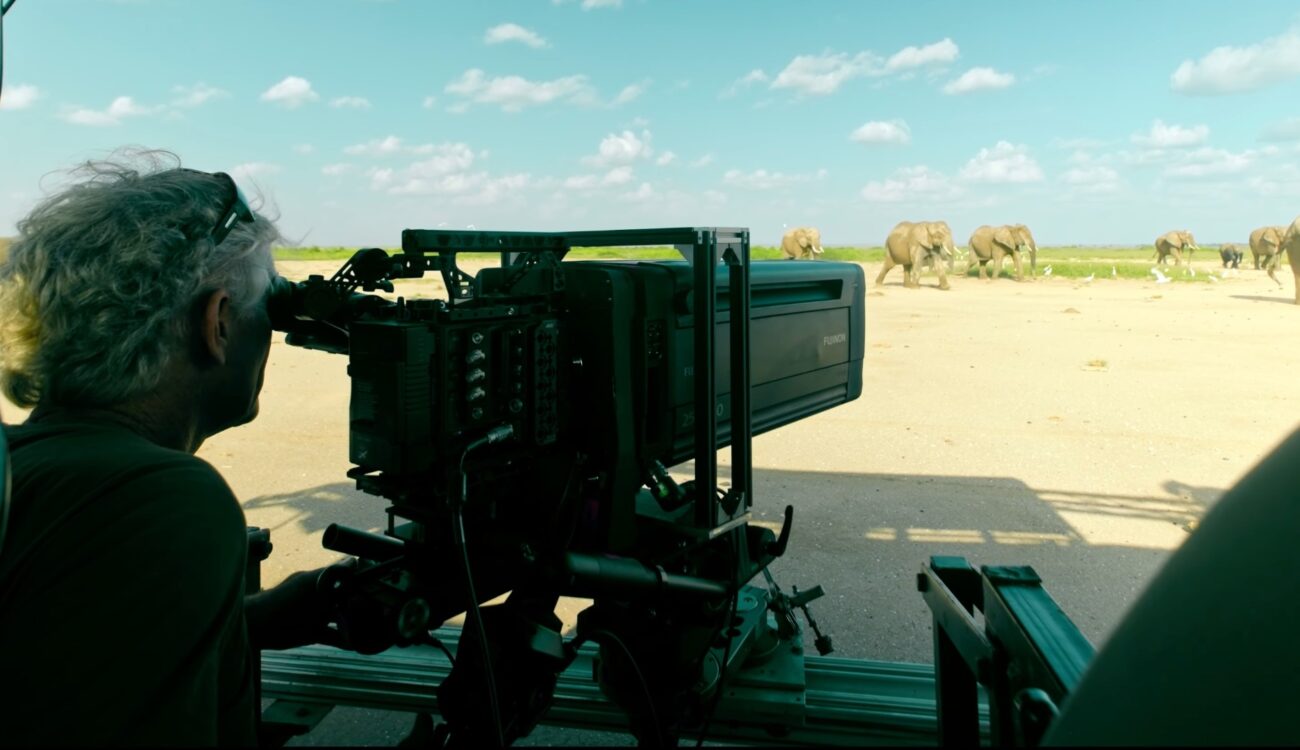
Emmy Award-winning cinematographer Bob Poole reveals how the FUJINON Duvo HZK25-1000mm, paired with the ARRI ALEXA 35, enabled respectful wildlife filmmaking while delivering unprecedented intimacy in his elephant documentary. From vehicle-mounted setups to large-sensor advantages, here’s what it took to capture elephants in the wild without disturbing them.
Wildlife cinematographer Bob Poole spent decades developing his approach to filming elephants, an approach rooted in respect, patience, and maintaining proper distance from his subjects. His recent work on an elephant documentary for PBS Nature combined his lifelong passion with cutting-edge technology, specifically the FUJINON Duvo HZK25-1000mm box lens mounted on an ARRI ALEXA 35. The result demonstrates how professional wildlife filmmaking balances technical capability with ethical responsibility, where the right gear becomes essential for both image quality and animal welfare.
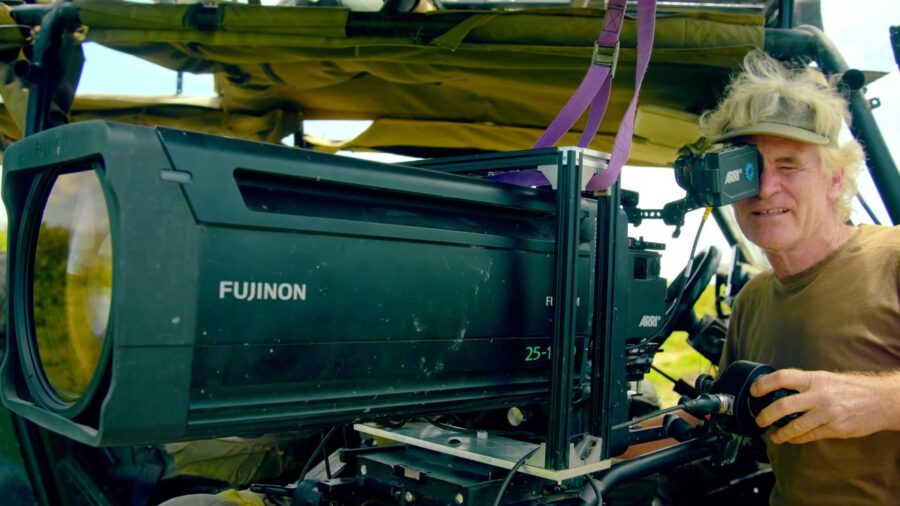
We initially spoke with Bob Poole at NAB 2024, right after he tested the Duvo lens on safari in Kenya with support from FUJIFILM North America’s Vice President, Victor Ha. At the time, the 28kg / 61.7lb lens seemed like an ambitious choice for unpredictable field conditions, requiring Bob to “chop up and re-design” his vehicle to accommodate the massive setup. However, that initial safari confirmed what has now become evident in the finished documentary: the Duvo HZK25-1000mm delivers capabilities that simply weren’t available to wildlife cinematographers before.
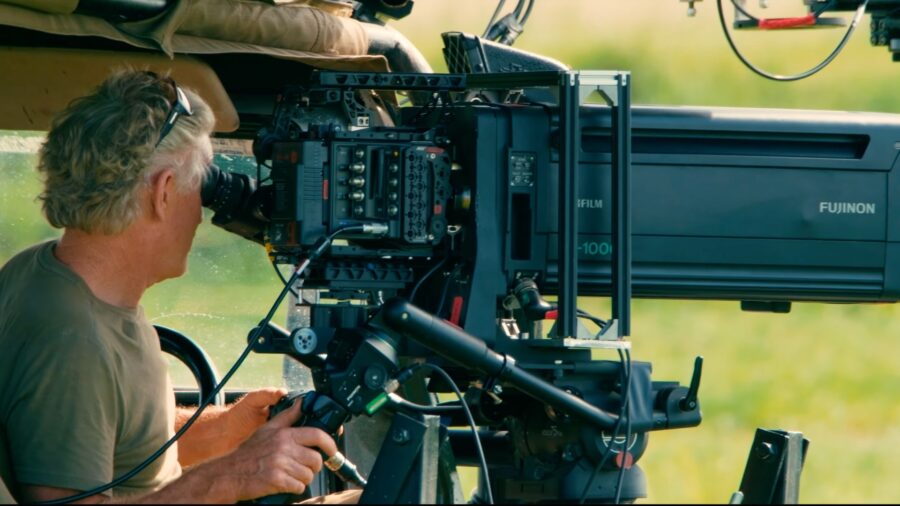 Credit: FUJIFILMThe challenge of filming elephants
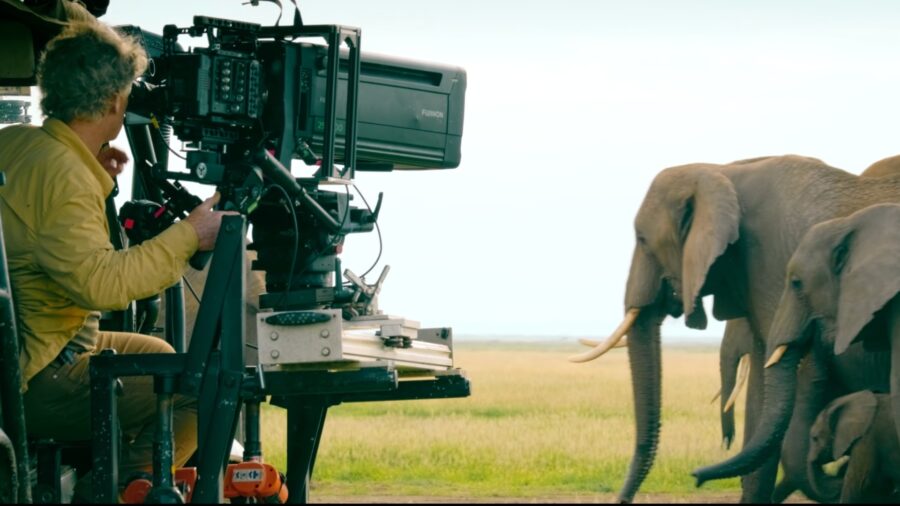
Bob’s approach to wildlife cinematography prioritizes animal comfort above all else. Elephants are unpredictable subjects, sometimes approaching within meters of the camera position, other times remaining at a significant distance. Traditional wildlife filming often requires choosing between wide-angle coverage or telephoto reach, forcing cinematographers to either get dangerously close or sacrifice intimacy in their shots.
The Duvo HZK25-1000mm fundamentally changes this equation. With its 40x zoom range covering 25-1000mm (extending to 37.5-1500mm with the built-in 1.5x extender), Bob could maintain a respectful distance while still capturing intimate details. The lens’s fast T2.8 maximum aperture at the wide end, ramping to T5.0 at 1000mm, enabled shallow depth-of-field shots that convey emotional connection without requiring physical proximity to the animals.
What makes this particularly effective for elephant filming is the smooth bokeh transition the lens produces. Even when working at extreme telephoto focal lengths with limited depth of field, the Duvo’s optical design ensures out-of-focus areas roll off naturally, drawing viewer attention exactly where Bob intends without creating distracting artifacts. For wildlife work where subjects exist within complex natural environments, this characteristic becomes crucial for maintaining visual clarity and emotional impact.
Camera package and workflow
Bob’s primary camera was the ARRI ALEXA 35, which paired exceptionally well with the Duvo lens’s PL mount and large image circle. The ALEXA 35’s Super 35 sensor matched the Duvo’s native coverage.
FUJIFILM supplied backup cameras, including the GFX100 II and X-H2S, which documentary crew members used for supplementary footage. Bob also utilized these cameras for timelapse sequences, which ran almost continuously throughout the shoot. This multi-camera approach, combining the vehicle-mounted Duvo setup with more portable FUJIFILM bodies, gave the production versatility that extended beyond what any single camera system could provide.
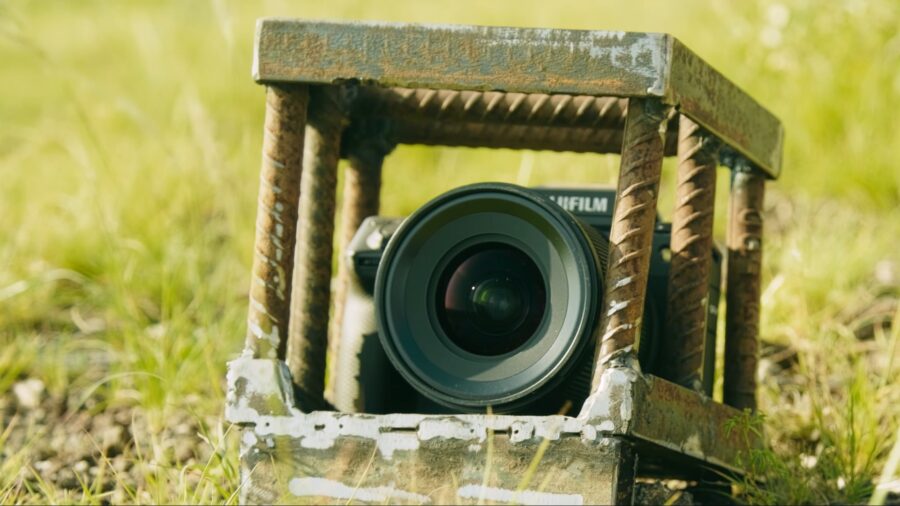 The FUJIFILM GFX100 II is waiting to capture some low-angle elephant shots. Credit: FUJIFILM
The ALEXA 35’s sensor characteristics complemented the Duvo’s optical performance particularly well. Large-format sensors deliver advantages for wildlife work that extend beyond just depth of field control. The increased sensor area captures more light information, providing greater flexibility in post-production for adjusting exposure and extracting detail from shadows. For documentary work where reshoots are impossible and lighting conditions vary constantly, this latitude becomes essential.
Post-production flexibility
Wildlife documentaries often require extensive post-production to match shots from different times of day, adjust for varying weather conditions, and create narrative flow from footage captured over extended periods. The technical quality delivered by the Duvo-ALEXA package reduced the compromises typically required during this process. Rather than fighting technical limitations, editors and colorists could focus on storytelling decisions.
The FUJINON Duvo HZK25-1000mm features several technologies specifically designed to simplify post-production workflows. Automatic Restoration of Illumination Attenuation (ARIA) corrects exposure ramping as you zoom, Breathing Compensation maintains consistent framing during focus adjustments, and Automatic Chromatic Aberration Correction reduces color fringing. While these features were developed primarily for broadcast applications, they prove equally valuable for documentary work where technical perfection cannot come at the expense of capturing decisive moments.
 Credit: FIJIFILMWide-angle perspective in wildlife filming
While the Duvo’s extreme telephoto capabilities often dominate discussions, Bob specifically noted the value of the lens’s wide-angle coverage. At 25mm on Super 35, or 37.5mm with the extender engaged for full-frame, the Duvo provides surprisingly useful wide-angle perspectives for establishing shots and environmental context.
Wildlife documentaries require more than just close-ups of animals. Viewers need to understand the landscape, the ecosystem, and the spatial relationships between subjects. Having wide-angle capabilities in the same lens package that delivers 1000mm telephoto reach means wildlife cinematographers can tell more complete stories without constantly swapping lenses or cameras. For vehicle-mounted setups like Bob’s, where lens changes become complicated by the rig configuration, this versatility proves particularly valuable.
Optical image stabilization
Working at extreme focal lengths introduces significant challenges around image stability. Even minor vibrations from wind, vehicle movement, or operator shake become dramatically magnified at 1000mm. The Duvo addresses this through FUJIFILM’s ceramic ball roller optical image stabilization system, which actively compensates for movement to maintain stable framing.
For wildlife filming where tripod placement is limited, and subjects move unpredictably, reliable stabilization becomes essential rather than optional. Bob’s vehicle-mounted setup, while far more stable than handheld operation, still experienced vibrations from rough terrain, wind conditions, and the substantial weight of the rig itself. The Duvo’s stabilization system handled these challenges effectively, delivering smooth footage even in adverse conditions.
The stabilization system works in conjunction with the lens’s overall mechanical design. At 28kg / 61.7lb, the Duvo requires substantial support infrastructure, but this weight also contributes to momentum-based stability. Combined with electronic vibration compensation, the result is a shooting platform that remains surprisingly steady even when conditions work against it.
The joy of wildlife filmmaking
Beyond technical specifications and workflow considerations, in the above video, Bob spoke about the fundamental pleasure of wildlife cinematography. Spending time observing elephants, understanding their behavior, and capturing authentic moments of their behavior is the core appeal of this specialized field. The Duvo lens and ALEXA 35 camera served as tools enabling Bob to realize his creative vision, but the real work involves patience, knowledge, and respect for the subjects.
 Credit: FUJIFILM
Professional wildlife filmmaking requires years of experience to develop the skills needed for capturing compelling footage while prioritizing animal welfare. Bob’s lifelong passion for elephants informs every decision he makes on location, from camera positioning to knowing when not to film. The technology supports these ethical considerations by enabling distance, but the responsibility for respectful filming ultimately rests with the filmmaker.
The PBS Nature program “Tusker: Brotherhood of Elephants” represents the culmination of this approach, where technical excellence and ethical practice combine to deliver powerful wildlife storytelling. Viewers can watch the full program at PBS.org.
Technical specifications
The FUJINON Duvo HZK25-1000mm is a box-style cinema lens with native PL mount and dual-format sensor coverage. Key specifications include a 25-1000mm focal range (40x zoom ratio), T2.8-T5.0 maximum aperture, a built-in 1.5x extender that extends the range to 37.5-1500mm, optical image stabilization via a ceramic ball roller system, ARIA exposure correction, Breathing Compensation technology, and support for remote back focus. The lens weighs 28kg / 61.7lb and measures substantial dimensions requiring professional support systems.
Intended primarily for broadcast and high-end live production applications, the Duvo HZK25-1000mm retails for $265,000, positioning it firmly within the rental house and production company market rather than owner-operator purchases. However, for specialized applications like wildlife documentary production, where its specific capabilities prove essential, rental costs become justified by the unique results it delivers.
Have you worked with extreme-telephoto cinema lenses for wildlife or documentary applications? What challenges have you encountered in maintaining image quality while respecting subject distance? Share your experiences in the comments below!