
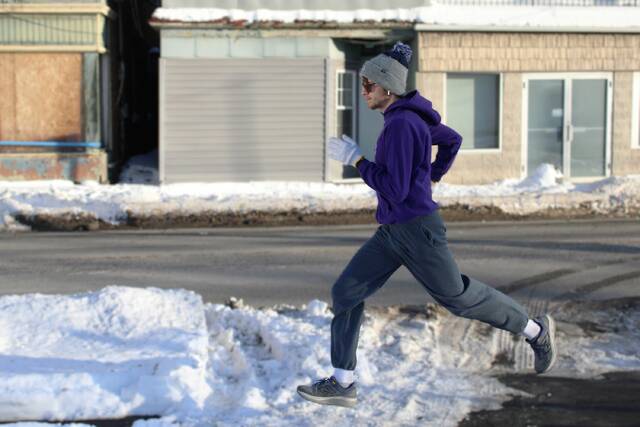
Exercising outdoors has numerous health benefits, but winter weather may disrupt normal routines.
There are unique risks associated with exercising in subfreezing temperatures. Plus, it can be difficult to find motivation in cold, dark conditions.
Luckily, there are ways to reduce risks and enjoy the benefits of outdoor exercise, from a mood boost to strength improvements, even in the winter.
Deborah Erdman, a registered nurse and outreach and injury prevention coordinator at Geisinger Medical Center in Danville, identified various tips.
Cover skin and airways
Erdman said cold weather can cause hypothermia or trigger exercise-induced asthma.
Significant body heat can be lost through exposed areas, like the hands, head, ears, and face. Exposed skin in subfreezing temperatures can develop frostbite quickly, and prolonged exposure can increase the risk of hypothermia.
That’s why it’s important to cover exposed skin with gloves, hats, and scarves, Erdman said.
It’s also good practice, and a commonly forgotten one, to wear sunscreen on exposed skin in the winter to protect it from UV radiation. Snow can multiply UV exposure because it reflects the sun’s rays, according to the Skin Cancer Foundation.
Covering the nose and mouth does not just protect skin. It also protects airways and lungs.
Erdman said cold temperatures, especially below freezing, can trigger exercise-induced asthma, even in healthy adults who don’t normally have asthma.
The nose and mouth warm and humidify the air, protecting the lungs. Rapid breathing of cold, dry air during exercise can overwhelm this function, potentially leading to increased mucus production, irritation, and airway constriction.
“That’s why it’s important to cover your mouth and your nose with a scarf or a gaiter,” Erdman said. “You’re protecting your airways, and you’re protecting your lungs.”
Dress in layers, warm up, and hydrate
Erdman said it’s best to wear not just one layer, but multiple, to prevent hypothermia.
A wool or synthetic base next to the skin can wick away sweat. A fleece or insulated middle layer can help retain heat. A water-resistant outer layer can protect from weather conditions. The outer layer should be one that can be easily put on or taken off when feeling too hot or cold.
When ready to exercise outdoors, Erdman said, “One of the first things to do is warm up.”
This can be light calisthenics or dynamic stretching as preparation, as with any strenuous exercise, to reduce the risks of injuries.
Staying hydrated is also important.
In cold, dry conditions, it is common to feel less thirsty. Drinking adequate fluids is important to prevent dehydration.
Know your limits and take breaks
Erdman advised minimizing time outside and exercising in short spurts to further reduce risks.
It’s also important to know when to take a break.
Shivering can be an early warning sign of hypothermia. Erdman provided some of its other symptoms.
“Sometimes dizziness, having a hard time moving, slurred speech, getting a little confused or disoriented, can mean that your core temperature is starting to drop and you need to get inside and get warm,” Erdman said.
Movement is important, especially within sedentary lifestyles. There are options to move within personal limits, even if it’s just stretching, standing, or walking more at home or at work. It can combat winter blues, strengthen muscles and joints, and improve cardiovascular health.
However, awareness of winter weather risks, along with existing conditions and physical limitations, should be considered before engaging in outdoor exercise, including shoveling snow.
“We can prevent bad things from happening if we just pay attention to what we’re doing and think about what we’re doing,” Erdman said.