
“A Toyota HiAce is a great vehicle for your family, band or church group, but you are sitting thigh-to-thigh.
“We are under contract to keep using the bus fleet we have for another two years.
“Moving to a different kind of bus at this point would be more expensive.”
Horizons Regional Council oversees Whanganui public transport, with Tranzit operating the service.
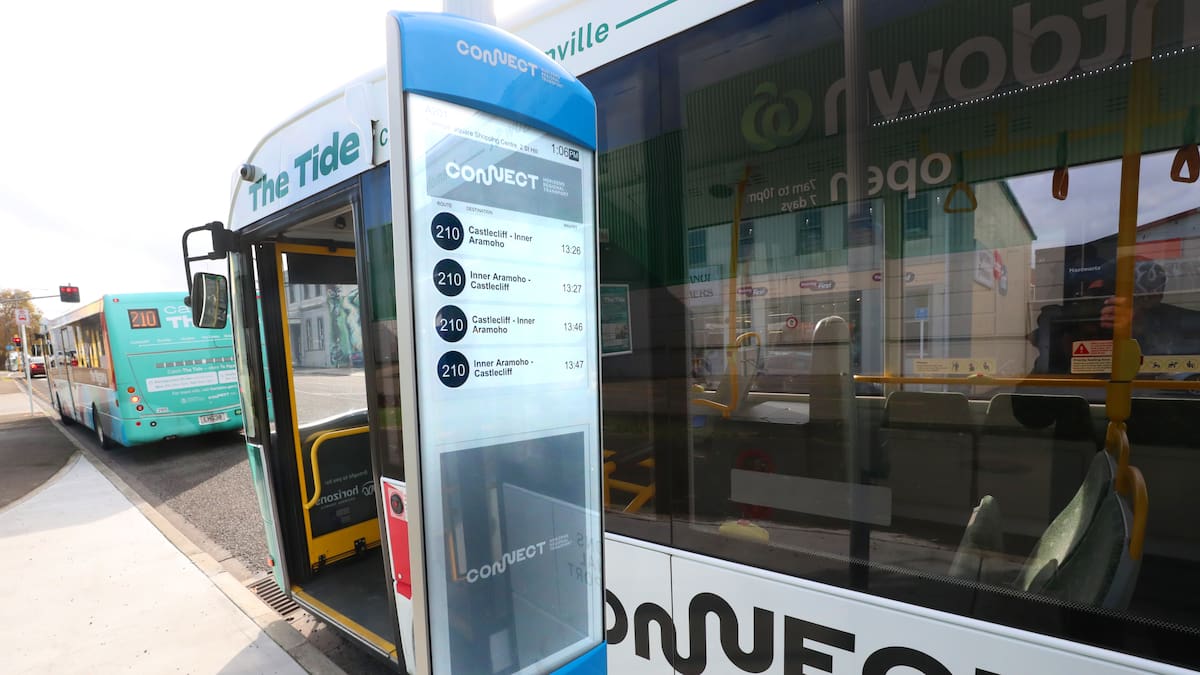
The city’s new bus network starts next month.
Five new routes – two frequent routes (every 20 minutes) and three hourly routes – are replacing the current 17 routes.
For the service, Horizons ratepayers in Whanganui will pay $6.65 per $100,000 in capital value per property in 2026-27, up from $3.80 in 2025-26.
Tonnon said between 50% and 70% of the service cost was driver wages, and a bus needed to be large enough for the busiest service in the day.
If they were not, “more drivers would be needed”.
Whanganui-based Horizons councillor Alan Taylor said he also received a lot of questions about bus sizes.
A Wanganui Taxi-Bus pamphlet from the 1990s.
“It ranks alongside the other major question – ‘Should I pay rates if the bus doesn’t serve me as an individual?’,” he said.
“At the end of the day, if we had smaller buses for certain parts of the day, the company would be required to purchase a second fleet.
“That capital cost would be huge for Whanganui. Then, you’ve got more insurance and more registration fees.”
Taylor said if smaller vehicles were already full when they arrived at a stop, there would be a “huge disincentive” for those waiting.
“They’ll just say ‘Stuff it, I’ll find another way to go’.”
In 2024, Horizons ruled out trialling on-demand public transport in Whanganui.
That would allow people to request a ride via an online or phone booking platform.
At the time, Tonnon said for environmental and cost benefits, public transport needed to have multiple people travelling together in the same vehicle.
“On-demand could not do that to the level of a fixed-route bus service,” he said.
He told the Chronicle this week control of public transport passed from city councils to regional councils in 1991.
Before that, Greyhound buses operated in the city.
“The new Manawatū-Wanganui Regional Council [later Horizons] put out a tender to run some public transport in Whanganui and gave it to Wanganui Taxis.
“A taxi-bus service began, running Toyota HiAces, and quite soon there were problems, because you went from a bus with 20 or 30 people on it, to a van that only fitted 10 or 11.”
Tonnon said by the end of the 1990s, it became clear the taxi-bus model was unsustainable and Horizons awarded the contract to Tranzit.
That company started out using smaller buses but quickly moved up, he said.
“There is a reason every large city in New Zealand uses the sized buses we do.
“That’s because it’s the cheapest way to do it.”
Mike Tweed is a multimedia journalist at the Whanganui Chronicle. Since starting in March 2020, he has dabbled in everything from sport to music. At present his focus is local government, primarily Whanganui District Council.