
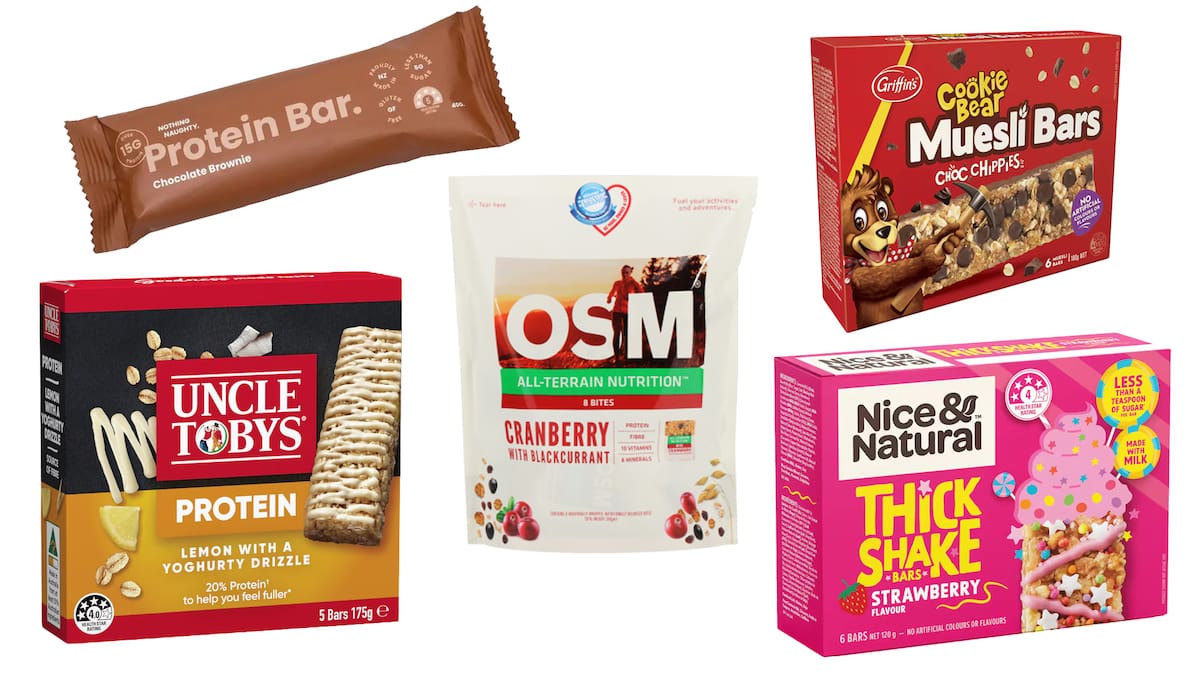
If you’re scanning the shelf in a hurry, it’s tempting to rely on claims such as “natural”, “oven baked” or “no artificial colours”.
Don’t.
“The first place to look is the ingredients list, rather than front-of-pack claims or pictures, as these can create a healthy impression that doesn’t always match what’s inside,” says registered dietitian Lily Henderson.
In general, the shorter the ingredient list, the better. Look for recognisable whole foods such as oats, nuts and seeds high up the list. These provide natural sources of fibre and protein.
If sugar, syrups or chocolate appear near the top, that’s your first red flag.
When does a bar become a sweet treat?
A snack bar shifts into dessert territory when its ingredients are mostly refined – white flour, golden syrup, fruit pastes and purees, chocolate coatings and candy pieces – rather than nutrient-rich wholefoods.
Bars lacking meaningful amounts of oats, nuts or seeds are unlikely to offer much nutritional value.
The tricky part, Henderson says, is that many bars do contain oats or nuts, “but these are often paired with chocolate coatings or chocolate chips, which can quickly tip the overall nutritional balance towards an occasional option rather than an everyday lunchbox snack”.
A yoghurt coating deserves particular scepticism. It is usually sugar and vegetable oil with a small amount of milk solids or yoghurt powder – it looks wholesome but functions like added sugar.
The sugar content of a muesli bar can tip into candy bar territory. Photo / Rob Stark
How much sugar is too much?
Even if you only eat one bar at a time, comparing sugar per 100g gives you a clear sense of how sweet it really is.
“Ideally, the lower the sugar, the better, with a target of less than 15g sugar per 100g for everyday snack bars,” says Sekula.
For context, some fruit strings sit about 60g sugar per 100g, while many muesli bars hover closer to 30g per 100g.
Dried fruit such as dates can be slightly better than refined sugar because they provide some fibre and nutrients, but they are still a concentrated source of sugar. Fruit juice concentrates and fruit pastes count as added sugar, even if they sound virtuous.
It’s also worth glancing at the per-bar serving information. We tend to eat the whole thing, not 100g.
What actually makes a bar filling?
If you want something that tides a child over until dinner – or gets you through a long meeting – fibre and protein matter more than marketing.
“A snack bar is more likely to be filling and nutritionally valuable when it contains fibre from whole foods like oats, nuts and seeds, which help support digestion and keep you full for longer,” says Henderson.
Some bars boost protein with isolates or powders. That can increase satiety, but it is still worth checking the overall ingredient list. A bar delivering fibre and protein from recognisable whole foods is generally a more balanced everyday choice.
As a rough guide, aim for more than 10g of fibre per 100g (over 2g per bar).
Five good choices
While no muesli bar can be considered nutritionally “perfect”, these five options stack up better than the rest. Photo / Herald composite
Based on those benchmarks – lower sugar, meaningful fibre, whole-food ingredients – these types of bars tend to stack up better:
1. OSM (One Square Meal) Bars Higher in fibre and protein than most supermarket bars, and designed as a balanced mini-meal rather than a sweet snack.
2. Nothing Naughty Protein Bars Typically high in protein and lower in sugar than many confectionery-style protein bars.
3. Nice & Natural Protein Nut Bars (Real Dark Chocolate & Cacao) Nut-based, with relatively low sugar per bar and healthy fats from whole nuts.
4. Be Natural Trail Bars – Sultanas, Dates, Almonds & Peanuts Based largely on whole ingredients. Higher in natural sugars from dried fruit, but also delivering fibre and texture.
5. Uncle Tobys Protein Muesli Bars Offers more fibre and protein than classic chocolate chip varieties, making them a more balanced choice.
None are perfect. But compared with heavily coated or syrup-bound options, they are closer to everyday fuel than dessert.
Five sugar traps
These muesli bars should only be eaten occasionally as treats. Photo / Herald composite
These sit firmly at the sweeter end of the spectrum.
1. Nice & Natural Thick Shake Range Highly processed, often high in sugar, sometimes with sprinkles or confectionery inclusions.
2. Griffins Choc Chippies Muesli Bars High sugar, low fibre, chocolate-forward.
3. Flemings Snacker Lotsa Choc Chocolate-heavy and light on wholegrain substance.
4. Milo Bars A combination of wholewheat and chocolate beverage mix, closer nutritionally to a sweet snack than a balanced bar.
5. Mother Earth Baked Oaty Slices (Indulgent flavours) Varieties such as Raspberry & White Choc or Afghan function more as a treat than a high-fibre staple.
These are not “never foods” but they belong in the occasional category.
How often should you rely on bars?
“For both adults and children, packaged snack bars can have a place, but it depends on the overall context of the diet,” says Henderson.
Ideally, most eating is based around nourishing whole foods that rarely come pre-packaged. But real life involves school sports, long commutes and the 3pm slump.
Bars are best used for convenience or extra fuel. Choosing options lower in added sugar and higher in dietary fibre makes them more suitable for regular use.
And if you’re trying to cut back on ultra-processed snacks? Roasted nuts, trail mix, yoghurt, corn thins with cheese, or homemade oat-and-seed bars are all realistic swaps.
The bottom line: a muesli bar is not automatically healthy – or unhealthy. But once you know what to look for, it becomes much easier to tell the difference between a lunchbox ally and a lolly in disguise.
Herald contributor Nikki Birrell has worked in food and travel publishing for nearly 20 years.