
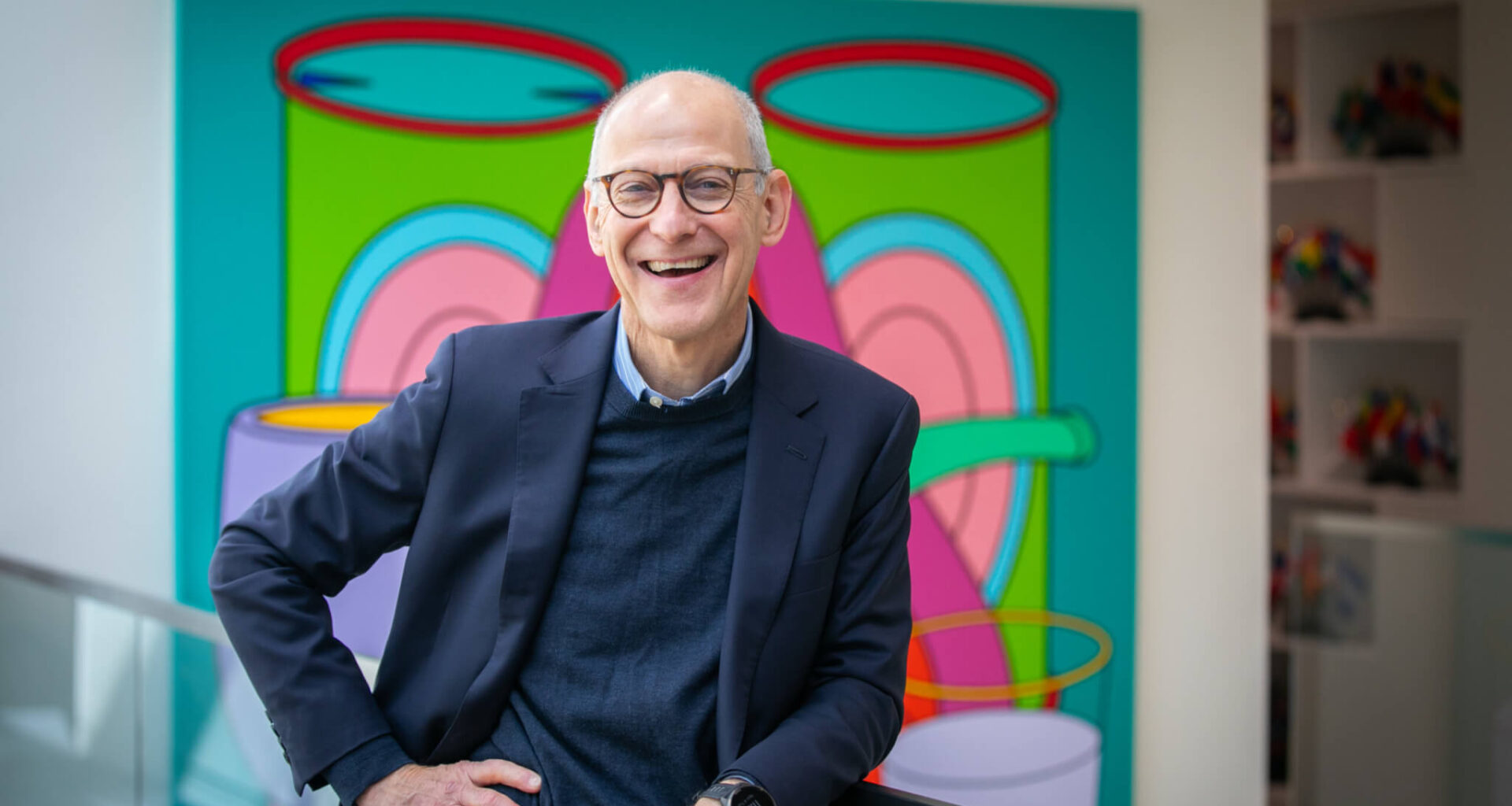
The bioethicist, oncologist, and author argues that chasing longevity at all costs may be the biggest mistake we make.
We live in a culture obsessed with longevity and optimization. Track your sleep. Count your macros. Biohack your way to 150. But what if that entire framework is getting it wrong?
That’s the provocative argument at the center of Dr. Ezekiel Emanuel’s new book, Eat Your Ice Cream: Six Simple Rules for a Long, Healthy Life. Dr. Emanuel — an oncologist, bioethicist, and chair of the Department of Medical Ethics and Health Policy at the University of Pennsylvania — made headlines more than a decade ago when he wrote that he hoped to die at 75. Not because he’s given up on life, but because he believes our fixation on longevity is distracting us from what actually makes life worth living.
In this week’s episode of HerMoney, Jean Chatzky sat down with him to talk about the real cost of aging in America, why the wellness industry may be selling us false hope, and what women specifically need to know about planning for a longer life.
The Problem With Chasing Longevity
Between supplements, spa retreats, and continuous glucose monitors, Americans spend somewhere between $1 and $2 trillion a year on wellness. And yet Dr. Emanuel argues that most of it isn’t adding a single day to our lives, and may actually be making us more anxious.
Jean Chatzky: You’ve been critical of the wellness industry, that much of what’s being sold is simply being sold. What do you think drives us to spend so much when we pretty much know it’s not going to do any good?
Ezekiel Emanuel: I think it’s an attempt to have autonomy and control over part of your life. We’re living in very topsy-turvy times. And this isn’t the first time we’ve had a wellness obsession. The same was true between 1880 and 1914. There are incredible parallels: automation disrupting work, small wars, waves of immigration, and income inequality. The response then was vegetarian magazines, hygiene books, and the flourishing of spas. The world seems out of control, and wellness feels like a place where we can assert some kind of power. The vaccines I take, the food I eat, the exercise I do; that’s a place I can control.
Obsessing about, ‘Did I sleep well? How much did I walk yesterday? What am I eating? How much protein?’ makes you anxious, with probably not adding a second, much less a day, much less a month to your life.
What Longevity Research Actually Says
Dr. Emanuel is not anti-health. His book lays out six evidence-based principles for living well, but first, he wants to dismantle the fantasy that science is on the verge of unlocking immortality.
Jean Chatzky: I clipped a Time magazine cover from 2015 where they put this baby on the cover and declared it likely that he would live to be 142 years old. It just made me nauseated. I don’t want that.
Ezekiel Emanuel: In 1909, the St. Louis Post-Dispatch ran a headline that said: “Researcher says science will allow us to live to 150 or 200 years.” We’ve been chasing the Fountain of Youth for a long time. And we have not pushed up the maximum age at all. Yes, more people are living into their nineties and becoming centenarians, but going past 115 or 120 has not happened. There really is a natural biological limit. And I don’t know how many people over 90, certainly over 95 or 100, are dancing or taking trips. Most of them are literally in a chair, not moving. The goal shouldn’t be more years. It should be better ones.
Bottom Line: Strive For Quality Over Quantity
Jean Chatzky: You wrote your famous column about being ready to die at 75 a number of years ago. You’re now 68. Has your thinking changed? Has it evolved? Has your number changed?
Ezekiel Emanuel: My number hasn’t changed. The other issue is that 75 is an average. It’s about the bell-shaped curve. Some people are going to be on the lower end of average and have problems earlier. Some people will be on the other side. If I happen to be on the other side, my rule still holds: I don’t want treatments like chemotherapy or major heart surgery intended to prolong my life. There are lots of other things I would take, like a hip replacement or cataract surgery. I haven’t ruled those out. But there aren’t that many people who are still fully vigorous in their eighties and nineties. I know some. And if I turn out to be one of those, we might have to reevaluate.
MORE ON HERMONEY:
Ready to take control of your financial future? Join InvestingFixx, Jean’s twice-monthly women-only investing club, where expert stock pickers bring ideas to the table, and a community of women learn and win together. Your first two classes are always free.
Editor’s note: We maintain a strict editorial policy and a judgment-free zone for our community, and we also strive to remain transparent in everything we do. Posts may contain references and links to products from our partners. Learn more about how we make money.