
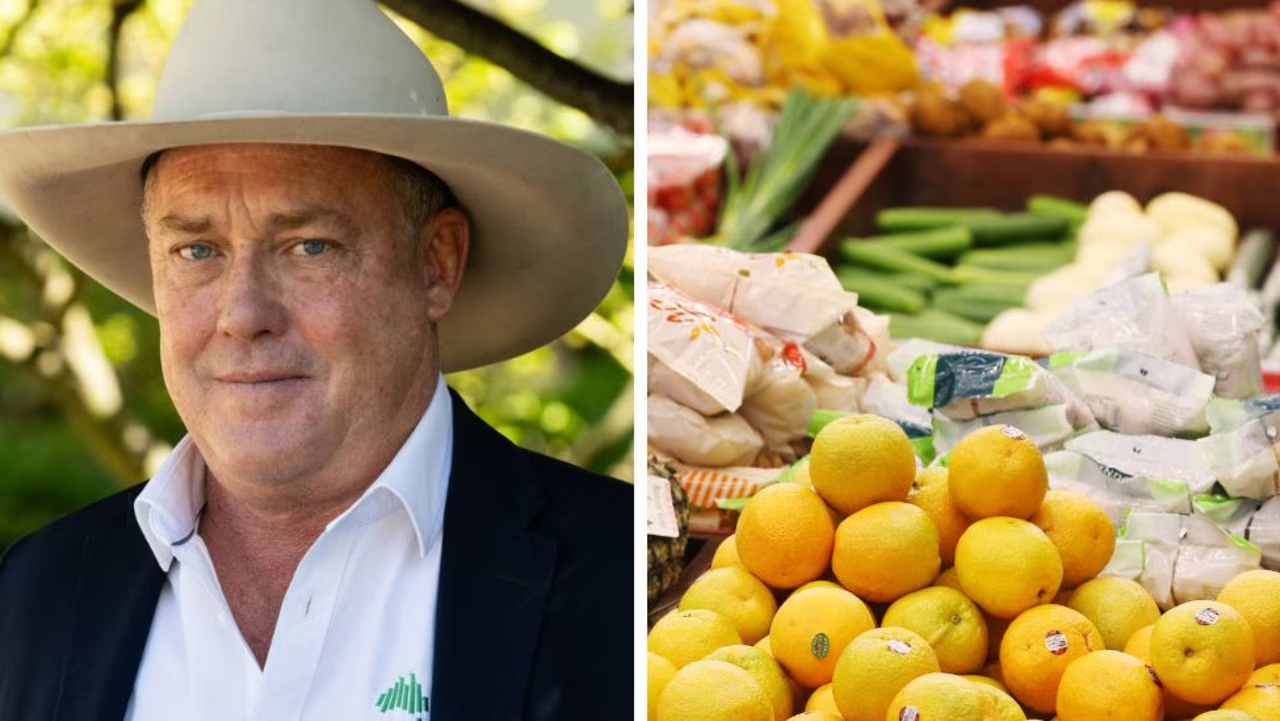
Aussies can soon expect to pay more for their groceries, Australia’s peak farming body has warned, as the Middle East war continues to wreak havoc on supply chains.
The US-Israeli war on Iran, now in its fourth week, has seen refined fuel prices skyrocket as Iran continues to effectively block oil supply through the strategic Strait of Hormuz.
As of March 17, Australia had 30 days of diesel, 38 days of petrol and 30 days of jet fuel.
National Farmers’ Federation (NFF) President Hamish McIntyre said many farmers are struggling to get fuel and freight companies which transport goods are having to absorb the price hike, despite the government tapping into its emergency fuel supply to cushion the impact of the crisis.
Dairy products will be among the first to see prices skyrocket, followed by fresh produce.
“We estimate in a matter of weeks we’ll start to see the costs flow through to the consumers on supermarket shelves,” he said, as per ABC News.
“It starts with dairy, then our fruit and veg, and in any of our intensive animal industries too.”
National Road Transport Association agreed the increase in fuel prices will also flow to customers.
“Come the 21st of April when a lot of the fuel bills start to come in, and the fuel price will have increased steadily to then, we’re going to see some major changes in this freight industry,” he told ABC’s Radio National.
“You could see (food) prices increase dramatically.
“It’s the only way that people can grasp how bad this situation is — when they go down to their supermarkets and shops, the stuff’s just not there to buy.”
Food production could be ‘halved’
It comes as Mr McIntyre warned Australia could see its food production “halved” within months in a nightmare scenario.
The western Queensland farmer, who grows wheat, barley and chick peas, told news.com.au he believes there is enough urea, which is used as fertiliser, on ships and within Australia to secure the winter crop.
Prices for urea have roughly doubled $870 per tonne near the end of February to more than $1225 as of March 15, with reports of up to $1600 in some regions already — blowing through highs of around $1300 at the start of the Ukraine war.
“What we don’t have is enough to apply in-crop and get set up for summer crops,” he said.
“If we can’t get our in-crop requirements after May, the winter crop in Australia could be halved.”
But he warned around 40 per cent of Australia’s farmers may not be able to plant at all.
Large growers lock in urea orders ahead of time, but smaller spot operators essentially “wait until it rains to decide” what crop to plant and “ring up and order their fertiliser with their seed from their local supplier”.
“More than likely they will not get access to urea,” Mr McIntyre said. “It’s that serious.”
In a worst-case scenario “we’re looking at a massive reduction in production of winter crop, then we’re potentially very worried about securing next year’s summer crop as well”.
The NFF says any fuel rationing plan should put essential services first, followed by food production.
“Perishable dairy, then fresh vegetables, then intensive animal industries — chicken, pork, red meat — then the grain production sector,” Mr McIntyre said.
‘More hard decisions’
Michael Coote, chief executive of Ausveg, said vegetable growers had “no capacity to absorb” the increased costs.
“Vegetable growers heavily rely on diesel to run their farms and have already seen the price double with increasing reports of shortages in regions across the country,” he said.
Mr Coote said fertiliser suppliers have also “doubled some prices over the past two weeks with questions over future supply, and concerns have been raised over supply and cost of other key inputs like plastics for packaging as the manufacturing industry sounds the alarm.”
Unless vegetable growers receive “viable farmgate prices, we’ll see more making hard decisions about their future farming activities”.
“Growers across the country are reporting to Ausveg that they are seriously considering whether to plant or harvest crops, with some growers making these decisions as early as this week,” Mr Coote said.
“With 98 per cent of fresh vegetables consumed in Australia grown here, any significant reduction in crop volumes will impact the harvest and supply of fresh produce to Australian families. The potential likelihood of vegetable shortages will be further impacted with international shipping disruptions also likely to affect the supply of imported frozen and other processed vegetables.”