
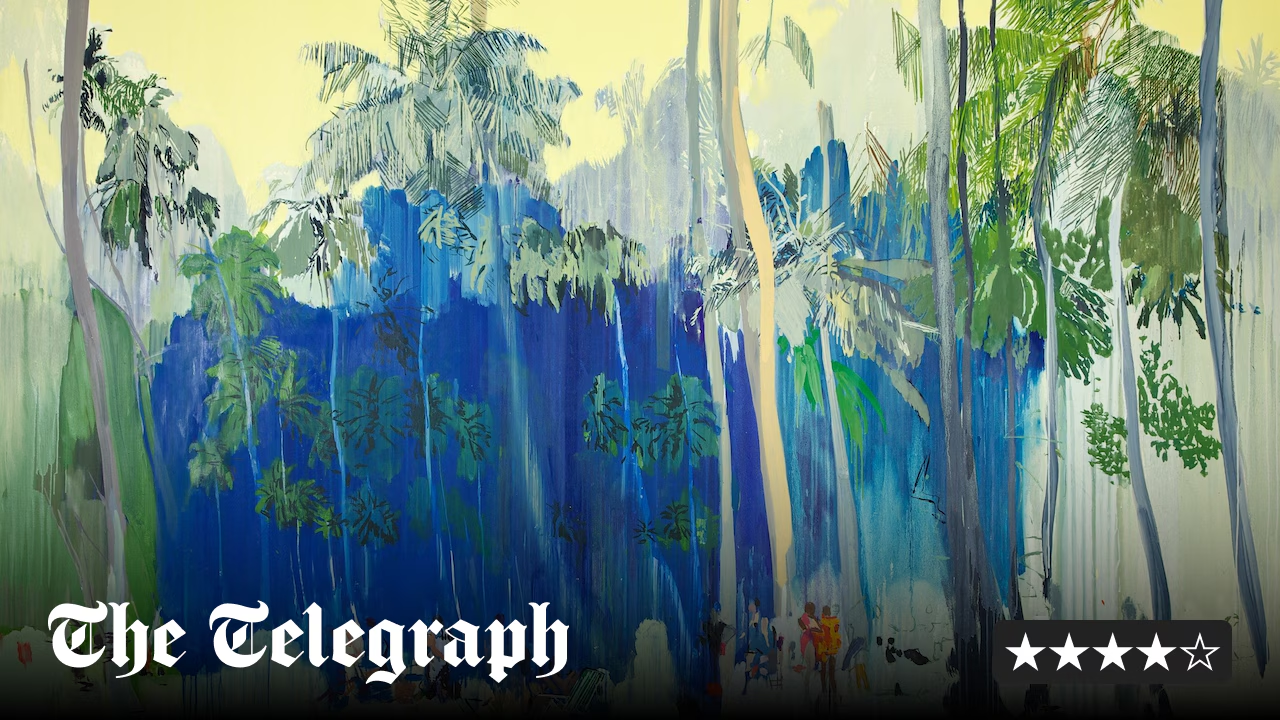
There’s a diffident quality to the art of Hurvin Anderson: a cool, introspective streak, summoning feelings of estrangement. An obsession with camouflage-like patterns in many of his large pictures even suggests a psychological impulse to blend in.
Yet, while Anderson may be the quiet man of British art, he should not be underestimated. Several striking compositions in his transfixing new retrospective at Tate Britain are triumphs of contemporary painting, including Maracas III (2004), a hazy Caribbean vista, like the crystallisation of a memory, in which tiny figures are dwarfed by sinuous palm trees that seem to sway against deep blue.
The youngest of eight children of Jamaican emigrants, Anderson, 61, was the first member of his family to be born in Britain. Insistently interrogating complex feelings about his heritage, his work oscillates between English landscapes with pastoral titles such as Scrumping (the catalogue loftily invokes John Constable) and Caribbean scenes dominated by tropical vegetation. On which side of the Atlantic does his identity lie? Anderson grew up in the working-class neighbourhood of Handsworth in Birmingham, and didn’t visit Jamaica until he was a teenager.