
HERE are some of the long-term benefits of swimming:
1. Help you live longer
According to a 2017 report commissioned by Swim England, swimmers had a 28 percent lower risk of early death and a 41 percent lower risk of death due to heart disease and stroke compared with those who didn’t swim.
2. Help keep you lean
Swimming is a full-body workout, engaging most muscles. According to Harvard Medical School, a person weighing 11 stone will burn about 432 calories with an hour of swimming as opposed to roughly 266 calories walking at a moderate pace. Another study published in 2021 found that 16 weeks of swimming led to significant reductions in body fat and BMI.
3. Boost heart health
Swimming can improve your cardiovascular fitness, allowing the heart to become stronger and the lungs to become more efficient in utilising oxygen. Research shows swimming has been linked to improvements in hypertension, blood pressure, and other markers of cardiovascular health.
4. Strengthen your lungs
If you’ve been diagnosed with a lung condition like asthma or chronic obstructive pulmonary disease (COPD), your lungs will benefit greatly from swimming, according to a Swim England report. Swimming trains the muscles involved with respiration, meaning it can enhance lung volume and aid breathing techniques. For those who have asthma, the pool provides an ideal exercise setting as it’s humid, warm, and usually a low-pollen environment.
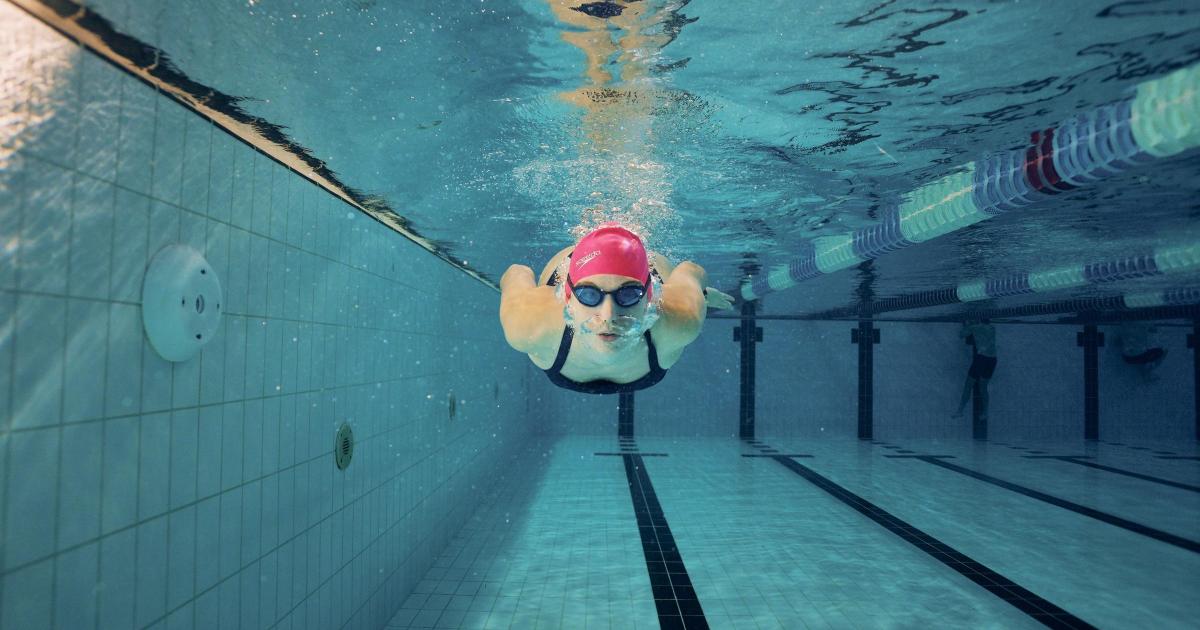
Swimming can boost your mood too Photo supplied
5. Boost brain power
When researchers studied the specific benefits of swimming, they found a unique benefit. In one small study, participants who did a 20-minute, moderate-intensity swim processed visual information more quickly and responded faster on cognitive tests conducted immediately before and after their swim.
6. Put you in a better mood
A study published in 2003 found that a single session of swimming improved mood even more than a single session of aerobic dance. This is said to be due to the release of ‘happiness chemicals’ in the brain, specifically endorphins dopamine and serotonin.
7. May help you sleep
According to experts, any exercise routine, including swimming, helps reset the body’s internal clock and restores the natural circadian rhythm. A Brazilian study published in 2021 assessed the sleeping patterns of visually-impaired males aged 16-60 and found that those who swam five times a week enjoyed better sleep quality than those who swam less frequently or not at all.
8. May help with chronic pain
Conditions such as arthritis and fibromyalgia often come with reduced mobility and in many cases, short or long-term pain. Aquatic exercises including swimming have been shown to benefit musculoskeletal conditions and improve physical function and quality of life. This is because the buoyancy of the water adds resistance (making water workouts challenging), but low-impact at the same time.
9. Be calming for people with Additional Needs
People with disabilities – especially those with a neurodiversity such as autism – can find it difficult to process sensory information. For a lot of people who struggle in this way, being in water is a soothing experience which can help develop spatial awareness, balance and coordination, fine and gross motor skills, and learning to feel where your body is in relation to the external world.
10. Can help before and after surgery
According to Swim England, complications after having an operation can be reduced by 30 – 80 per cent if patients are able to exercise before having the procedure. In addition, being active after surgery also speeds up the recovery process. Exercise that improves fitness, strength, balance and deep-breathing is said to be especially helpful in this respect and swimming provides all of these factors. In addition, the pressure of the water decreases swelling, improves circulation and helps flush out the kidneys.
Five fun facts about swimming
• Studies have linked swimming with improved short and long-term memory in mice.
• For anxious people, the weightless environment of a swimming pool soothes agitation and calms the mind.
• The pressure of water on the body in a swimming pool can help reduce the risk of cardiovascular disease.
• An hour of vigorous swimming can burn off 650 calories – that’s more than walking or biking.
• Joining a team of swimmers – either at a pool or for outdoor swimming – increases a sense of community, belonging and wellbeing.
About Better leisure centres
Centres in the city include York Leisure Centre, Burnholme Sports Centre, Energise Leisure Centre and Yearsley Swimming Pool. For more information, please visit www.better.org.uk