
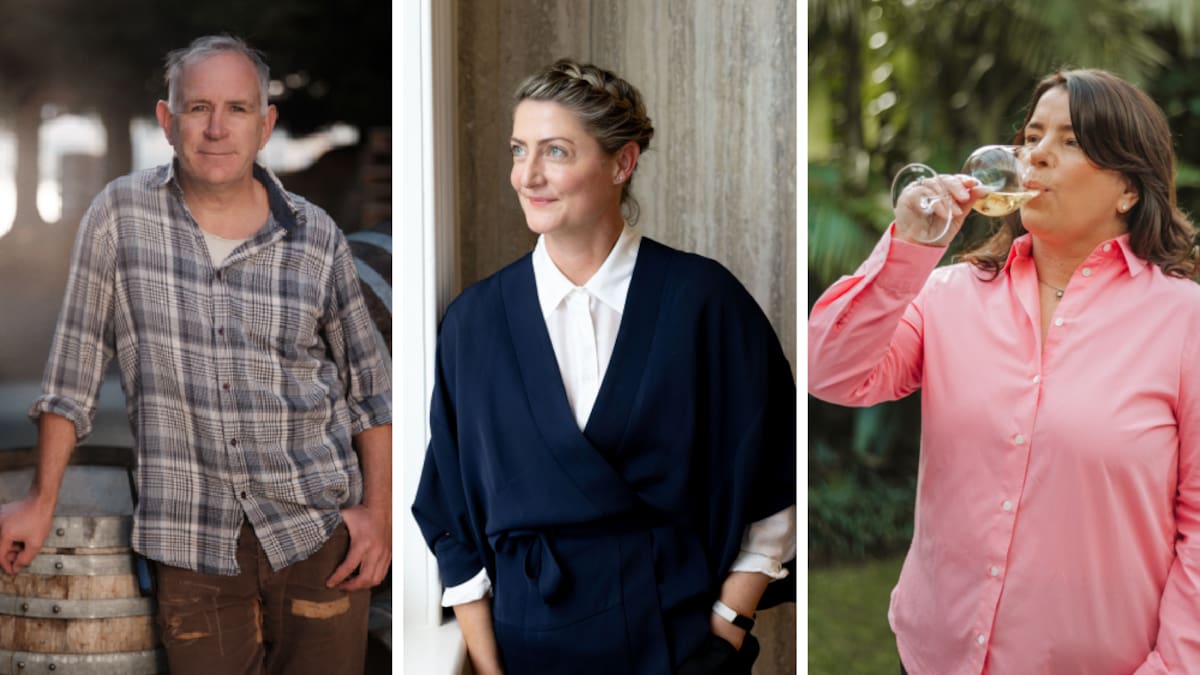
New Zealanders are drinking less wine. What does that look like on the restaurant and retail floor, and for the people making it? Johanna Thornton speaks to three industry experts about the shifts they’re seeing and what gives them optimism for the future.
‘It’s not all doom and gloom’
Sommelier and group beverage manager for Onslow, Gilt and The Oyster Inn
As sommelier, I curate the winelists across our restaurants and work with the front of house teams, talking to guests, sharing stories and selling them great wines.
Drinking behaviour has definitely changed, whether it’s for health reasons or the cost of living. I saw a shift in mid-tier spending when there was talk of a recession about a year and a half ago. People moved towards more affordable options, while another bracket didn’t really get touched and were still spending top dollar.
When it comes to drinking habits, the shift we’ve seen is people going for more special bottles, being slightly more intentional, choosing quality over volume. They’re spending the same amount but it’s more about celebration or the experience rather than just consuming a lot.
We monitor spend per head closely, and it’s classically a 60/40 split – 60% food, 40% beverage – and it hasn’t changed much. If people aren’t drinking, they’ll still have something else. Non alcoholic beer has gone crazy, so much so that we now have multiple options. We have a good range of mocktails. We’re constantly trying to build on our non-alcoholic selection.
Leah Kirkland is sommelier and group beverage manager for Onslow, Gilt and The Oyster Inn.
I’ve noticed people ordering more wine by the glass in the last year or two. The interesting thing is they might go for multiple glasses and not realise the volume they’ve drunk, but they feel better about it.
We’re launching a new Coravin programme at Onslow for top-end wines in small glass pours, so people can have that experience of something amazing. At The Oyster Inn and Gilt, we offer carafes as another option instead of a full bottle.
The trend towards people drinking white wine or lighter wines has definitely been seen. People aren’t drinking big chunky reds as much anymore. Chablis has become a huge phenomenon in New Zealand. People don’t even look at the list – they just say, “I’ll have a glass of Chablis.” People drink that like water.
For us, wine is still very much a part of the dining experience. I don’t think it’s as mandatory as it may have felt in the past but our restaurants sell an experience – it’s not an everyday when people come in, so 80-90% would have wine with a meal.
We’re getting more requests to speak to a sommelier, which was a phrase never mentioned in Auckland when I started in hospitality. The wine world has opened up so much here in terms of international wines, wine bars popping up and the rise of small producers in New Zealand. People want to hear the story behind the wine, and choose something they haven’t had before.
Onslow. Photo / Babiche Martens
The conversation around declining volume has been worldwide. Does it concern me from a restaurant perspective? No, because it’s our responsibility to make sure there’s a broad range of non-alcoholic, low-alcoholic and great wines. The experience is what people come out for, the whole package. For example, wine dinners are on the rise. Every time we put one on, it sells instantly.
This year, tourism has been phenomenal. Some nights at Onslow, 80% of the room is from the United States and with the dollar being what it is, they think the winelist is pennies.
There’s been a remarkable shift this year in the hospitality world. People are out and about and there’s a really positive attitude, so it’s not all doom and gloom. You have to work hard for it, for sure, but I think it’s turned a corner.
‘The industry needs to move forward’
Director of wine at Normanby Fine Wines
Customers are drinking a little less, but drinking better. There’s definitely health reasons behind it, moderation is a trend we’re seeing. There’s a wellness factor there.
Post-covid, the market is different and while we’re starting to see people with a bit of discretionary money, what customers are choosing to do with that money is different. The big thing is choice, and it’s more conscious.
We set out to change the way fine wine retailing is done at Normanby Fine Wines. Having a bottle on a shelf with a price is not a sustainable business model for the future. It needs to be in a space that is warm and welcoming, where people can linger and hear the stories behind the bottles and what’s in them. Having a wine bar and cafe within the space creates an inviting environment to purchase and experience fine wine.
Liz Wheadon, director of wine at Normanby Fine Wine & Spirits. Photo / Lucko Prawito
We’ve only been open nine months and it’s been busy and still growing. A highlight is the number of young people coming in and the comments from customers saying they thought they didn’t like wine, but they like what they’re tasting here.
If I look at the broader industry, I think there has been a dumbing down of what’s available. And a lot of that speaks to the structure of the industry, where a small set of products drive the majority of the volume. What we’re doing at Normanby is completely different. People have said ‘gosh it’s very bold’, but it’s understanding if you create an environment where you can communicate to your customers about wine, you can have a breadth of range.
It is a tough market and I think any retailer, whether it’s wine, clothing, or whatever it is, will be very conscious of inventory. They’ll be looking at the winners and sticking to them. There’s a whole lot of small New Zealand producers out there doing incredible things but they don’t have the business structure to pay listing fees or rebates or deal with the financial side of listing with some of the very big retailers. We set out to give shelf space to producers who found this hard. Just before we opened, I did stand there and think, ‘Have we got this right?’ We needed to get it right for it to be successful.
At Normanby, we’re selling more lighter, fruitier reds, less of the high alcohol styles of the past. For younger customers, there’s an interest in sparkling wine, fruity chilled red wine, but there’s also an openness to trying new things.
Normanby Fine Wines & Spirits. Photo / Lucko Prawito
What gives us optimism is what’s happened here in Auckland. We are opening our second store and wine bar in Wellington at the end of March. We’ve come from starting this business with a blank piece of paper and creating what we think is a really exciting experience.
It’s an interesting time for the industry. I think it’s quite pivotal and we’re at a point of change. The numbers are showing the industry needs to move forward. And I think it’s going to look very, very different in the future. The wine industry needs to ask, how do you connect with those customers of tomorrow?
‘Thank goodness it’s changing’
Winemaker and general manager at Rippon Vineyard & Winery in Wānaka
What people care about when they pick that bottle up is changing. Thank goodness it’s changing. It’s really important. We need them to care about what they’re drinking – the planet needs them to care, the economy needs them to care, so it’s really positive.
It used to be that the vast majority of wine was bought because it was an impulse buy off a supermarket shelf because it had a red, gold or silver sticker on it, or it was on the end of the shelf or the most convenient. That’s how wine is still bought and that’s probably wrapped up in those [falling consumption] statistics. I don’t know that, but that’s what it feels like.
Nick Mills, winemaker and general manager at Rippon Vineyard & Winery in Wānaka.
The trade of Rippon wine isn’t done in the same spaces and in the same way; it’s done in restaurants and [specialist] retail by people who care – who go around looking for and putting those sorts of wines on the shelf. How people find our wine is quite different, and how they’re getting sold to and cared for by the people selling it is different. It could well be seen as a different industry.
Every purchase decision you make, when you choose a bottle of wine off a list or a shelf, has an impact on a piece of land somewhere. And intentionally, what is that impact you want to have?
We started Rippon by saying we’re in love with a piece of land. We wanted to help it find its potential.
It’s not easy. There are lots of things that are difficult about it. The way we work is labour-intensive. It’s hands-on. We don’t use contract crews. We don’t use machinery from anywhere else. Everything we do is on site. We don’t buy any fruit in. So that costs money.
Rippon Vineyard overlooking Lake Wānaka. Photo / Wanaka – NZ
We got into organics and biodynamics in an effort to connect with our land, have a stronger relationship with it and help it express itself accurately as something we can taste and feel.
People are drinking less. The volume is going down, absolutely, as it should. I think a correction is being had but the people who are seeking that connection [through wine] and the people that we’re connecting with, I believe, is increasing.
You can look at the statistics and say wine’s in trouble and certain aspects of it certainly are and there’s good reasons for that, but there are other conversations and narratives going on. People are actually caring about what they put in their body and the land that it comes from. They might not be able to say it and articulate it in words, but I’ve seen, felt and experienced that firsthand.
More on wine & drinks