
By LIZ EARLE, AWARD-WINNING AUTHOR AND FOUNDER OF LIZ EARLE WELLBEING FOR THE MAIL ON SUNDAY
In yesterday’s Daily Mail extract from her eye-opening new book on how to age well, skincare guru Liz Earle revealed how at 62 she’s turned back her biological clock. Today, Liz explains why we should all go barefoot and how sunlight can supercharge our cells…
Why cholesterol is your friend
Cholesterol gets a bad rap, but it is vital to our health, including for hormone production and healthy skin. Our bodies need cholesterol – especially our brain, which, despite its relatively small size, contains around 20 per cent of the body’s total amount.
We need our skin to make a specific form – sulphated cholesterol – to help create vitamin D, that health-boosting powerhouse. Some researchers suggest that this form also supports blood vessel health.
Cholesterol itself is only found in animal products – so plant-based eaters are at risk here. We get sulphated cholesterol by eating cholesterol-rich foods such as egg yolks, shellfish, oily fish and grass-fed meats, and sulphur-rich foods such as eggs, garlic, onions and cruciferous vegetables (think broccoli and cabbage).
When it comes to healthy oils, a fascinating debate is ongoing. Health writer Dr Catherine Shanahan argues that the fats we eat directly influence how our skin responds to sunlight.
In her view, seed oils such as sunflower, soya, safflower and similar can oxidise under UV exposure and amplify inflammation, while traditional fats such as olive oil, butter and animal fats may help reinforce skin resilience from inside.
<!- – ad: https://mads.dailymail.co.uk/v8/us/lifestyle/lifestylefitnesswellbeing/article/other/mpu_factbox.html?id=mpu_factbox_1 – ->
Many of us – women and men – are unwitting sufferers of ‘deferred happiness syndrome’. Our happiness, our needs, are constantly delayed or put on hold while we sort everything out for other people.
Women in midlife and beyond often carry the heaviest load – juggling work, teenagers, ageing parents and grandchildren against a backdrop of declining hormones – which can tip the nervous system into chronic stress.
If that sounds familiar, it’s time to live in the present and focus on the ‘now’ instead of the ‘sometime later’. Protecting downtime – setting clear boundaries with work and family and making space for activities that nourish you is not self-indulgent. It’s natural medicine. Carving out time for myself has made an incredible difference to my health and mental wellbeing. At nearly 63, I feel better than ever before because, after a period of turbulence – divorce, pain, family ill health, weight gain and mental unease – I managed to rediscover my fitness, vigour and zest for life.
Now, I want to share what I’ve learned about how natural healers that have supported our bodies since the dawn of time – light, water and the Earth’s energy – have the power to supercharge our cells. As we grow older, our health does not have to decline. It can actually improve.
Mindfulness, meditation and journalling may sound daunting, but they calm the nervous system and encourage perspective. Even ten minutes of daily stillness can reset the stress response, while expressive writing helps make sense of emotions and clear mental clutter. Time out, whether through nature walks, hobbies or creative play, reintroduces joy, itself a therapeutic nutrient.
Learning to say no (I’ll tell you how, over the page) and setting healthy boundaries is also vital for protecting our time, energy and healthspan. Note the word ‘healthspan’. When thinking about old age, we tend to congratulate ourselves on the fact that lifespan has been increasing in the UK and is currently 82.2 years on average.
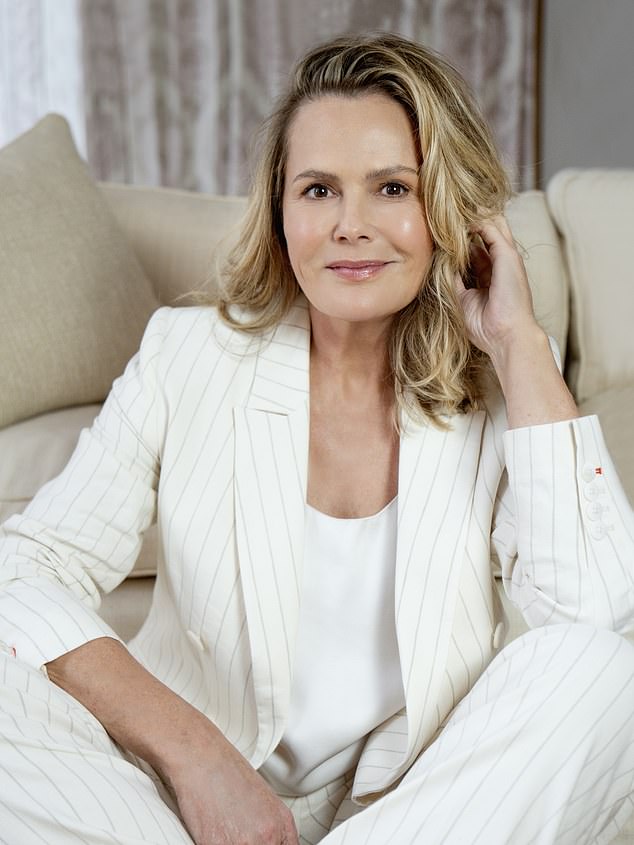
Many of us – women and men – are unwitting sufferers of ‘deferred happiness syndrome’, writes skincare guru Liz Earle. Our happiness, our needs, are constantly delayed or put on hold while we sort everything out for other people.
But living well isn’t only about extending our lifespan. It’s about healthspan – the number of years we can expect to live in older age while still feeling fit, well and fully ourselves. And here in the UK, our healthspan averages only 70.5 years. That leaves more than a decade, for most of us, spent living in poor health – often in pain, with limited mobility and struggling with cognitive decline.
How to say no
Here are a few phrases to practise:
The simple no: ‘I can’t commit to that right now.’The kind no: ‘Thank you for thinking of me, but I need to pass this time.’The redirect: ‘I can’t do that, but what I can offer is . . .’The pause button: ‘Let me check my diary and get back to you.’ (This buys time if you tend to say yes automatically.)
Remember: ‘No’ can also be a complete sentence.
<!- – ad: https://mads.dailymail.co.uk/v8/us/lifestyle/lifestylefitnesswellbeing/article/other/mpu_factbox.html?id=mpu_factbox_2 – ->
Well, that’s not how I intend to spend my final decades. Like so many women, I’ve dedicated my life to working hard, raising children, caring for others and contributing to the workplace and our wider society.
Now, I want to reward myself with later years brimming with fun, friendship and vitality – not slipping into frailty and decline.
On average, a 65-year-old woman in the UK is taking at least five prescription medications daily. Nearly half of all older adults (over 65) take five or more medications regularly, compared with just 12 per cent in the early Nineties, all of which come with side effects, possibly even dependence.
Medical students study prescribing, yet no time is given to getting patients off medications. I’m not anti-medicine, but I am all for sharing the information we need to help ensure it is not an inevitability. I want you to feel fit and well in your own right.
How drinking a glass of water left in sunlight can supercharge our cells 
Scientists used to believe that there were three kinds of water: solid (ice), liquid and gas (vapour). Then in the early 2000s Gerald Pollack, Professor of Bioengineering at the University of Washington, discovered ‘fourth phase’ water, or Exclusion Zone (EZ) water – sometimes referred to as ‘structured’ water.
His research shows that when water is near a water-loving surface, such as a cell membrane or some tissue in the body, it forms an ordered, gel-like state, different from normal water.
Examined under a microscope, EZ water looks different from tap water, filled with a vast array of snowflake-like crystal patterns.
Unlike the water flowing through our taps, structured water is water in its most natural, molecularly organised state – a form found in fresh springs and plants, and within our bodies.
And the good news? Making small changes to our drinking water could have a positive effect on cellular ageing. It’s neither expensive nor unattainable. In fact, alongside getting a bit of sunshine, it’s one of the simplest health hacks there is.
Here are my tips:
Sunlight on water: Leaving a glass of water in sunlight for 30-60 minutes has been shown to alter its molecular order. The ‘structuring’ effect is temporary, but if drunk straight away it may provide a gentle ‘primer’ for your body’s own structuring.Movement and circulation: Exercise, even gentle daily activity, generates warmth, boosts blood flow and improves oxygen delivery – all of which stimulate structured water formation inside us.Light – especially infrared light – can influence the organisation of water inside our cells. The body continuously structures its own water when we’re exposed to sunlight.Plant foods: The water found in plants is more than simply trapped liquid. Focus on cucumber, berries, grapes, salad vegetables and melon. These provide both fluid and minerals to support hydration within our cells.Prioritise spring water and well-filtered water with electrolytes. These provide both fluid and minerals to support hydration within our cells.Swirling or vortexing water: Stirring water for 20-30 seconds introduces natural movement, turbulence and aeration. It can shift subtle properties and surface tension and often makes water taste fresher.Sound frequencies: Experiments by researcher Masaru Emoto showed that speaking kind, positive words over water created beautiful crystalline structures, and negative mentions made ugly ones. Playing music or tuning in to specific frequencies may be subtly influential.
<!- – ad: https://mads.dailymail.co.uk/v8/us/lifestyle/lifestylefitnesswellbeing/article/other/mpu_factbox.html?id=mpu_factbox_3 – ->
Just as sunlight regulates and energises us from the top down, as I described yesterday, there is a quieter current beneath our feet feeding us from the bottom up: the Earth’s vibrational energy.
Our health and wellbeing are shaped by natural energies that interact with us physically, mentally and emotionally. Some support balance and healing, while others, if unchecked, can disrupt our systems.
You may have heard about grounding, or earthing – the practice of making direct contact with the Earth’s surface, such as walking barefoot on grass, stone or sand, or wild/sea swimming.
Even the most non-woo scientist will agree that the Earth carries a mild negative charge, thanks to free electrons in the soil, water and air.
When we touch the ground, this charge gently transfers into the body, helping to neutralise excess positive ions, which are linked to inflammation and oxidative stress.
Negative ions are also abundant in forests, mountains and near waterfalls, which is why time in these settings often leaves us calmer, lighter and happier.
Grounding reconnects us with the Earth’s electrical field, allowing free electrons to flow through direct skin contact.
Research suggests that grounding can lower cortisol, ease pain and improve sleep. And so a simple act – walking barefoot on natural ground – becomes a powerful pro-ageing recharge.
Everything, including us, vibrates at a particular frequency: balanced frequencies are linked to health and vitality, while discordant or artificial ones are associated with cellular stress and fatigue.
Further along the vibrational scale, we find electromagnetic fields, or EMFs. Again, some have a positive impact on our physique and psyche, others not so much.
Natural EMFs, like those from the Earth’s magnetic field (geomagnetic energy) and the Sun (solar energy), play an essential role in regulating biological rhythms. But artificial EMFs have a more negative impact. These are the kind emitted by modern devices such as mobile phones, wi-fi routers, Bluetooth gadgets, smart meters and powerlines.
Relatively recent in human history, these operate at frequencies, intensities and durations that our bodies have never previously experienced.
All have been linked to potential health risks, particularly with prolonged or high-level exposure. Studies link non-native EMFs (NNEMFs) to disrupted sleep, increased oxidative stress and lowered brain function.
As an experiment, I’ve slept next to my wi-fi router switched either off or on and tracked my quality of sleep. No prizes for guessing which option resulted in the deepest and most restful repose.
I invested in a state-of-the-art EMF monitor and have measured levels in all kinds of surroundings, from planes (high) to trains (low) and various rooms in my house or places I’m visiting.
I’ve seen some of the highest readings come from travelling in electric vehicles, sitting on a heated car seat and the connection point of cables charging my electrical gadget. I now forgo the seat warmer and charge my laptop or phone when I’m not using them or sitting right beside them. And I never plug my phone in to charge next to my head while I sleep.
I’ve also found my monitor handy when staying in hotel rooms – you’d be amazed at how often the wi-fi router is hidden behind the headboard. Simply pulling out the plug until the morning gives me a more restful night’s sleep.
While the long-term impact of NNEMFs is still being explored, an increasing body of research suggests that chronic exposure – especially at close range – could contribute to biological stress, particularly in the ageing body.
But in the end, no matter how many days we spend in the sunshine, how many supplements we take or how many steps we track, what we are truly seeking is a happy ending – and that begins and ends in the mind.
All the information and scientific studies that I’ve shared with you are for nothing unless we decide, in our minds, to take consistent action and create our own happiness.
Bring healing energy to your day 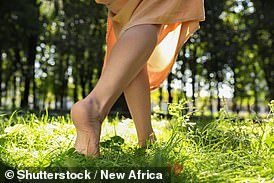
Early morning
Step outside as soon as possible, even for a few minutes, and stand barefoot on grass, earth, stone etc.Absorb the Earth’s grounding energy.
Mid-morning
Keep your workspace as low-NNEMF as practical: use wired connections where possible, avoid sitting next to laptops or phones while they are charging and step away from screens regularly.Use a simple, inexpensive grounding mat under your desk to sit barefoot – this works even in a high-tech office space and is easily portable.
Midday
Gift yourself five minutes of intentional silence. No phone, music or conversation – simply sit quietly, ideally looking at nature (even a photo or picture) or close your eyes.
Afternoon
If possible, take an afternoon walk outdoors; slip off your shoes or go barefoot if you’re able to.
Evening
As dusk falls, start to reduce blue light and NNEMF exposure.Turn off wi-fi routers and dim artificial lights to mimic the natural fall of daylight.
<!- – ad: https://mads.dailymail.co.uk/v8/us/lifestyle/lifestylefitnesswellbeing/article/other/mpu_factbox.html?id=mpu_factbox_4 – ->
Just as muscles strengthen with use, the brain also thrives when challenged. The ability of the brain to adapt and rewire itself, known as neuroplasticity, doesn’t stop in childhood. The more we stretch our minds, the more resilient our neural networks become.
This is not only about memory and cognition; building mental agility helps to protect against age-related decline and supports emotional wellbeing, creativity – and joy.
Simple, everyday activities such as reading, writing or playing a strategy game are acts of brain training. They strengthen neural connections, improve focus and stimulate creativity.
Try puzzles, languages, music or new skills. The greatest benefits for neuroplasticity come from novelty. Learning a new language, playing a musical instrument or picking up a completely fresh skill challenges the brain to lay down new pathways, creating a fresher, stronger network.
Puzzles and memory games sharpen concentration, while music uniquely engages multiple brain regions at once, enhancing coordination, rhythm and emotional regulation.
Research shows that those who regularly engage in mentally stimulating hobbies have a reduced risk of cognitive decline in later life. Mine has been learning about maritime weather patterns at sea and how to operate ship-to-shore marine radio (I love being out on the water).
The best learning is driven not by obligation but by genuine curiosity. Following your interests – whether they be history, gardening, astronomy or painting – maintains motivation and points of conversation.
As we age, purpose becomes more than productivity – it becomes a lifeline. Research shows having a strong sense of purpose reduces the risk of chronic disease, protects against cognitive decline and even extends lifespan.
Purpose is not a luxury for the few, it is a biological necessity for all. It shapes our days and directs our choices. It is what gets us up in the morning – not out of obligation, but with a quiet sense of resolve. And, crucially, it reminds us that we still matter, that we still have something to offer.
Science confirms what wisdom has long suggested: passion, purpose and a positive outlook are linked to lower inflammation, steadier cortisol, better sleep and stronger immunity.
Purpose does not have to mean climbing mountains or writing memoirs. It can be found in mentoring others, nurturing a creative gift, volunteering or being a source of wisdom and warmth in someone’s life. Our later years can be purposeful, healthy and joyful – perhaps more so than those that came before, because they are informed by experience, perspective and clarity about what really matters.
© Liz Earle 2026 l Adapted from How To Age by Liz Earle (Hodder & Stoughton, £22) to be published on April 23. © Liz Earle 2026. To order a copy for £19.80 (offer valid to 25/04/26; UK P&P free on orders over £25) go to www.mailshop.co.uk/books or call 020 3176 2937.