
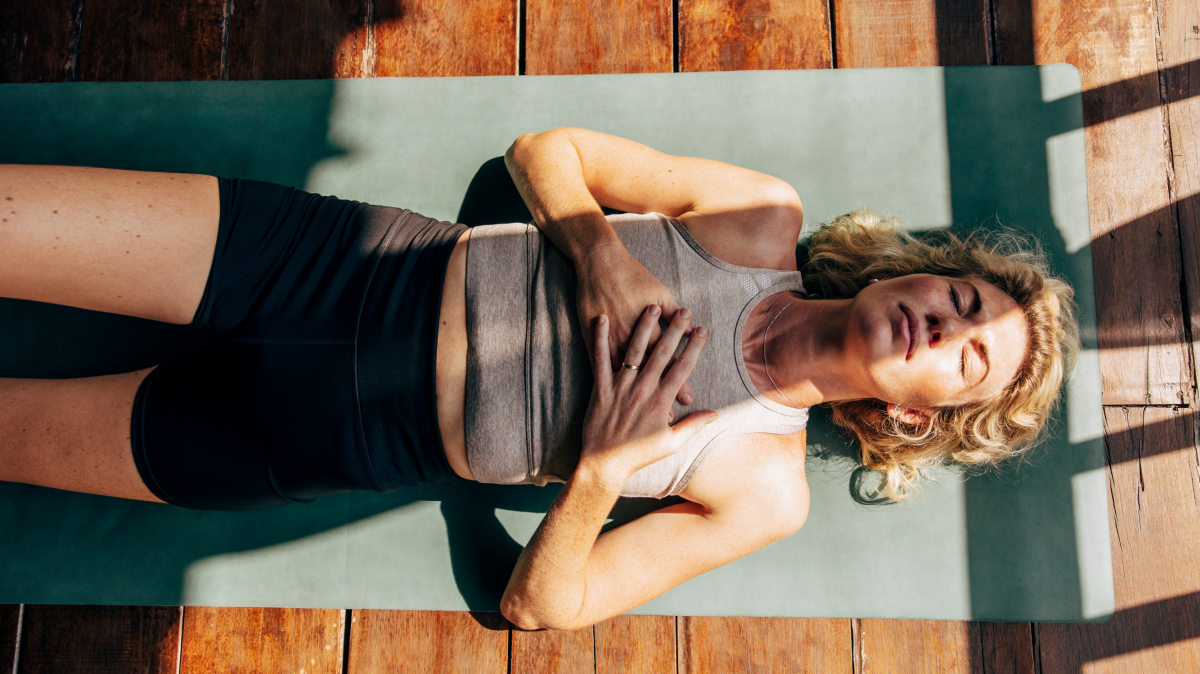
Most guides for staying fit and healthy exhort us to get up on our feet and stop lying around, but exercises to improve balance and agility can be done entirely on your back on the floor in just one ten minute session per day.
The routine, developed by an 81-year-old Japanese scientist, is performed while “supine” on the ground and with no need for weights, sit-ups, planks or even raising your back off the floor. A study found it could improve flexibility, agility and balance within just two weeks.
The regime, which involves tensing specific sets of muscles and wiggling the toes in set patterns, improves posture and flexibility in younger people and could also help to prevent falls in older people and form part of rehabilitation from injuries, according to a study that tested its effectiveness, published in the journal PLOS One.
The regime is similar to, but much less strenuous, than Pilates and could be beneficial if done even for just one minute a day, researchers suggested.
Yoriko Atomi, from the Tokyo University of Agriculture and Technology, said: “Since the weight of the torso accounts for about half of our body weight, controlling it is actually quite difficult, leading to problems unique to humans, such as falls and joint disorders. Improving balance not only increases agility but also enhances various motor skills, allowing us to live more comfortably. Falls are becoming a growing concern among the elderly.”
She described herself as a scientist who has “spent decades on muscle adaptation and the cellular response to mechanical stress” who “eventually came to believe that the supine position is the place where humans can re-learn how to use their own bodies correctly”.
She said it was inspired by her experience as “an 81-year-old active scientist who developed this exercise after suffering from her own knee and low[er] back pain, and who continues to perform it every morning”.
Atomi said of the regime that she has developed and tested: “I recommend that office workers and those aged 40 to 50 and older perform this routine every morning, even if you’re short on time, just one minute is fine, but do it daily upon waking’. She added that people should do it after using the lavatory first thing in the morning.
The study randomly assigned a group of 17 healthy men to two groups, one in which they performed the regime for two weeks and another in which they did not.
At the start and end of each period, they were set physical fitness tests including sit-ups, a standing long jump, side-to-side leaping and a 50-metre run, during which the degree of “sway” in their torsos was measured to assess their balance and stability.
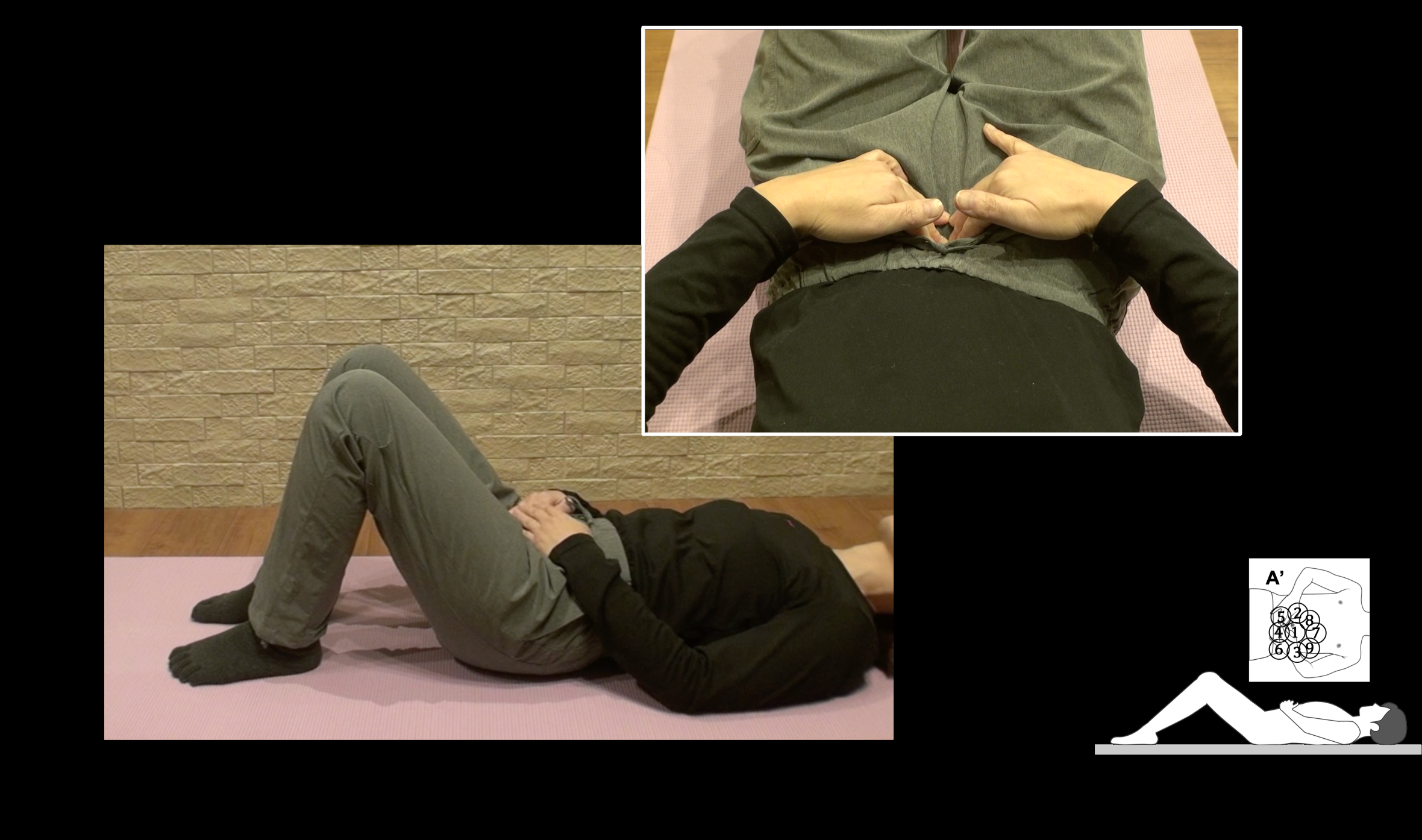 Demonstrating where to place your hands at the start of the exercises
The second part of the study took 22 participants, men and women, and asked them to undertake the same exercise regime, this time testing them afterwards in a side-to-side stepping task while using accelerometers to assess how well they were able to control the stability of their head, back, pelvis and ankles to prevent overbalancing.
Those who followed the routine for two weeks “showed greater gains in flexibility, agility and static balance performance as reflected by reductions in [the amount of] sway” they displayed, the study found.
It did not improve power or overall muscle strength, but participants who followed the regime were able to complete more side-to-side leaps and kept better control of their heads and backs. It is thought that this was because the body’s nervous system adapted to control the muscles more effectively.
Atomi said the supine exercises worked because they did not involve the erector spinae, a set of three vertical muscles running along the spine that we rely on heavily for our posture and balance, allowing people to concentrate on strengthening other core muscles that help to maintain our stability.