
Members of the public travelling across the Strait are worse off, the documents show, with freight prioritisation meaning private vehicle passengers are expected to face capacity pressures over the coming years, especially during the busy summer period.
The move to two ships also poses risks if one ferry faces issues, a fear that materialised when a technical fault struck the Kaiārahi in March, taking Interislander down to only one operational ferry.
Rail Minister Winston Peters said at the time it would not make sense to bring in another vessel for the “short-term disruptions”, despite calls from the freight sector.
Before the decision was made, a “strictly confidential” report prepared for KiwiRail by consultancy firm PwC last year outlined options to retire the Aratere, either in mid-2026, or mid-2025 as was ultimately decided.
The vessel needed to be removed from service to allow for its Picton berth to be demolished, to make way for infrastructure for the new ferries.
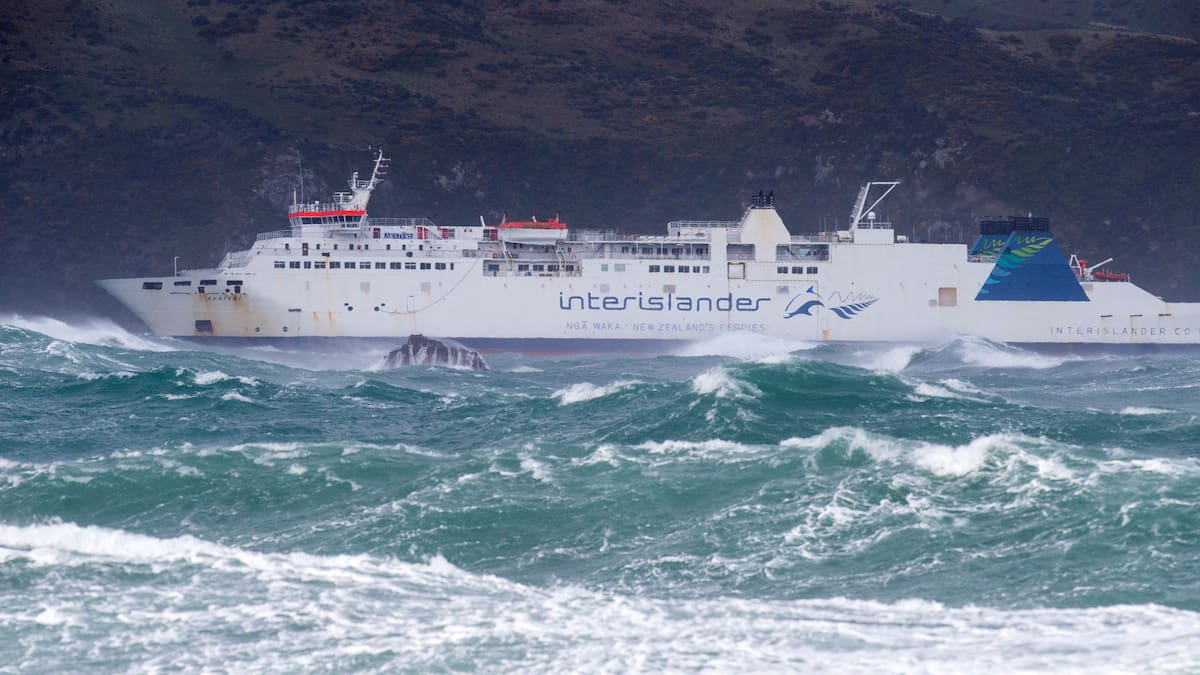
The Interislander ferry Aratere was retired last year to allow for work on its Picton berth, taking Interislander’s service down to two ships. Photo / Mark Mitchell
The 2025 retirement meant KiwiRail could avoid paying $12 million to dry dock the ship in Singapore, which resulted in a forecast $7m net financial benefit to KiwiRail over two years, as opposed to a 2026 retirement.
Following the release, the Herald asked how much KiwiRail had paid for the consultants’ report. KiwiRail refused to disclose the figure, again citing commercial sensitivity. The Herald has again appealed to the Ombudsman.
A commercial in-confidence briefing to Peters said it was “simply not commercially viable to continue to operate Aratere for the relatively short window between its return from drydock and its Picton wharf needing to be demolished”.
However the KiwiRail briefing warned retiring Aratere “will create a four-year gap in rail-enabled ferry operations to 2029″.
“The withdrawal of Aratere will reduce the capacity of the Interislander fleet from three ships to two and the overall market capacity to transport freight across the Cook Strait.
“KiwiRail will prioritise rail freight and commercial vehicle customers. Private vehicle and foot passengers will face capacity pressures particularly during the summer peak.
“The withdrawal of Aratere will put greater pressure on Interislander to maintain its high level of reliability, this will be mitigated through the rigorous application of proactive maintenance.”
After the Ombudsman ordered the documents be released, KiwiRail provided copies that were still heavily redacted. The Herald challenged the extent of those redactions with the Ombudsman, who advised that much of the redacted material had in fact been cleared for release and should not have been redacted.
KiwiRail blamed a “mix-up” and said it had accidentally supplied an earlier, more heavily redacted version of the documents.
It later released revised copies with significantly fewer redactions, but much of the rail freight financial impacts of retiring the ship remained withheld.
The state-owned enterprise said it accepts the Ombudsman’s findings, and now believes the risks of the information’s commercial sensitivity is reduced.
A spokesman for KiwiRail said the removal of the ferry has meant “less flexibility at peak times”.
“Services have continued to operate safely and reliably, over the last 12 months our reliability to sail, excluding weather is over 99%.”
“KiwiRail engaged extensively with freight customers, industry partners and the wider supply chain to plan for the transition to a two ship fleet,” the spokesman said.
The Aratere, since renamed Vega, has now left New Zealand and is en route to India to be scrapped.
Ethan Manera is a Wellington-based journalist covering Wellington issues, local politics and business in the capital. He can be emailed at ethan.manera@nzme.co.nz.