
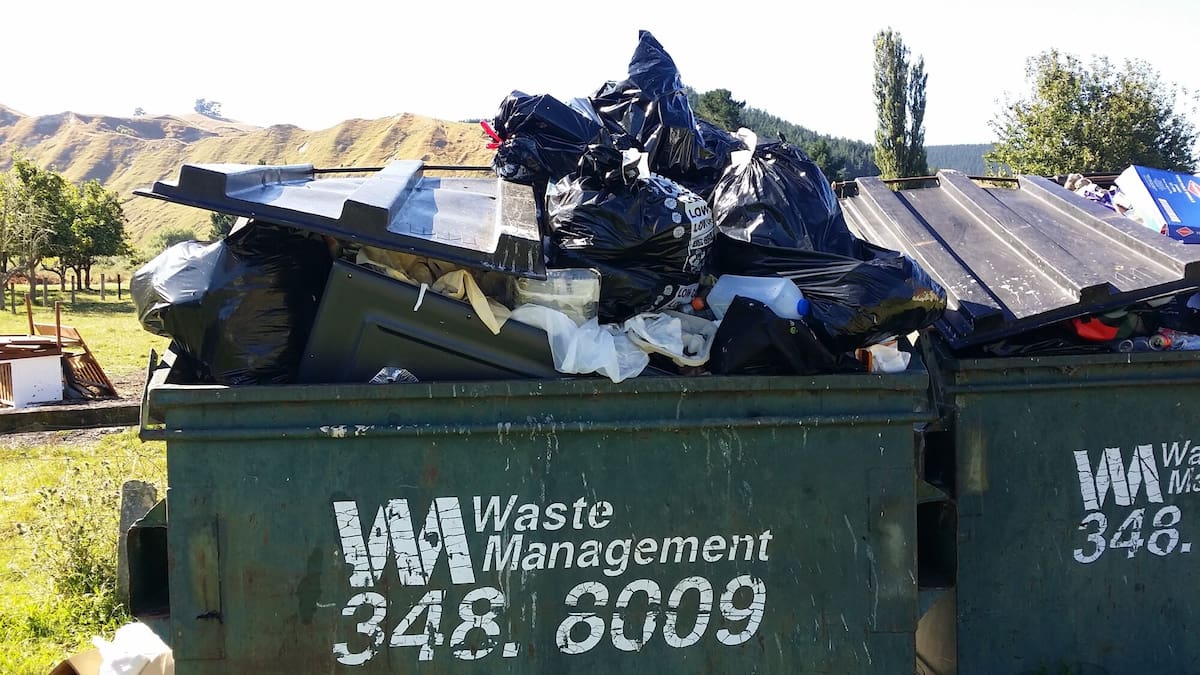
She said 15% of what was in the bins was “actually general rubbish but, sadly, 2% of that was hazardous waste”.
Public feedback was gathered as part of the assessment.
“This is probably preaching to the converted, but illegal dumping was the top issue,” Harrison said.
“We’ve heard quite a lot and we’ve seen quite a lot of mismanagement at the rural bin sites.
“Just general disrespect for the sites, I think. We see huge amounts of rubbish scattered.”
The assessment by consultants Tonkin and Taylor, presented to the council in May, said reported illegal dumps in the district had increased from just under 500 in 2021 to 650 in 2025 but not all offenders could be identified.
Whanganui District Council waste manager Morgan Harrison.
“In this case, council staff will sort the waste and separate what is able to be recycled before disposing of the rest.”
The council’s litter team costs ratepayers about $180,000 a year.
At the June 17 meeting, Harrison said as part of its waste management and minimisation plan (WMMP), the council would review the rural service to ensure it was fit for purpose.
She wanted to work with the board to set up pre-engagement sessions with the rural community.
“It’s residents, but it’s also our farmers and how they manage their farming waste on-site.
“We are going to see a farm plastics and agrichemical stewardship scheme in place in the next 12 to 24 months, I hope, and that’s from MFE [the Ministry for the Environment].”
Board chairman Jack Bullock asked if “rural satellite recycling set-ups” would be explored, which Harrison confirmed.
The council’s kerbside recycling network, introduced July 1, 2024, covers Whanganui’s urban areas and rural settlements Mowhanau, Fordell and Marybank.
Those outside the network need to use the Whanganui Resource Recovery Centre.
Bullock told the Chronicle rural recycling needed expansion and the WMMP, updated every six years, was “an opportunity to get it right”.
“The key to this is diverting or minimising the amount of waste we send to landfill, and we can’t do that if there are just skip bins at these sites,” he said.
“We need to be providing the infrastructure there.
“There could even be dedicated scrap metal bins on site. Materials get sent to Molten Metals and a bit of money is recouped.”
Harrison said the council wanted to hear from the rural community about measures to help reduce waste, improve recycling and make services more accessible.
“We plan to have a separate conversation with communities who use particular rural bin sites about whether they are still fit for purpose in their current locations,” she said.
A draft WMMP will be presented in September, with public consultation in October and November, and the final document approved in February.
Mike Tweed is a multimedia journalist at the Whanganui Chronicle. Since starting in March 2020, he has dabbled in everything from sport to music. At present his focus is local government, primarily Whanganui District Council.