
The council classifies the lifeguard service as a recreational sporting organisation, making it subject to the same reserve lease rules as other community sports clubs.
Under current policy, community leases must include a termination clause with a standard notice period of two years, although extensions of up to seven years may be granted in some circumstances.
The council has proposed amending the clause to a standard notice period of between three and six years maximum to align with its long-term plan.
Warner said the clause would not require the club to move in the near future, but it created uncertainty about the long-term stability of surf lifesaving facilities on council-owned land.
“Given the extremely limited options for relocation, Tauranga City Council, in our view, would be effectively contributing to public safety endangerment,” Warner told the committee.
He argued that, unlike other organisations, surf clubs had limited options for relocation because they must be based close to the beaches they patrol.
“We’ve got nowhere to go, where those clubs sit now is literally the only positions they can go in, we’ve seen that.”
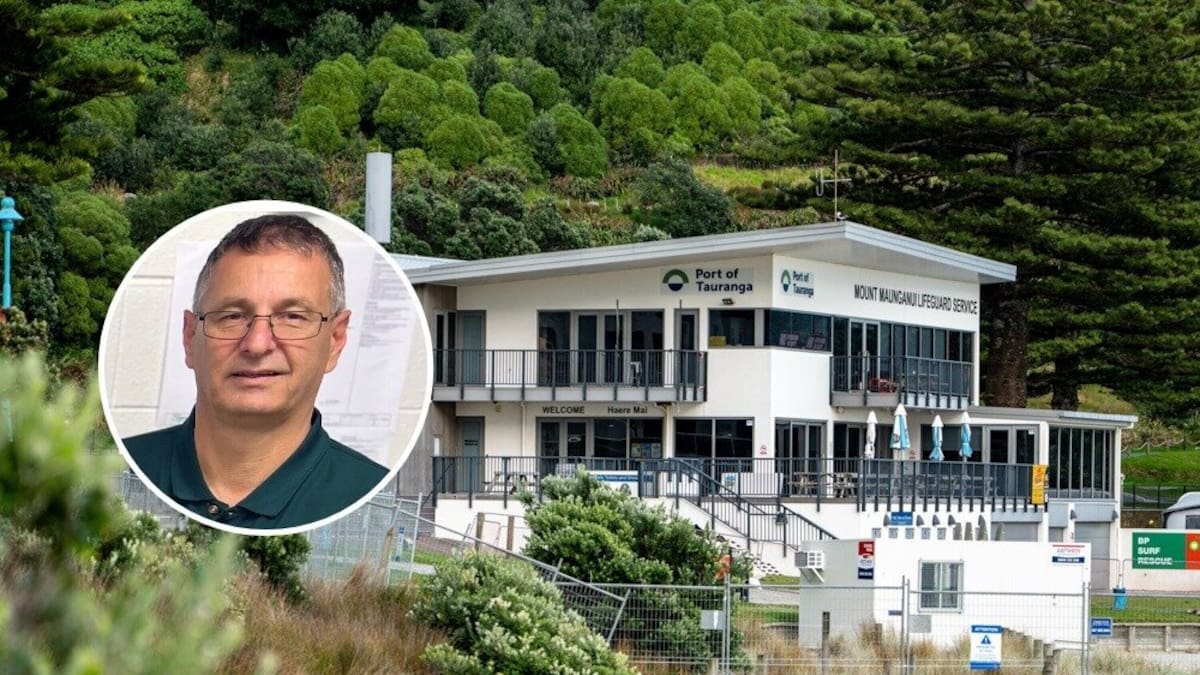
The Mount Maunganui Lifeguard Service building on Adams Ave. Photo / Brydie Thompson
In a written submission before the council hearing, Warner said volunteer lifesaving clubs had invested between $4 million and $10 million in building and maintaining their facilities.
Given that investment, and the limited ability of clubs to relocate, Warner said the land use policy should guarantee them longer-term security of tenure.
He said those investments underpinned the frontline volunteer rescue services that played a vital role in keeping beachgoers safe.
During the last season, the three clubs along the Mount Maunganui and Pāpāmoa coastline saved 97 people.
“It’s 97 people who are home with their families and whānau today that would not have been the case had we not been there,” Warner said.
In response to Warner’s submission, Mayor Mahé Drysdale said he understood where the surf club was coming from regarding security of tenure.
“On the flip side, I think it would be a very politically unpopular decision to move a surf club without having another home.”
Drysdale asked Warner whether there had ever been a case in New Zealand where a council had left a surf lifesaving club without a base.
The Tauranga City Council City Futures Committee heard public submissions on the Use of Council Land Policy on Wednesday. Photo / Kaitlyn Morrell
Warner said it was not something he was across and agreed with Mayor Drysdale it would be “significantly unpopular”.
“But that doesn’t mean that [the] council has to make tough decisions at different times that it sees in its best interest,” Warner said.
“What it sees as its best interest is maybe not what surf lifesaving and the community sees as best.”
‘Treated and managed differently’
The council also proposed a policy requiring the impact on existing ratepaying businesses to be considered when new commercial activities on council-owned land are assessed.
Warner said surf clubs should also be exempt from this clause because they are volunteer organisations working to raise funds to save lives.
“[The] council’s proposing surf lifesaving clubs be constrained by clauses which, if removed, would likely enhance and enable long-term community safety and financial sustainability for organisations which are critical to community wellbeing.”
He said the club delivered beach education and surf safety at its facilities, which were also Civil Defence operation hubs and education and welfare centres.
“We think surf lifesaving clubs need to be ring-fenced, pulled out of the sporting pool and popped somewhere else or ring-fenced within it and treated and managed differently.”
He said the club supported the council’s developing “healthy lifestyles by the beach” event strategy, but restrictions on commercial activities limited its ability to generate revenue needed to fund its lifesaving work.
“We’re not bringing commercial money in to make a profit. We’re not bringing dollars in to feed our own nests. We’re bringing money in to buy rescue equipment to save people’s lives.”
The committee will deliberate on the policy at its August 18 meeting.
Kaitlyn Morrell is a journalist for the Bay of Plenty Times and Rotorua Daily Post. She has lived in the region for several years and studied journalism at Massey University.