
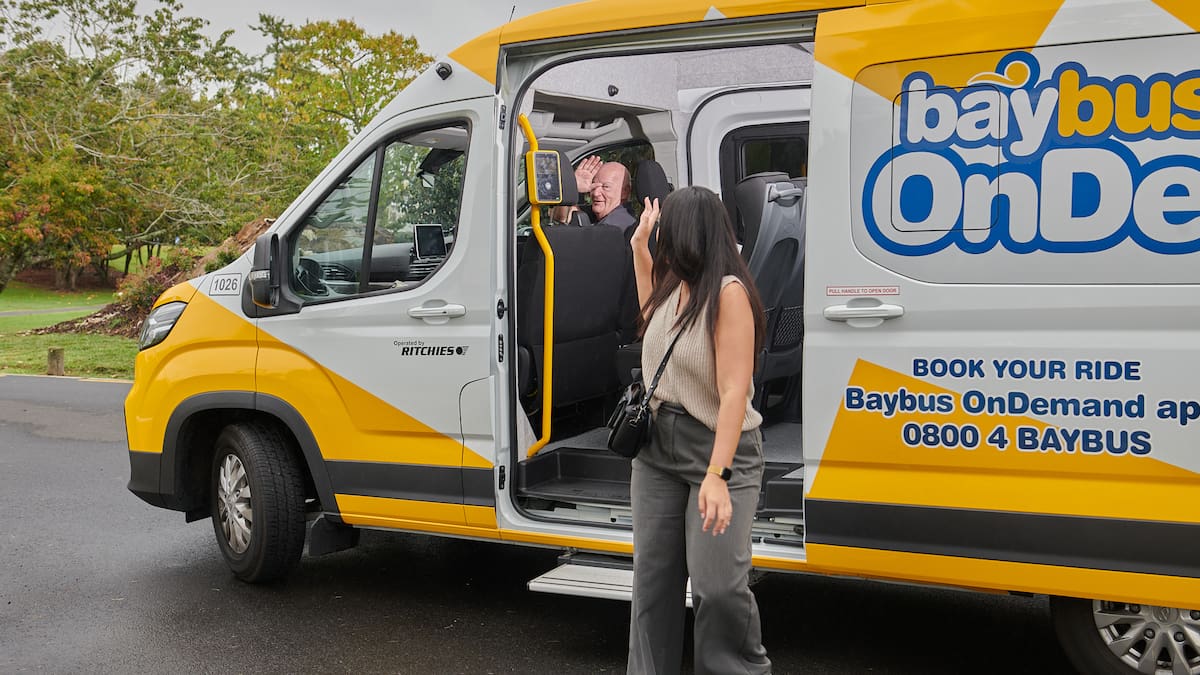
The service launched in March 2024, operating in Tauranga South. It replaced Route 51 with an app-based, corner-to-corner service using small electric vans.
It had no schedule or routes, with passengers able to book trips on demand across Gate Pā, Greerton, Parkvale, Pyes Pā, Tauriko and The Lakes.
Passengers booked trips through the Baybus OnDemand app instead of following a fixed timetable. Photo / Bay of Plenty Regional Council
In July 2024, Von Dadelszen reported the service had quickly exceeded expectations.
Where Route 51 had 800 users in three months, the on-demand service had 4600 – plus customer satisfaction over 90%.
“There were just so many positives for it,” Von Dadelszen told the Bay of Plenty Times this week.
He said the service proved there was demand for smaller, more flexible public transport.
He believed the council should have refined the service rather than scrapping it, suggesting slightly larger electric minibuses operating neighbourhood feeder routes into the city’s main bus corridors.
“My vision was always to have those smaller buses serving suburbs like Matua, Bethlehem and Pāpāmoa, feeding into the main network.”
Von Dadelszen acknowledged the service was expensive to operate but said many passengers understood it was a premium service and would have accepted higher fares to keep it running.
“I think it was successful because it was so cheap for what it offered. Even after they increased the fare to $5, it was still incredibly good value.”
He said the council should use the trial’s findings to develop a more affordable version of the service and not abandon the concept altogether.
“It was really successful patronage-wise. So you’ve got to find, in my view, … a middle ground somewhere.”
Andrew von Dadelszen (left) and Mike Seabourne with a Baybus OnDemand vehicle in 2024. Photo / Bay of Plenty Regional Council
A regular user since the OnDemand service launched said he was disappointed by the decision.
Oliver, who spoke on condition his surname was not used, said he used it several times a week and struggled to understand why the council had decided to stop it.
“It shouldn’t be happening. There’s something wrong somewhere.”
Although Oliver still drove, he said he preferred the bus because of rising fuel costs and its convenience.
Oliver said the service made everyday trips, such as doctor’s appointments and supermarket visits, much easier.
He built a friendship with one of the drivers, who was the first to tell him the service was ending.
He said the driver understood about 10 staff may lose their jobs when the service finished.
Route 51 will return when the Baybus OnDemand trial ends. Photo / NZME
Oliver said the closure was a step backwards and urged the council to seek feedback from passengers before making decisions that affected so many people.
Regional council chair Matemoana McDonald said the trial had achieved exactly what it was designed to do.
“The service achieved strong customer satisfaction and significantly higher patronage than Route 51, with use stabilising at around 3700 trips a month.”
She said the trial also gave the regional council valuable information about customer demand, travel patterns, operating requirements and cost.
Baybus OnDemand cost about $1.1 million to operate in the 2025/26 financial year and required an average subsidy of about $25 per passenger after fares.
The subsidy was funded through a mix of 90% targeted passenger transport rates and 10% general rates.
“Despite the positive customer results, continuing Baybus OnDemand would require a significant ongoing subsidy and further long-term funding,” McDonald said.
She confirmed Route 51, which previously connected Pyes Pā to Tauranga Crossing, would return when the On Demand service ended.
This was expected to cost about $320,000 a year to operate, with about 51% funded by NZTA and the remainder covered through rates and fares.
The council would use travel data from the trial to help shape the reinstated service.
The exact transition date, route and timetable were still being finalised.
The council referred Bay of Plenty Times questions about whether drivers would lose their jobs and what would happen to the mini-buses to service operator Ritchies.
Ritchies referred all questions about the future of the service to the regional council and declined to comment on potential job losses.
“Ritchies will manage the impact of any decisions about the future of the service internally.”
Zoe Blake is a multimedia journalist at the Bay of Plenty Times and Rotorua Daily Post.