
“There will certainly be a component of our customers that will be business markets,” she told the Herald.
“But due to the large community of New Zealanders in Western Sydney, that ‘visiting friends and relatives’ market will be particularly strong as well.”
The new airport is 53km west of the older Sydney Kingsford Smith Airport and 58km from Sydney CBD.
Return flights will leave WSI at 8.55am Sydney time on the same day, landing in Auckland at 2.10pm local time.
It remains to be seen what first mover benefits Air NZ might enjoy and how it will respond to other airlines moving in.
As recently as last October, it was expected Air New Zealand would only start serving the new airport in mid-2027.
Since then, the airline has had some progress getting grounded aircraft back into service.
In New Zealand, the flag carrier this year cited a slower than expected recovery in domestic demand for some of its financial woes.
But O’Brien indicated the airline was confident demand would be strong enough to support its investment in the new route.
“We’ve seen some great business going across the Tasman, and we’re particularly happy from an Australia and New Zealand point of sale.”
The new airport had no dedicated Air New Zealand lounge but O’Brien said the airline was working on options around that.
“Third-party lounge options will be confirmed closer to the start of operation … So we’ll provide that information to our customers closer to the time,” O’Brien added.
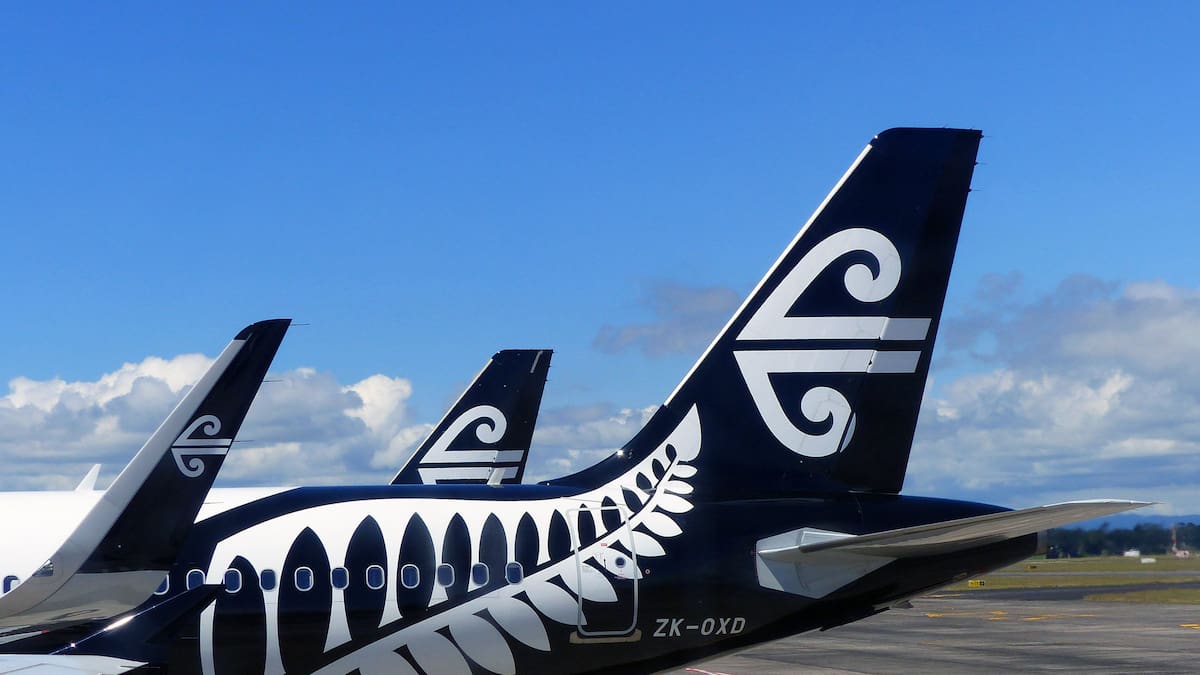
Air New Zealand will deploy its internationally configured narrowbody A320 and A321 aircraft on the new route, not widebodies.
“At this point, we will operate with those jets only, but with any route that we operate, any network plan, we always review and we’ll closely monitor performance and customer uptake,” O’Brien said.
The Airbus twinjets in question are economy-configured with no Business Premier class.
The airline said one-way “seat only” fares from Auckland to WSI would start from $319.
O’Brien said WSI had built a world-class terminal.
She said the airline intended to keep flying to Kingsford Smith and WSI provided “additional growth and capacity” into Australia’s biggest city.
WSI chief executive Simon Hickey said Air New Zealand’s flights would create more choice and flexibility for family and friends, holidaymakers, and transtasman business travellers.
He said the terminal would have an efficient, digital check-in experience.
Why West?
Kingsford Smith is subject to curfews restricting much aircraft movement between 11pm and 6am.
And there is not much undeveloped land in its neighbourhood for expansion.
A Federal Government-owned company called Western Sydney Airport Co Limited was established in 2017 to run the new airport.
In that year’s Federal budget, the Government committed up to A$5.3 billion ($6.34b) to the project.
Construction started in September 2018.
It has a Code F capable runway, which can handle the largest passenger aircraft, including Boeing 747s and Airbus A380s, and massive freighters such as the Antonov AN-124.
On October 28 last year, a New South Wales Rural Fire Service 737 air tanker was the first jet aircraft to land at the airport.
WSI is also known as Nancy-Bird Walton Airport, named for an aviation pioneer nicknamed the “Angel of the Outback”.
John Weekes is a business journalist covering aviation. He previously covered consumer affairs, crime, politics and courts.
Stay ahead with the latest market moves, corporate updates, and economic insights by subscribing to our Business newsletter – your essential weekly round-up of all the business news you need.