
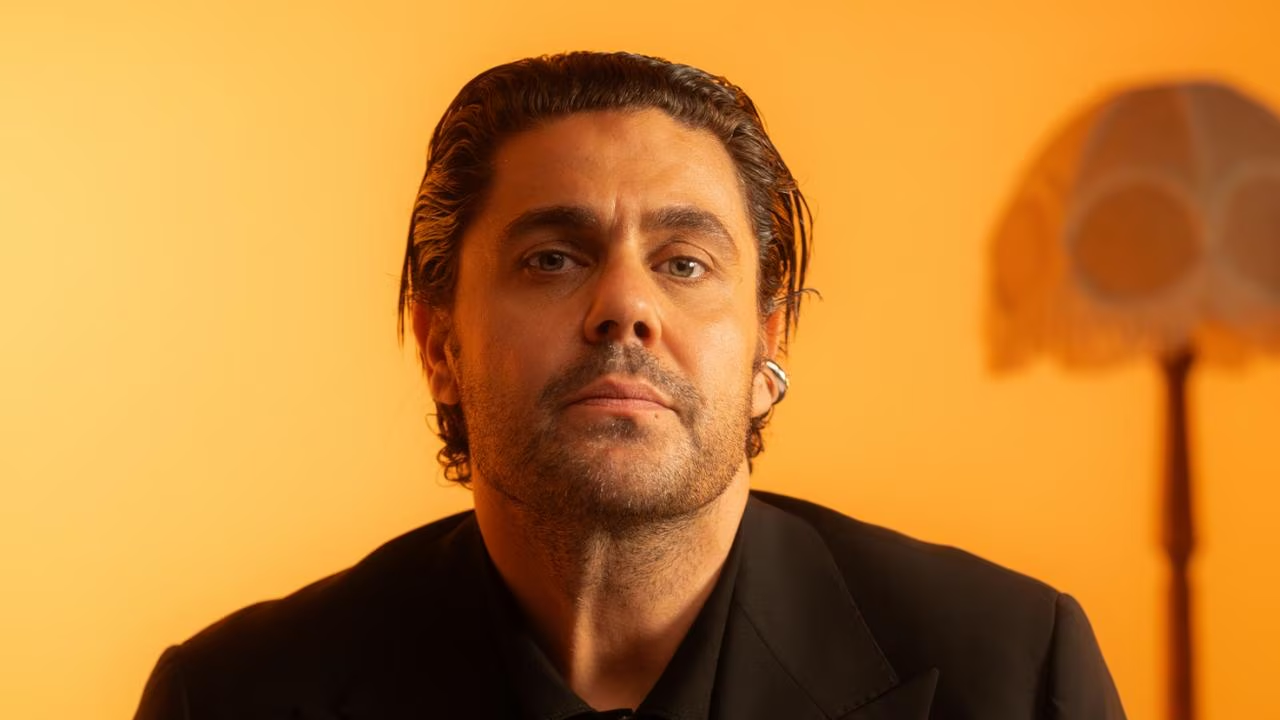
Award-winning musician Dan Sultan has released his new single Forgiveness as Australian artists take their fight against the AI theft of their work to the Federal Government this month. There will be no forgiving the tech bros behind ripping 144 of the award-winning artist’s songs to train their AI models without permission or payment.
Streaming platforms are flooded daily with hundreds of thousands of AI-generated tracks designed to manipulate algorithms and siphon royalties with streaming platform Deezer revealing this week more than 50 per cent of uploads were entirely made by machines.
So an artist’s most defiant act right now is to upload a new song they created with imagination and talent into that chaos.
Sultan said the theft of his work to train AI models to generate soundalike songs is robbing him of an income to provide for his family, wife Bronnie and their young daughter and son.
But an equally bitter pill to swallow is that the public response – and that of radio programmers – to AI slop has been muted. Dominating the pop airwaves is the AI enabled rework of Madonna’s Like a Prayer by Aussie producer Josh Fawaz.
No vocalist was originally credited on his version of the song, despite it featuring a distinctly robotic voice for Madonna’s iconic lyrics. But by last Friday, a new credit for the song appeared on Spotify listing “Generative AI” for the drum and vocal parts of the song.
“Music has never been more undervalued, so you’re going to get a bunch of AI slop that’s stolen from artists in order to be made, and people are going to be okay with that. It’s supply and demand,” Sultan said. “So it’s up to us as individuals, and as a culture, to reject it and then there won’t be a market for it”.
“The music industry has nothing to do with me being an artist, and that’s what I am first and foremost. So AI won’t take away my ability to make work that I’m proud of and to put my heart and my soul out there; it will never compete with music made with heart and soul.
“I would like to be paid for my work – I’ve got bills to pay like everyone – but this is just another way artists get ripped off.”
As Spotify removed 75 million fake tracks from its platform, French streamer Deezer ramped up its efforts to stem the flood of AI-generated music on its site.
“Now that half of all daily uploads are AI-generated tracks, we are taking additional steps to safeguard the rights of artists and songwriters, while maintaining focus on music that fans actually love,” said Deezer CEO Alexis Lanternier.
“We have reached a pivotal moment, but we have the technology to keep track of the development, and an ambition to do what’s right.”
Sultan’s Britpop-flavoured Forgiveness is the latest single from his sixth studio album Little Miracles, out in October.
The album title is inspired by both his family and the fact the songs were written with his now good friend, acclaimed English producer Guy Chambers, in just 12 days last year.
Sultan had long dreamt of working with the hit maker who not only steered Robbie Williams to post boy band solo success but has also worked with Kylie Minogue, Tina Turner and Darren Hayes.
He said he had wanted to relocate to London for his music career about 10 years ago but those plans were parked as he addressed mental health challenges.
“Anyway, I didn’t do it and I wasn’t able to do it. I wish I’d done it. It’s a regret, one I’ve found peace with. The idea of working with Guy was attached to all of that,” Sultan said.
“So then to get a writing session with him was a really beautiful full circle moment for me and we became friends quickly.
“The songs were written in 12 days and the record finished in 19 days, it was lightning in a bottle.”
Little Miracles, which was completed at the legendary Abbey Road Studios in London, is released on October 23.