
Some of the savings will come from Oranga Tamariki, the Government department that protects vulnerable young children.
Opportunity’s plan includes $152m in savings from Oranga Tamariki.
Wong said as her party’s universal basic income would pull families out of poverty, there would be less violence against children, and therefore less demand for services.
Wong made the remarks on Friday after unveiling Opportunity’s party list for the November 7 election.
She was accompanied by her highest-ranking candidates, a “new generation of politicians” who would enter Parliament should it cross the 5% threshold.
The latest NZ Herald-Motu Research Poll of Polls has Opportunity at 5.3% with a 56.1% probability of entering Parliament.
“New Zealand is clearly at a crossroads,” Wong said.
“Successive governments of all stripes have failed to deliver on our big issues and deliver an inclusive and sustainable economy for all New Zealanders.
“We clearly need to approach politics and our economic issues differently, if we are to have any hope at delivering a more prosperous future for the next generation.”
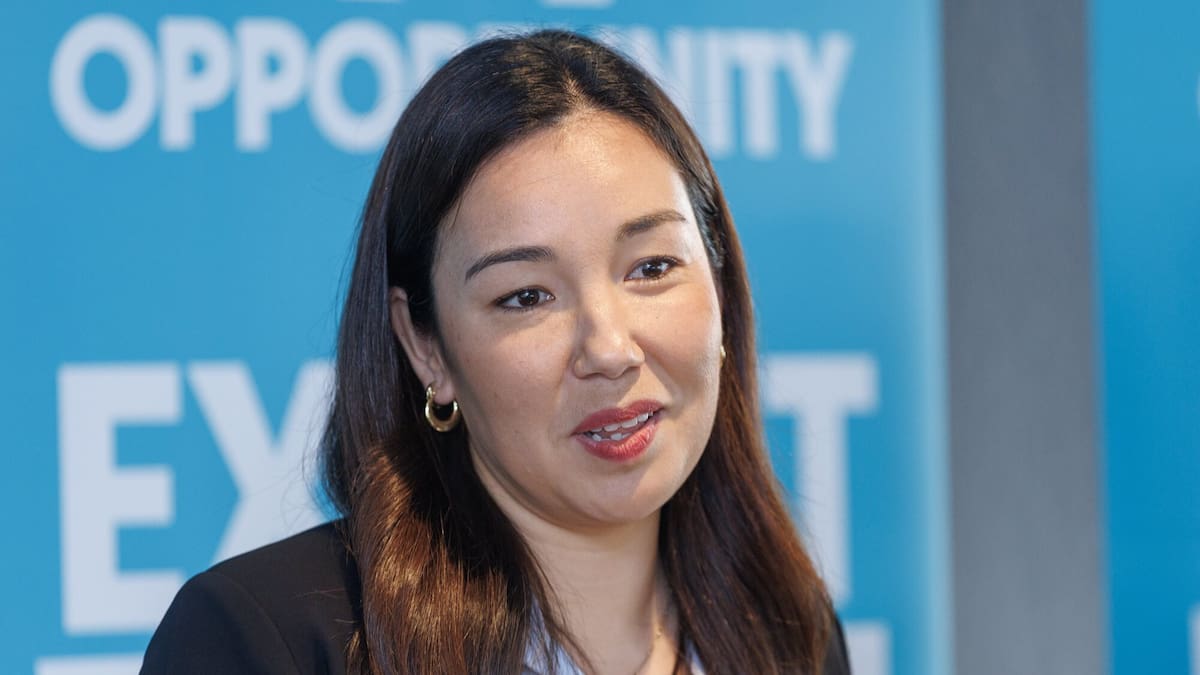
The Opportunity Party leader Qiulae Wong said the benefit system could be simplified. Photo / Mark Mitchell
It followed National leader Christopher Luxon on Monday ruling out working with the party, with his opposition targeted at Opportunity’s tax plan.
That plan promises an annual land value tax of 1.75% on urban land, generating about $24b a year, which would help pay for the Citizen’s Income.
The Citizen’s Income, a universal annual payment of about $19,400, would replace many main benefits, including Jobseeker.
Opportunity believes the universal payment would remove bureaucracy from the current benefit system, leading to savings for Government.
It also expects it to help reduce poverty, meaning fewer health costs and other long-term fiscal benefits.
To reflect this, Opportunity’s costings in the tax plan include savings of $3.8b. As the Herald reported last night, the party was forced to release more information on what this included after questions about its achievability.
A table produced by Opportunity shows major cuts to the budgets of the Ministry of Social Development (MSD) – which administers benefits – and Inland Revenue, which are expected to be trimmed by about 60% and 33% respectively.
The $3.8b savings figure is also supported by eliminating student loan living costs, something that the Citizen’s Income would replace.
A table supplied by Opportunity showing its tax plans.
‘Efficiency’
The Herald on Friday asked Wong how Opportunity expected to achieve the near $4b in savings.
That’s been a frequent question of the Government as it sought to find savings across government departments.
“A more universal approach to welfare can save the taxpayer millions or billions of dollars in efficiency in MSD and multiple other government departments,” Wong said.
“That is a way to do efficient public service in a planned and intentional way rather than simply plucking a number out of the air, which is what we have seen from this Government.”
She is referring to the Government’s baseline savings exercises.
In this year’s Budget, the Government asked various departments to make savings of 2%, including by reducing staff, consultants and contractors, and scaling back some programmes.
The 2% savings amounted to about $424 million. This will be followed in future Budgets by two 5% reductions, leading to an overall 12% baseline reduction of about $2.4b.
This is part of the Government’s goal to reduce the public service headcount to 55,000 by June 2029, a cut of about 9000 roles.
When the Government took office, its first Budget included a baseline exercise delivering about $1.5b in operating savings.
Asked about what would be done to create “efficiency”, Wong said New Zealand currently had a “tangled welfare system” administered by public servants.
If that was simplified, “that’s a lot of jobs that no longer need to exist”, Wong said, adding that some could be “repurposed” or phased out over time.
“We’ve proposed a 10-year transition plan, so this is not happening overnight. We believe that the public service can be more efficient, but we’d have to do that in a careful and planned way, not just arbitrarily cutting thousands of jobs.”
The Opportunity Party leader Qiulae Wong leading candidates into the room before announcing their party list. Photo / Mark Mitchell
The Herald sought to confirm there could be job losses under this plan.
“There could be, yes, and we’d want to do that in a way that is planned and gives people time, so that they know what’s coming, not just pluck a number out of thin air,” Wong said.
The tax plan says it will “cut services by removing the bureaucracy of the current benefit system”, allowing 2000 MSD workers to be repurposed “where they can have more impact”.
Asked where they would go, Wong said they could be moved to “supporting people into job pathways”, rather than “spending time ticking boxes on whether [beneficiaries] deserve support”.
“Actually, what are the meaningful things we can do to help them live a more meaningful and contributing life for New Zealand? If we decide that the cost benefit of that is worth it, then that’s where we would put the money.
“If it’s better off, simply making savings in the public service, then that’s an option too.”
The Opportunity Party Wellington North candidate Jessica Hammond during their press conference. Photo / Mark Mitchell
Jessica Hammond is ranked third on Opportunity’s list. She’s currently working in the public service, so the Herald asked if she thought her party’s public service plans were realistic.
“Absolutely, I think public servants like efficiency. We want to do well by the public of New Zealand … We don’t want to do that with arbitrary cuts.”
She said the public service needed a “pipeline of talent coming into the public service”.
“I think that this culture of being afraid of being cut all the time does not bring out the kind of behaviours that we need to face our new challenges.”
Hammond said that didn’t make people “innovative”, but instead “cautious and defensive”.
Asked if there may be some in the public service who may worry they will lose their jobs under Opportunity’s plan, Hammond said: “People may feel that way”.
“But, like I say, public servants are not against efficiency when it makes sense in the interests of New Zealanders,” she said.
“It’s not a foregone conclusion there’ll be cuts. There’ll be possibly redeployments.
“I don’t think people working in MSD, for instance, like policing people’s relationships. They want to do good by the people of New Zealand and we can help them do that.”
Savings from Oranga Tamariki
One of the areas of savings in Opportunity’s table is from Oranga Tamariki where they are expecting $152m of operating savings.
Wong said Opportunity’s tax plan is expected to produce tax cuts for 70% of New Zealanders. That comes from the Citizen’s Income as well as changes to income tax brackets.
“It will lift tens of thousands of families out of poverty,” Wong said.
“That then has flow-on effects on how much we are having to look after those young people in our justice statistics, for example. That creates savings in those other agencies.”
Asked if she was saying that she expects the Citizen’s Income to lead to less violence against children, Wong responded: “Yeah, I mean there’s clear evidence that if people are better off, they are less likely to commit crime”.
“They are more likely to be contributing taxes to society. That is why we have proposed this tax policy because it delivers a more robust, economic base for our country.”
The changes could involve staffing impacts at Oranga Tamariki.
“Part of it might be roles, and I think if we have fewer people needing to work one on one with children in poverty, then that is a good thing for New Zealand.
“Part of it is also the systems and processes that go along with administering those programmes.”
Opportunity list
1. Qiulae Wong | Mt Albert
2. Daniel Eb | Kaipara ki Mahurangi
3. Jessica Hammond | Wellington North
4. Kayla Kingdon-Bebb | Wellington Bays
5. Eden Skipper | Christchurch Central
6. Jodie Kuntzsch | Nelson
7. Sarah Lucas | New Plymouth
8. David Bainbridge-Zafar | Dunedin
9. Holly Knill | North Shore
10. Pāpā Wharewera | Waiariki
11. Bianca Beebe | Southland
12. Romeo Tevaga | Upper Harbour
13. Ben Wylie-van Eerd | Hutt South
14. Rachel Ward | Tukituki
15. Naomi Pocock | Hamilton East
16. Helen Tait | Waitaki
17. Cody Marsh | Northcote
18. Adam Macrae-Martin | Otāhuhu
19. Mark Roach | Waitākere
20. Robert Mason | Kenepuru
21. Luke Ross | Remutaka
22. Michael Carter | Tauranga
23. Derrick Paul | Maungakiekie
24. Matt Shepherd | Wairarapa
25. Ben Lane | Māngere
26. Chee Khiang (CK) Sng | Kāpiti
27. Finn Liley | Rotorua
28. Evan French | Glendene
29. Jamie Attenborough | Mt Roskill
30. Matthew Harris | Rangitata
31. Sacha Haskell | Tāmaki
32. Netra Ghimire | Palmerston North
33. Cail Smith | East Cape
34. Sam Plummer | Taupō
35. Blair Smith | Hamilton West
36. Johan Chang | Auckland Central
37. Almo Wong | Henderson
38. Adrian Mee | Selwyn
39. Paul Jackson | Epsom
40. Kevin Huang | Pakuranga
Jamie Ensor is the NZ Herald’s chief political reporter, based in the press gallery at Parliament. He was previously a TV reporter and digital producer in the Newshub press gallery office. He was a finalist in 2025 for Political Journalist of the Year at the Voyager Media Awards.