
“I went digging and found two distinct areas in India and China that produce a vast majority of jewellery globally. I obviously understand Asia very well, so I began sourcing and vetting suppliers, and after getting a few samples I found there was this massive difference in what it cost to make and what people were selling it for.”
Whittaker argued that the model for the jewellery industry had not changed for nearly a century, noting that it was tied up in high rent for bricks-and-mortar locations, millions of dollars locked in inventory, staffing costs and exorbitant marketing campaigns to justify the inflated price point.
Heirest’s model would strip out those costs by relying on a digital-first experience, but offer an improved touchpoint for customers in the process.
Liam Whittaker, founder of Heriest, was the former chief operations officer at global retail company Zuru.
Heirest plans to focus on two main growth drivers influencing the wider jewellery category: hyper-personalisation and lab-grown diamonds.
The experience works through a real-time online configurator where customers become the designer behind their piece, with more than 125,000 combinations available.
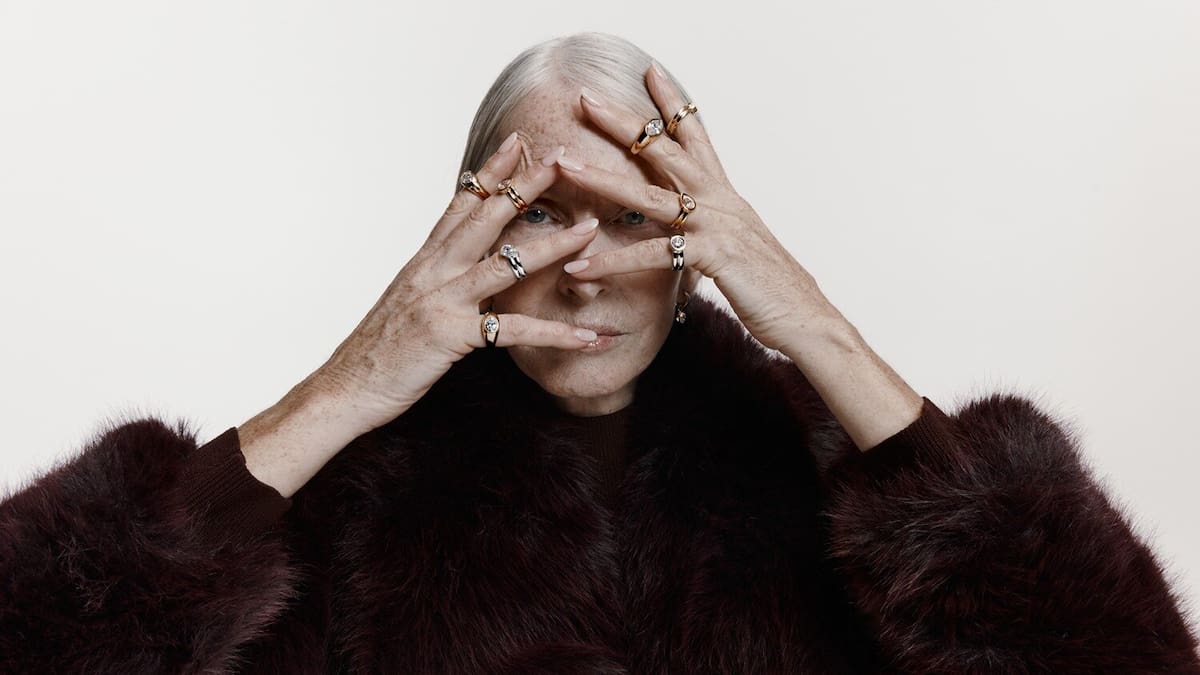
Customers can choose from a variety of styles, from diamond tennis necklaces and bracelets to pinky rings and stud earrings, and the type of metal for their piece.
Every Heirest stone featured in the jewellery is lab-grown and hand-selected to fall between D–F colour and VVS1–VS2 clarity. Whittaker claims the result is a stone that is, by definition, optically flawless.
The growth of lab-grown diamonds in the industry has accelerated over the past few years. According to data provided by Whittaker, roughly 0.3% of all engagement ring sales in the United States in 2010 were lab-grown diamonds. By 2026, that figure had risen to 61%.
“One thing people understand now is that these lab-grown diamonds are structurally, chemically and optically identical. The only difference is you get a certification saying one is from a lab and the other’s natural. That’s it.”
While lab-grown diamonds are inherently cheaper than naturally sourced diamonds, Whittaker believes the market has become more sensitive to price.
He said diamonds used to be a benchmark of affluence, but now, as more consumers have gained access to the stones, personalisation is what drives the value of a piece.
As customers choose a design that suits them, Heirest’s website updates the price and interactive visual in less than a second, with prices ranging from $900 through to roughly $22,000.
Whittaker said the website used predictive code logic to narrow down the most probable next selections by a customer, optimising the number of assets it needed to load.
Once a design is finalised by a customer, it’s handed over to Heirest’s artisans, who cut, set and polish every piece by hand. In two to four weeks, customers will receive their product.
Whittaker said the brand was working with one manufacturer in Guangzhou, China, and a leading jewellery manufacturer based in India.
“We’re going to be about 5% to 40% cheaper than mainstream brands. We get progressively cheaper the higher the value is because we’ve got a lot of fixed costs. We’re shipping everything made to order via DHL.”
To help elevate the experience, customers will be given a custom jewellery box, featuring a metallic, scannable card that provides all of the product’s information, including diamond certifications, insurance documentation and care instructions.
The box also comes with physical copies if a customer prefers that instead, a travel pouch with a cleaning cloth and sizing kit, and a ceramic tile infused with a unique fragrance developed for the brand.
Buyers can customise every detail, from metal and gemstone to cut, carat and engraving, with every choice visualised instantly and pricing updated in real time.
Whittaker acknowledged that building trust as a new brand will be a challenge, but it hasn’t stopped the business earning organic sales of nearly $600,000 before its official launch. Roughly $120,000 of that has been over the past two and a half months.
To help launch the brand and build its credibility, Heirest and Whittaker will run a pop-up site in Britomart for Auckland Fashion Week this month, with another likely to come in Sydney before the end of the year.
“The idea is that people can come in, try things on, interact with the brand and play with the configurator on these massive displays.
“What’s probably more important for me is not the impact we’re having on that small number of people, but it’s capturing the content and then showing people in Australia and the UK that we exist in the real world. I think that takes us to a whole other level of credibility.”
The business will launch globally in English-speaking countries on August 10, with further translations and expansions to follow.
Tom Raynel is a multimedia business journalist for the Herald, covering small business, retail and tourism.
Stay ahead with the latest market moves, corporate updates, and economic insights by subscribing to our Business newsletter – your essential weekly round-up of all the business news you need.